Michigan reports another attendance gain and a clearer playbook for schools
Statewide attendance rose to 91.5% in 2025-26, while chronic absenteeism fell to 27.2%. The more useful news for school and district leaders is Michigan’s push to pair public data, early-warning routines, coaching, and family outreach tactics instead of relying on attendance messaging alone.
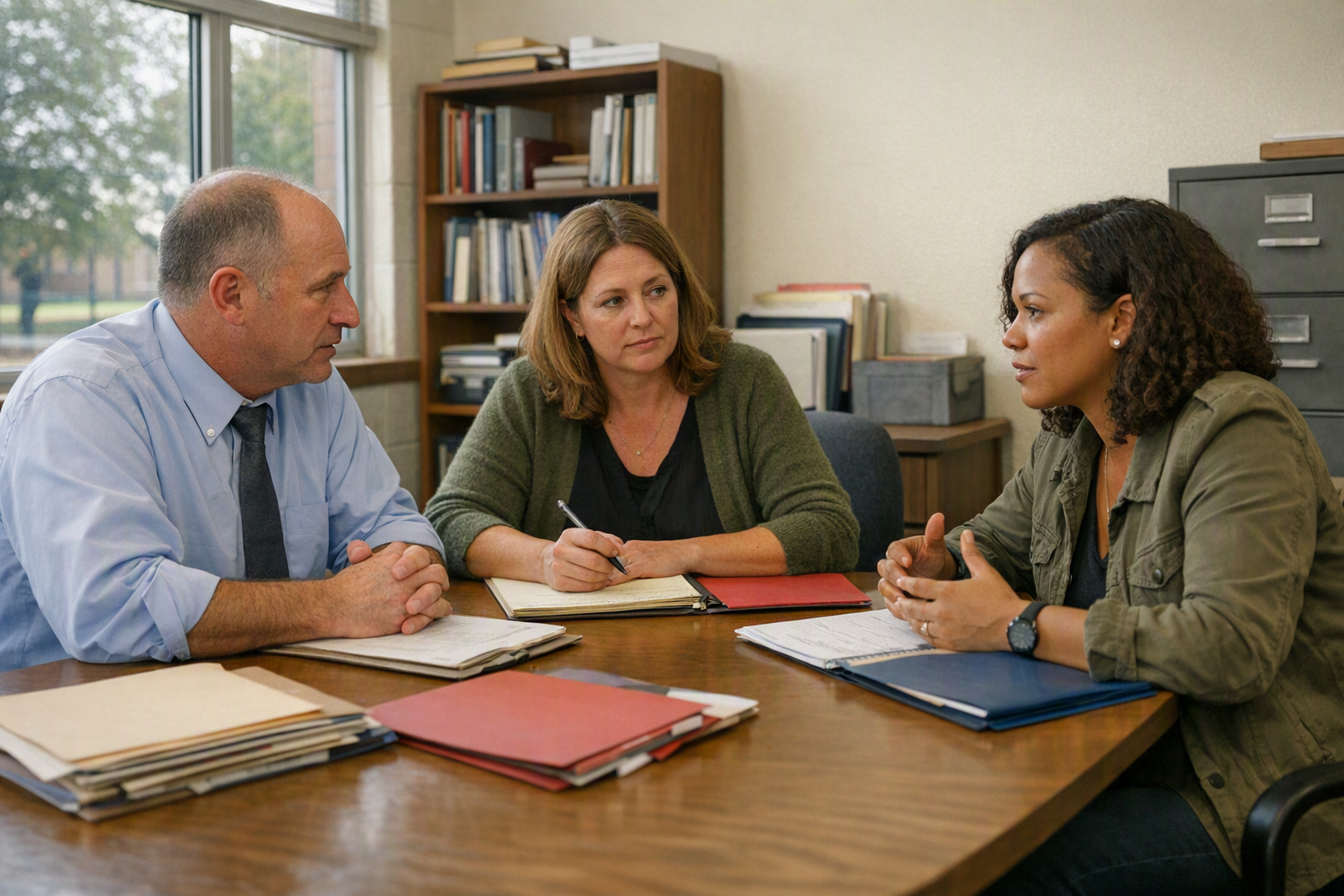
Michigan’s statewide school attendance rose to 91.5 percent in 2025-26, and its chronic absenteeism rate fell to 27.2 percent, marking a fourth straight year of improvement. The headline number is modest: attendance improved by 0.2 percentage points year over year, while chronic absenteeism fell by 0.7 points. But the more useful development for school leaders is that the Michigan Department of Education is now packaging the rebound as a set of operating moves, not just a message campaign — from parent calls and family conferences to mental health supports, home outreach, early-warning routines, and state coaching for implementation. (michigan.gov)
That matters because Michigan is pairing the new numbers with tools schools can actually use. Districts and principals can compare their local results in the state’s MI School Data portal, which updates attendance annually and allows users to drill down by location, grade, and subgroup. The portal also makes clear what the numbers do and do not capture: attendance is based on students attending at least half their scheduled hours, and chronic absenteeism means missing 10 percent or more of the school year for any reason, not just truancy. (mischooldata.org)
The rebound is real, but the problem is still large
Michigan’s Sept. 17 release says statewide attendance has risen 2.7 percentage points since 2021-22, from 88.8 percent to 91.5 percent. Over the same span, chronic absenteeism has dropped 11.3 points. That is genuine recovery. It is also incomplete recovery: more than one in four students statewide were still chronically absent last school year, a level that would have been alarming before the pandemic and remains deeply disruptive now. (michigan.gov)
The state’s own July 2026 attendance guidance underscores how uneven that burden remains. In 2024-25, the guidance noted, nearly 28 percent of Michigan students were chronically absent, with especially high rates among students experiencing homelessness and students who are economically disadvantaged. The document is aimed not only at educators but also at community partners, reflecting the state’s argument that attendance is tied to student engagement, health, family circumstances, and access to basic needs — not simply whether a school sends home another reminder letter. (michigan.gov)
What Michigan is actually handing schools
The practical shift is in the support stack around the data. Michigan is directing educators to new Student Attendance and Engagement Guidance released in July, a statewide attendance-and-engagement webpage, MI School Data for public comparison, and the Early Warning Intervention and Monitoring System, or EWIMS. The guidance itself is organized around the areas many schools say they are struggling to coordinate: student engagement, social-emotional and behavioral health, academic support, expanded learning, physical health, basic needs, family engagement, and communication strategies. MDE also says it has trained 20 EWIMS coaches to support implementation in districts and schools statewide. (michigan.gov)
EWIMS is important here because it turns attendance from a poster campaign into a routine. On MDE’s official EWIMS page, the department describes it as an evidence-based, data-driven process within a secondary MTSS framework. Schools review attendance, behavior, and course-performance indicators, identify students showing risk, match those students to interventions, and then monitor whether those interventions are working. In other words, the state is pushing schools toward a recurring team process, not just a set of isolated tactics. (michigan.gov)
Michigan has also been surfacing examples of what that looks like on the ground. In an October 2025 state board update, MDE said Flint Community Schools used EWIMS districtwide, partnered with families and agencies, ran a “Strive for Five” attendance campaign, and deployed student success coordinators. Lawrence Public Schools, by contrast, paired attendance work with housing partnerships, more direct student-support staffing, and social media outreach to families. Flint’s attendance improved from 76.6 percent to 78.3 percent in 2024-25, while Lawrence improved from 93.1 percent to 94.1 percent. Those are very different contexts, but they share a common pattern: attendance work is being built into staffing, data review, and family contact, rather than treated as a stand-alone slogan. (michigan.gov)
More recent state spotlights add operational detail that many districts can borrow. At Lansing-Sexton High School, the district reorganized support around graduation cohorts rather than counselor alphabet or credit status, then assigned each cohort a team that includes a counselor, interventionist, administrator, and specialist. The school also used bus passes and gas cards to deal with transportation barriers. At Durand High School, staff shifted from viewing grades as the main signal to treating attendance as an early engagement problem, hired an academic interventionist to coordinate the work, sent families biweekly grade updates, and brought parents, counselors, administrators, and students into joint meetings when support needed to intensify. (michigan.gov)
The menu of tactics is useful, but the system matters more
Michigan’s new release lists familiar strategies: calls to parents, family conferences, mental health interventions, and door-to-door outreach. Those are real tools. But the best recent Michigan research suggests school leaders should be careful not to read that list as a ranking of what “works best.” A statewide survey of Michigan school leaders found schools were already using an average of about 13 attendance practices in 2024-25, with communication-based strategies far more common than efforts to remove barriers or improve students’ in-school experience. A related Michigan-and-Georgia working paper reached a similar conclusion: schools tend to rely heavily on nudges aimed at changing student or parent behavior, while barrier-removal strategies are less common. (detroitpeer.org)
That helps explain why MDE’s own attendance resource page now highlights a more nuanced takeaway: no single strategy explains which schools improve the most. The department’s featured research says stronger attendance outcomes tend to come from coherent, well-implemented systems that support students and address broader factors such as school climate, relationships, and structural barriers. Read that way, Michigan’s Sept. 17 release is less a celebration of one magic move than a reminder that schools need a repeatable workflow: identify problems early, assign adults, communicate with families, solve practical barriers where possible, and keep checking whether the response is working. (michigan.gov)
For educators, that is the most useful frame. Public reporting through MI School Data creates pressure to improve, but it also gives schools a place to start asking better questions: Which grades are slipping? Which student groups are missing most often? Are attendance problems showing up alongside behavior or course-failure indicators? The trade-off is that schools under staffing and budget pressure may default to the cheapest interventions — texts, robocalls, warning letters — unless states and local partners help them with the harder work around transportation, mental health, housing instability, and student connection. Michigan’s own featured attendance research makes that caution explicit, arguing that school-based strategies alone struggle when the roots of absenteeism lie beyond what schools can control. (mischooldata.org)
So the immediate news is not simply that Michigan improved again. It is that the state is trying to turn a small statewide gain into a more practical playbook: public school-level data, early-warning routines, guidance organized around actual barriers, and examples of districts changing staff roles and response systems to match the problem. The next question for this school year is whether Michigan can move from sharing a menu of promising practices to showing, with more school-level specificity, which combinations of supports are helping different kinds of communities improve fastest. (michigan.gov)
More from School Leadership

Texas study suggests special ed formulas miss much of district spending
Analyzing 6,116 Texas district-year observations, researchers found that placement and disability mix do track some special education costs, but explain only a modest share of spending differences, especially across smaller districts.
OpenAI expands ChatGPT for Teachers to 55 more districts
The bigger development for school leaders may be OpenAI’s 16-state National Data Privacy Agreement path, which could reduce contracting friction as districts move teacher AI use into managed, admin-controlled workspaces.

GAO says DoDEA schools need better screening to catch reading and math gaps
A new GAO report found referral bottlenecks, uneven access to student data, and poorly rated training alongside weak screening in DoDEA schools. With new universal screeners planned for later in 2026, the findings offer a practical MTSS audit for district leaders.