Douglas County’s attendance strategy uses weekly flags, home visits, and tutoring
Colorado says the district cut chronic absenteeism to 15.2% by linking dashboard alerts to school teams, family outreach, and a nine-week support program for students who need a reset.
The Colorado Department of Education is highlighting Douglas County School District as a practical answer to a question many attendance teams are still trying to solve: what should happen after a student starts missing too much school. In Colorado’s third-largest district, chronic absenteeism fell from 17 percent in 2023-24 to 15.2 percent in 2025-26, while average daily attendance climbed to nearly 94 percent. The notable part is not a single standout program. It is the district’s handoff structure: weekly data flags, school-based attendance teams, home visits, tutoring tied to reengagement, and, for a smaller group of high school students, a short-term support center before students transition back to campus. (ed.cde.state.co.us)
For school and district leaders looking for something transferable, the main lesson is that Douglas County built a sequence, not just a message campaign. Weekly reports identify students nearing the chronic absenteeism line, and Colorado defines that threshold as missing 10 percent or more of enrolled school time across all absences, not only unexcused ones. That matters operationally: a district cannot wait for truancy paperwork if it wants to catch students whose attendance problems are building through illness, family strain, suspensions, or a mix of smaller absences. (ed.cde.state.co.us)
What happens after a student is flagged
According to the state case study, Douglas County principals and school teams can see daily attendance, class-by-class attendance, and how absences are coded. School attendance teams then use that information to check for patterns and respond with mentoring, attendance plans, and regular check-ins. That matches Colorado’s own attendance strategy guidance, which describes effective attendance work as a layered system of data collection, family partnership, and tiered supports rather than a one-step intervention. (ed.cde.state.co.us)
Douglas County’s home-visit program, Care Crew, shows what that next layer looks like in practice. The district says the program began in 2020-21 as a way to reconnect families who had disengaged from school and has continued beyond the immediate pandemic period. District materials say home visits are used to surface outside barriers and connect families with district or community help; over four years, 535 families were visited and an average of 72 percent of students improved engagement afterward. Colorado’s attendance best-practices page separately lists positive home visits as a promising strategy, though the state also notes that it has not independently evaluated every local program it shares. (dcsdk12.org)
Tutoring is another notable part of the model because Douglas County is using it as a reengagement tool, not only an academic add-on. In the state case study, the district said a grant-funded intervention program pays school staff to tutor students outside school hours, and 71 percent of participating students improved attendance. That is a useful design choice for other systems to notice: the tutoring is attached to attendance recovery and adult connection, not treated as a separate initiative. (ed.cde.state.co.us)
The most intensive support is a small part of a bigger system
For students with deeper disconnection, Douglas County escalates beyond school-level plans. The state says the district’s reengagement team served 640 students last year and worked with 61 of its 69 non-charter schools. But the district’s separate DC Student Support Center is much narrower than that overall reengagement figure suggests: it is a voluntary nine-week program for grades 9-12, runs Monday through Thursday, and uses licensed teachers and mental health professionals to support students dealing with truancy, behavior, expulsion-related disruption, mental health concerns, or substance abuse. District materials say the center itself serves about 60 to 80 students a year. In other words, the specialized placement is one high-intensity option inside a much broader attendance and reengagement apparatus, not the district’s default response. (ed.cde.state.co.us)
That distinction matters for replication. Douglas County’s own “points of pride” page says Student Support Center students reduced chronic absenteeism by an average of 28 percent and earned 3.57 credits per term in 2024-25, while new transition supports improved attendance and reduced behavior incidents when students returned to their home high schools. Those are district-reported descriptive results, not causal proof. Still, they illustrate why a short-term reset can be useful for a subset of students: it creates time for credit recovery, relationship rebuilding, and transition planning before a full return to a larger campus. (dcsdk12.org)
What smaller systems can copy first
The copyable part of Douglas County’s model is not necessarily the home-visit corps or the separate support center. Colorado’s strategy guide says attendance systems work best when schools combine infrastructure for spotting problems, partnerships with families and communities, and tiered responses. For a smaller district, that points to a realistic starting sequence: build a weekly early-warning list, convene a team that can review coding and barriers quickly, assign a named adult for check-ins, and establish a clear rule for when cases move to tutoring, community referrals, or district-level case management. Douglas County’s example is useful precisely because it shows those steps as connected handoffs rather than isolated programs. (ed.cde.state.co.us)
It also shows the staffing trade-offs. Douglas County reports 92 schools and about 61,000 students, and its more intensive pieces rely on trained staff for home visits and licensed instructional and mental-health staff for the support center. Smaller or less-resourced systems may not be able to reproduce those parts quickly. But they can still borrow the underlying design principle: reserve the most expensive interventions for a relatively small group of students, and make sure most attendance work happens earlier, through routine data review and relationship-based outreach. (dcsdk12.org)
That is the real significance of Douglas County’s results. Colorado’s latest statewide data put chronic absenteeism at 27.5 percent in 2025-26, so the district is operating well below the state average while the department pushes districts to cut absenteeism sharply from pandemic-era highs. Whether Douglas County can keep improving in 2026-27, and whether other districts can adapt the model with fewer people and less infrastructure, remains an open question. But the state’s own guidance and Douglas County’s playbook point in the same direction: attendance improves less from a single program than from a reliable ladder of supports that starts before missed days turn into disconnection. (ed.cde.state.co.us)
More from School Leadership
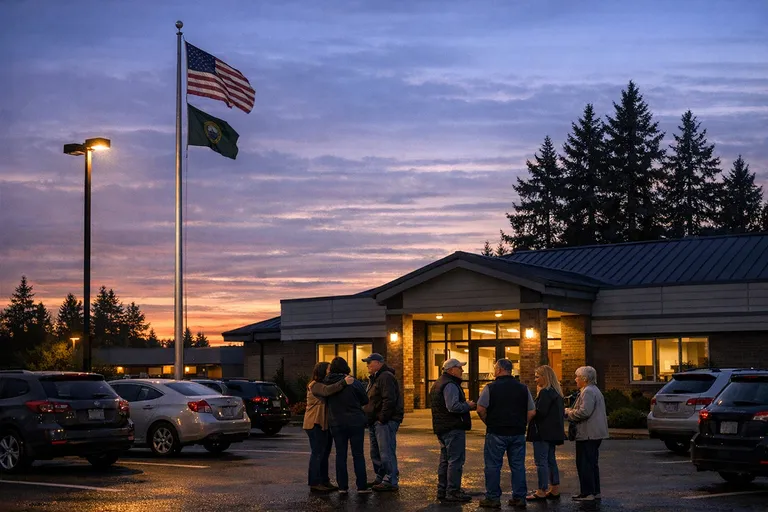
Battle Ground voters approve school operations levy after three defeats
The unofficial Nov. 3 result gives Battle Ground Public Schools a three-year local revenue stream for 2027-29 after deep cuts and reserve use. The levy should stabilize planning, but it will not instantly restore positions or programs already cut from the current budget.
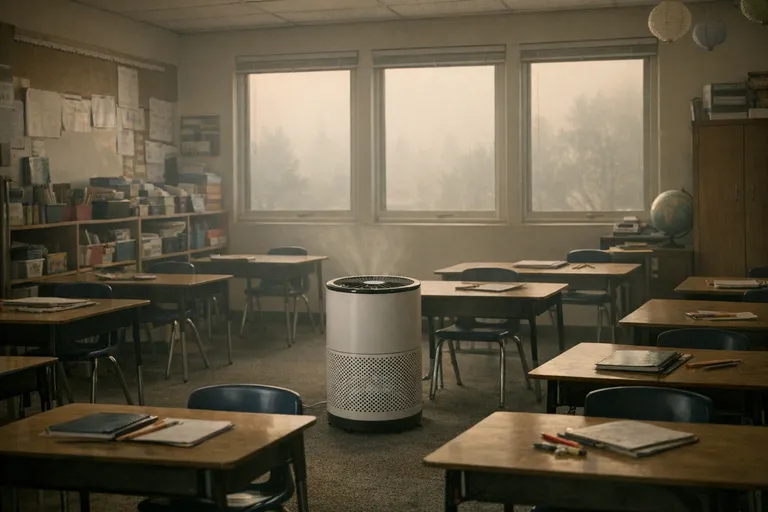
Wildfire smoke study finds many U.S. schools don’t protect indoor air well
A national analysis estimates smoke exposure at schools and childcare centers rose sharply from 2006 to 2023, giving districts firmer evidence for HEPA filters, PM2.5 monitoring, and stronger smoke-day plans.

NYC Public Schools’ AI tool list shows why districts must audit software features
A newly disclosed list of 38 flagged products shows that New York City’s AI rules often hinge on student-facing generative features, not entire apps. For school leaders, the bigger lesson is to ask vendors what AI is embedded, whether students can use it directly, and whether it can be turned off without disrupting instruction.