Battle Ground voters approve school operations levy after three defeats
The unofficial Nov. 3 result gives Battle Ground Public Schools a three-year local revenue stream for 2027-29 after deep cuts and reserve use. The levy should stabilize planning, but it will not instantly restore positions or programs already cut from the current budget.
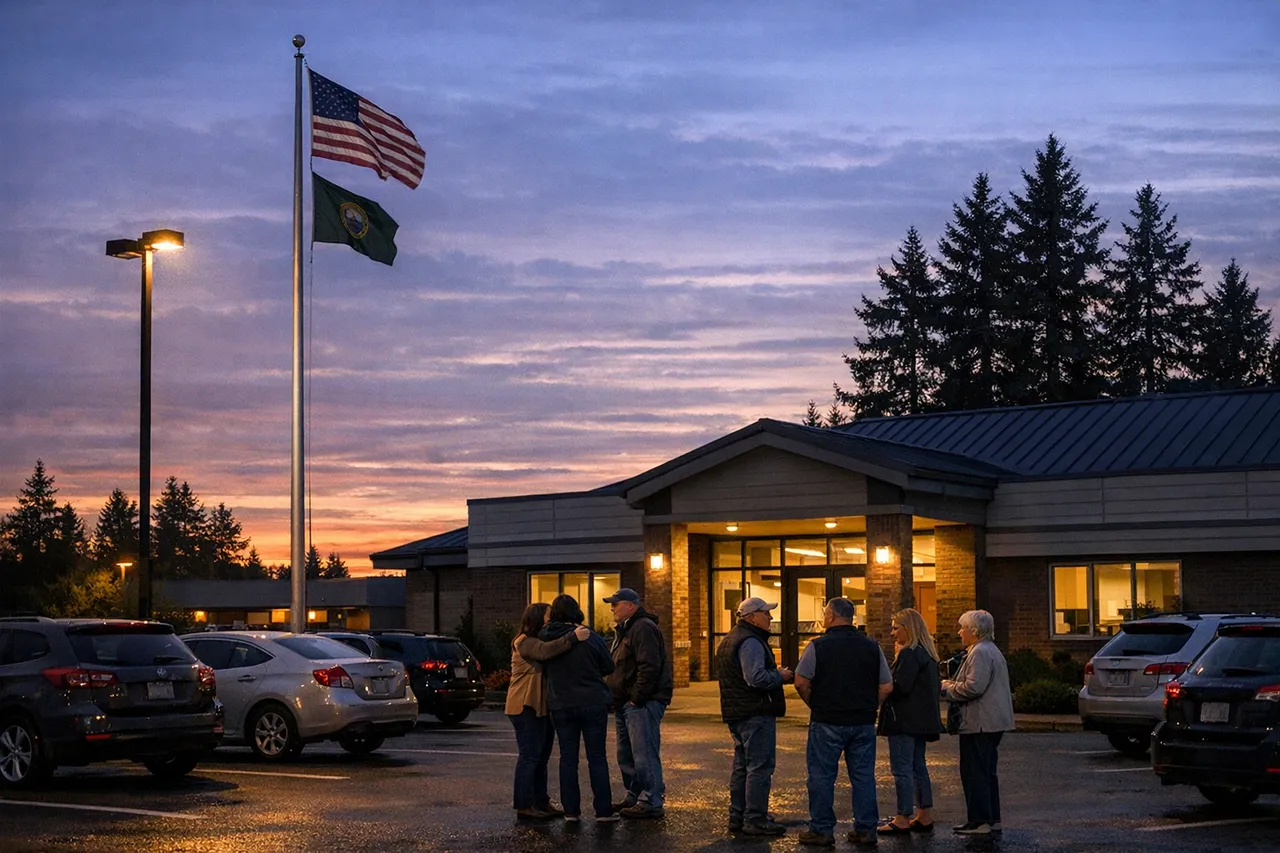
Battle Ground Public Schools won voter approval Tuesday night for Proposition 11, a three-year operations levy that restores local revenue after three straight levy defeats and nearly a year of running the district without a replacement tax stream. Unofficial Clark County results posted after 8 p.m. on Nov. 3 showed the measure passing with 15,102 yes votes to 14,175 no votes, or 51.58% to 48.42%. (clark.wa.gov)
For school leaders, the practical answer is this: a passed rescue levy buys time, not an instant reset. Battle Ground now has an approved local revenue source worth about $37.03 million in calendar year 2027, $38.69 million in 2028, and $40.43 million in 2029, which should stabilize budget planning after the district spent two years cutting programs and staff. But the current 2026-27 budget is already in place, and district leaders have not publicly laid out an immediate restoration schedule for specific positions or programs. (go.boarddocs.com)
The district has said it already cut about $34 million over two years because its prior educational programs and operations levy expired at the end of 2025 and three replacement attempts failed in February 2025, April 2025, and February 2026. Its budget materials say the 2026-27 plan still carries roughly a $14 million gap even after about $20 million in cuts, with reserves covering the difference for one year. Battle Ground projected ending the school year with about $11.7 million left in fund balance and a financial health score of 1.25 out of 4, in the state’s warning range. (battlegroundps.org)
What the levy fixes — and what it doesn’t
District materials framed Proposition 11 less as a broad expansion than as a way to restore basic operating capacity: more student supervision and security, more academic help in reading and math, student well-being supports, some career and technical education offerings, and smaller class sizes after the district said it eliminated 16% of teaching positions. Those categories matter because they show how operating levies land in classrooms: not in new buildings, but in adult presence, course availability, intervention time, and how many students a teacher sees at once. The district has also warned that without added funding in 2027 it could face increased state oversight, though OSPI says local resolution is its preference and Battle Ground is not currently under state financial oversight. (battlegroundps.org)
That also means the passage should not be read as a promise that every cut will snap back. The levy collections begin in 2027, and Battle Ground’s board will still have to decide which reductions are reversed first, how fast it can hire into hard-to-fill roles, and how much of the new revenue goes to restoring services versus rebuilding financial cushion. For districts watching from elsewhere, that is the real post-election work: a successful levy ends the emergency phase, but it does not erase the consequences of the cuts that got a budget through the failure period. (go.boarddocs.com)
Why this version cleared after three losses
The November 2026 ask was smaller, shorter, and cheaper than the proposals voters had rejected. District FAQ materials show the new measure at an estimated rate of $1.76 per $1,000 of assessed value for three years, compared with $1.95 in the 2025 proposals and $1.99 in the February 2026 proposal. Battle Ground also told voters that even if Proposition 11 passed, its local school tax rate would still sit below the Clark County average and that Battle Ground was the county’s only district without this kind of levy. (dbs.battlegroundps.org)
Timing appears to have mattered too. The three defeats came in lower-turnout special elections: 18,686 votes were cast on the February 2025 levy, 23,649 on the April 2025 levy, and 24,789 on the February 2026 levy. Tuesday night’s unofficial total on Proposition 11 was 29,277 votes. Battle Ground did not suddenly discover a new funding mechanism; it paired a pared-down levy with a general-election electorate and a message built around visible losses families could recognize, including fewer counselors, less supervision, larger classes, and fewer job-readiness classes. (clark.wa.gov)
That lesson is broader than one district. Operating levies are often politically harder to defend than capital measures because they pay for recurring staff and services rather than a building voters can point to. Battle Ground’s campaign materials translated that abstract budget gap into concrete trade-offs inside schools. Now the district has to prove that the same specificity can guide restoration decisions in 2027 — and that voter approval can become a durable operating plan, not just a pause before the next round of cuts. (battlegroundps.org)
More from School Leadership

Douglas County’s attendance strategy uses weekly flags, home visits, and tutoring
Colorado says the district cut chronic absenteeism to 15.2% by linking dashboard alerts to school teams, family outreach, and a nine-week support program for students who need a reset.
Wildfire smoke study finds many U.S. schools don’t protect indoor air well
A national analysis estimates smoke exposure at schools and childcare centers rose sharply from 2006 to 2023, giving districts firmer evidence for HEPA filters, PM2.5 monitoring, and stronger smoke-day plans.

NYC Public Schools’ AI tool list shows why districts must audit software features
A newly disclosed list of 38 flagged products shows that New York City’s AI rules often hinge on student-facing generative features, not entire apps. For school leaders, the bigger lesson is to ask vendors what AI is embedded, whether students can use it directly, and whether it can be turned off without disrupting instruction.