UNC-Chapel Hill settles federal civil-rights probes through 2028
The university-wide deal closes 18 investigations and a DOJ review while requiring new antisemitism procedures, race-blind admissions and scholarship practices, and quarterly compliance reports.
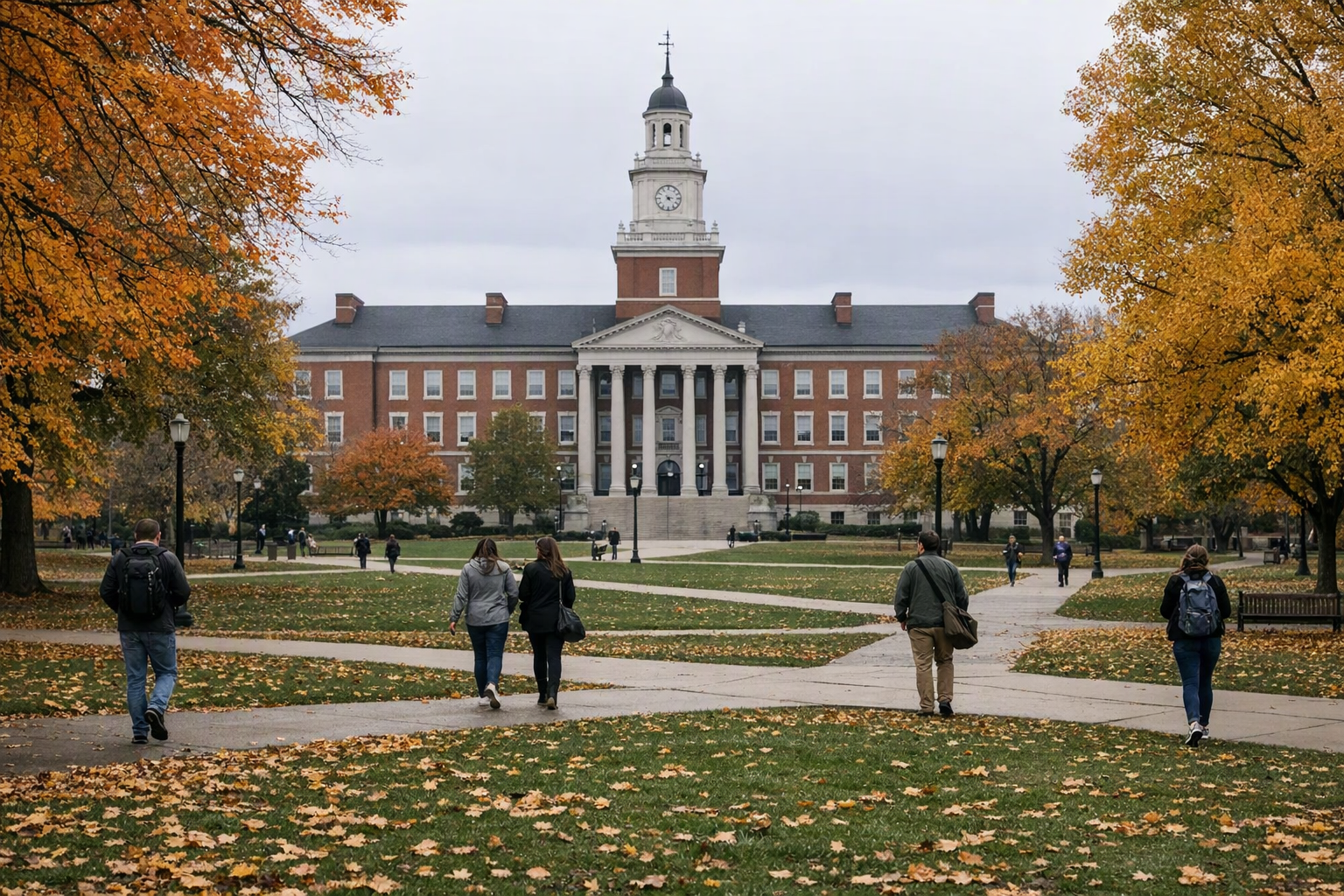
UNC-Chapel Hill said Monday, October 19, that it had reached a voluntary, university-wide settlement with the U.S. Department of Justice and the U.S. Department of Education that resolves 18 federal civil-rights investigations and a separate Justice Department compliance review while preserving the university’s eligibility to compete for federal grants, contracts, and awards. The agreement took effect on execution and runs through December 31, 2028, requiring new complaint-handling, training, reporting, admissions, and scholarship controls across the campus. (unc.edu)
What changed is not just that the cases are closing, but the terms on which they are closing. UNC said the deal ends the pending matters without adverse action or adverse findings, does not require the university to admit wrongdoing or liability, and does not include a monetary payment. The Justice Department, by contrast, presented the settlement as one that ends antisemitism and race discrimination at UNC. Those are not the same claim, and the distinction matters: this is a negotiated resolution, not a court judgment or agency finding of liability against the university. (unc.edu)
The federal government’s terms reach far beyond one office or one program. DOJ said the agreement applies to all undergraduate, graduate, professional, and other schools, components, and programs. On antisemitism, the settlement requires UNC to establish a Title VI coordinator, explicitly cover Jewish and Israeli students under the university’s nondiscrimination policy, promptly assess and investigate antisemitism complaints, provide mandatory antisemitism training to students, faculty, and staff, deploy additional law-enforcement resources when warranted, and prohibit face masks that conceal a person’s identity. Title VI bars race, color, and national-origin discrimination in federally funded programs, which is the legal framework both agencies used here. (justice.gov)
A settlement that reaches beyond admissions
The other major piece is race-blind institutional practice. Searchable portions of the agreement say UNC may not use race or analyze racial data in the admissions process, or alter admissions for the purpose of changing the racial composition of the student body. DOJ also said UNC must adopt wholly race-blind policies for student benefits, scholarships, financial aid, and programming, with scholarship criteria that cannot include diversity or identification with a protected characteristic. Inside Higher Ed, citing the agreement, reported that UNC also cannot partner with bridge or pipeline programs that take students’ race or ethnicity into account. (justice.gov)
That admissions language lands in a post-Students for Fair Admissions world, but it still matters. The Supreme Court’s June 29, 2023 decision held that Harvard and UNC had impermissibly used race in undergraduate admissions. What this settlement appears to do is translate that already consequential ruling into a much broader compliance package: not only admissions, but scholarships, recruitment relationships, student programming, complaint systems, and executive reporting. For presidents and general counsels, that is the operational lesson. The federal government is signaling that it does not view race-neutral admissions alone as the end of the compliance conversation. (supremecourt.gov)
UNC’s own framing suggests the university entered the agreement to keep that broader conflict from escalating. Its FAQ says the settlement resolves matters dating back to 2019 and spanning both the Biden and Trump administrations. UNC also pointed to steps it says it has already taken since 2024 under the UNC System’s Equality Policy, which was adopted in May 2024 after the Board of Governors repealed and replaced the system’s earlier diversity and inclusion policy. That state-level backdrop helps explain why UNC could argue the agreement recognizes work it had already begun, rather than only new federal demands. (unc.edu)
A compliance model other campuses will study
The settlement is also unusually managerial. Searchable portions of the agreement require UNC to name a Merit and Civil Rights Administrator with enough authority, staffing, budget, and access to implement the deal across the institution. Inside Higher Ed reported that this administrator must report directly to the chancellor, and that UNC must send quarterly reports on antisemitism and race-discrimination complaints through the end of 2028. UNC said other covered investigations will be held in abeyance during that period and will close without adverse action or adverse findings if the university completes its obligations. (justice.gov)
That structure is why this settlement is likely to get close reading across higher education. It resembles, in broad outline, the federal government’s 2025 agreement with Northwestern University, which likewise tied quarterly certifications and policy changes to continued eligibility for grants, contracts, and awards. UNC’s case is distinct: it involves a flagship public university, a public settlement document, and an explicit package that combines antisemitism response with race-blind admissions and scholarship rules. But together, the deals show a recognizable federal playbook: keep funding eligibility on the table, then use settlement leverage to impose years of compliance architecture. (justice.gov)
What campus leaders should watch next
UNC said the agreement expressly affirms academic-freedom protections and makes clear that the federal government will not dictate academic speech or curricula. Even so, some of the hardest implementation questions will arise outside the classroom. A mask ban tied to identity concealment, added law-enforcement deployment when events warrant it, and mandatory training for the full campus community all sit at the intersection of student affairs, campus safety, protest management, and civil-rights enforcement. The text released so far makes the compliance obligation clear; it does not answer every question about how aggressively those obligations will be enforced in day-to-day campus life. (unc.edu)
That uncertainty is likely the next story. Admissions offices will need to review data practices and outside partnerships. Advancement and student-affairs teams will need to examine scholarship criteria and programming language. Compliance offices will need systems that can document response times, investigations, and quarterly reporting in ways that can withstand federal review. UNC avoided litigation and kept research funding eligibility intact. But in return, it accepted a campuswide monitoring regime that turns civil-rights settlement terms into ordinary operating rules for at least the next two years. Other universities now have a public example of what that bargain can look like. (justice.gov)
More from Higher Education

McGraw Hill adds AI study hub and oral assessment tools to Connect
The college courseware update brings publisher-grounded study aids to select Connect courses and adds Breakout-powered discussion and oral assignments with AI-enabled feedback.

Arizona court approves GCU law school under new non-ABA pathway
The Arizona Supreme Court said future Grand Canyon University law graduates could seek bar admission in the state without first graduating from an ABA-accredited school, while the program remains under court oversight and still needs other approvals before enrolling students.
New Workforce Pell FAQ gives colleges a clearer compliance map
The Education Department’s Oct. 15 guidance does not rewrite Workforce Pell, but it does spell out how approvals, student eligibility and ongoing program requirements work in the first rollout year.