New Workforce Pell FAQ gives colleges a clearer compliance map
The Education Department’s Oct. 15 guidance does not rewrite Workforce Pell, but it does spell out how approvals, student eligibility and ongoing program requirements work in the first rollout year.

Education Department shifts Workforce Pell from rulemaking to implementation with new FAQ guidance
The U.S. Department of Education on Thursday, Oct. 15, published its first broad Workforce Pell frequently asked questions document, giving colleges and short-term program operators a clearer federal playbook for a policy that, until now, had been defined mostly by statute, rule text and training materials. In Electronic Announcement GENERAL-26-64, the department said the FAQ explains how students and institutions "establish and maintain eligibility" for the new short-term aid pathway, confirmed that schools have been able to apply since July 1, 2026, and said the department will update the guidance as new implementation questions arrive. (fsapartners.ed.gov)
That matters because Workforce Pell has already moved beyond the political phase and into the messy first year of campus operations. The final rule creating the new framework was published in the Federal Register on May 19, 2026 and took effect on July 20, 2026, with an option for early implementation on July 1; the FAQ says the rules apply beginning with the 2026-27 award year. By Oct. 1, Inside Higher Ed reported that the department had approved 21 programs across six states, a sign that rollout is real but still narrow. (federalregister.gov)
The FAQ does not reopen the May rulemaking. Instead, it answers the practical questions that tend to determine whether a new federal aid program can be administered without compliance errors: when schools can apply, what counts as an eligible workforce program, how approvals work, and which students can actually receive the grants. It also confirms a milestone that had been noted in earlier state and federal announcements: the first Workforce Pell program was approved on Aug. 4, 2026, and the department says approvals continue on a rolling basis. (fsapartners.ed.gov)
What the FAQ settles
At the program level, the guidance reiterates the core federal gatekeeping rules. Eligible workforce programs must last at least eight weeks but fewer than 15 weeks, fall within specified clock-hour or credit-hour ranges, be certified by a governor or tribal government and approved by the Education Department, and meet minimum 70% completion and 70% job placement thresholds as well as a value-added earnings test. Programs also must have met the relevant length requirements for the 12 months before an institution begins the federal approval process, and they cannot include correspondence, remedial, ESL, study-abroad or direct-assessment coursework. (fsapartners.ed.gov)
For students, the practical significance is that Workforce Pell expands eligibility without turning short-term training into a lighter-regulation corner of Title IV. Federal Student Aid handbook guidance says a student who already has a bachelor's degree may still receive Pell if the student is enrolled in an eligible workforce program, even though bachelor's degree holders are generally barred from Pell. But the same handbook also makes clear that students still must fit Pell's broader eligibility rules, and students with graduate or professional degrees remain ineligible. (fsapartners.ed.gov)
That combination is likely to reshape recruiting as much as awarding. In plain terms, the new FAQ makes it easier for colleges to tell prospective students, employers and workforce boards what the federal floor is. But it also makes clearer that a short-term program cannot simply be marketed as "Pell-eligible" because it fits a labor-market story or a course-length target; it needs state certification, federal approval and ongoing outcome performance. That is not a new legal standard, but the FAQ turns it into a more visible operational one. (fsapartners.ed.gov)
The operational burden now lands on campuses
For aid offices, the shift is significant. Federal Student Aid has already told schools that, beginning July 1, they can use the E-App in FSA Partner Connect to seek Workforce Pell approval, and that the portal is meant to collect supporting documents including the state certification form. The 2026-27 handbook separately reminds institutions that they are responsible for confirming a program's eligibility before disbursing Title IV funds and for making sure approved programs and locations are reflected on their institutional record. (fsapartners.ed.gov)
That sounds procedural, but it has real staffing consequences. Inside Higher Ed reported this month that colleges are having to retrain financial-aid teams, adapt software systems for short-term programs, and persuade students in nondegree programs to complete the FAFSA even when they have never needed federal aid before. Inference from the federal guidance: Workforce Pell is not just a new funding stream; it is a cross-campus workflow problem touching aid, registrar systems, workforce divisions, state relations and student marketing at once. (insidehighered.com)
That helps explain why the FAQ itself may matter more than its modest format suggests. A program can win the policy argument in Washington and still stall on campus if no one is certain when approval begins, what documentation must be retained, or whether a workforce division's eight-week certificate is actually on the same compliance map as the institution's credit-bearing offerings. The department's answer is essentially that these programs are now part of the normal Title IV machinery, not a sidecar. (fsapartners.ed.gov)
A federal program with 50 state gates
The other big implementation reality is that Workforce Pell is federal aid delivered through a partly state-controlled filter. The Education Department's fact sheet says governors, working with state workforce boards, determine whether programs align with high-skill, high-wage or in-demand occupations before the secretary considers federal approval. A July 1 department announcement made that role concrete by releasing the State Workforce Pell Certification Form and directing institutions to upload the completed certification as part of the E-App process. (ed.gov)
That structure all but guarantees uneven rollout. In late July, Inside Higher Ed reported that at least 20 states had begun building approval processes, but many were still standing up the data systems needed to evaluate programs. In practice, that means an institution can have a strong employer-aligned certificate and still wait behind state process design, workforce-board calendars, or data-validation work before the federal review even starts. (insidehighered.com)
That trade-off is deliberate. Workforce Pell was sold as an access expansion, but the May rule and October FAQ both show that Washington is trying to avoid repeating an older pattern in which short-term programs gain aid eligibility faster than regulators can verify outcomes. The quality controls are unusually front-loaded: approval depends not only on duration and credential type, but also on labor-market fit, completion, placement and whether tuition and fees stay within the program's measured earnings value over time. (ed.gov)
For colleges, that means the strategic question is no longer simply, "Do we have a short program students might buy?" It is closer to, "Do we have a short program with a year of operating history, state-level workforce backing, defensible outcomes, financial-aid systems ready for Title IV administration, and enough internal discipline not to overpromise before approval arrives?" That is a much narrower set of offerings than the public rhetoric around short-term Pell sometimes implies. The slow pace of approvals so far suggests the constraint is intentional, not accidental. (fsapartners.ed.gov)
The department's own caveat underscores that the story is still moving. The FAQ says its contents are meant to provide clarity rather than create new legal obligations beyond existing statute and regulation, and the Oct. 15 announcement says the document will be updated periodically. So the immediate takeaway for enrollment, finance and workforce teams is not that Workforce Pell has become simple. It is that the federal government has now drawn a clearer first operating map, and the next test is whether colleges and states can use it fast enough — and accurately enough — to make short-term Pell a scalable program rather than a small set of carefully managed pilots. (fsapartners.ed.gov)
More from Higher Education

Arizona court approves GCU law school under new non-ABA pathway
The Arizona Supreme Court said future Grand Canyon University law graduates could seek bar admission in the state without first graduating from an ABA-accredited school, while the program remains under court oversight and still needs other approvals before enrolling students.

What IronCircle’s collapse reveals about university boot camp oversight
Months after the cybersecurity boot camp provider shut down, SDSU and UNLV support pages show how difficult it is to transfer students, replace coursework, and sort out refunds when a university-branded program depends on an outside vendor’s platform.
Three indicted in alleged $20 million Eastern Gateway aid scheme
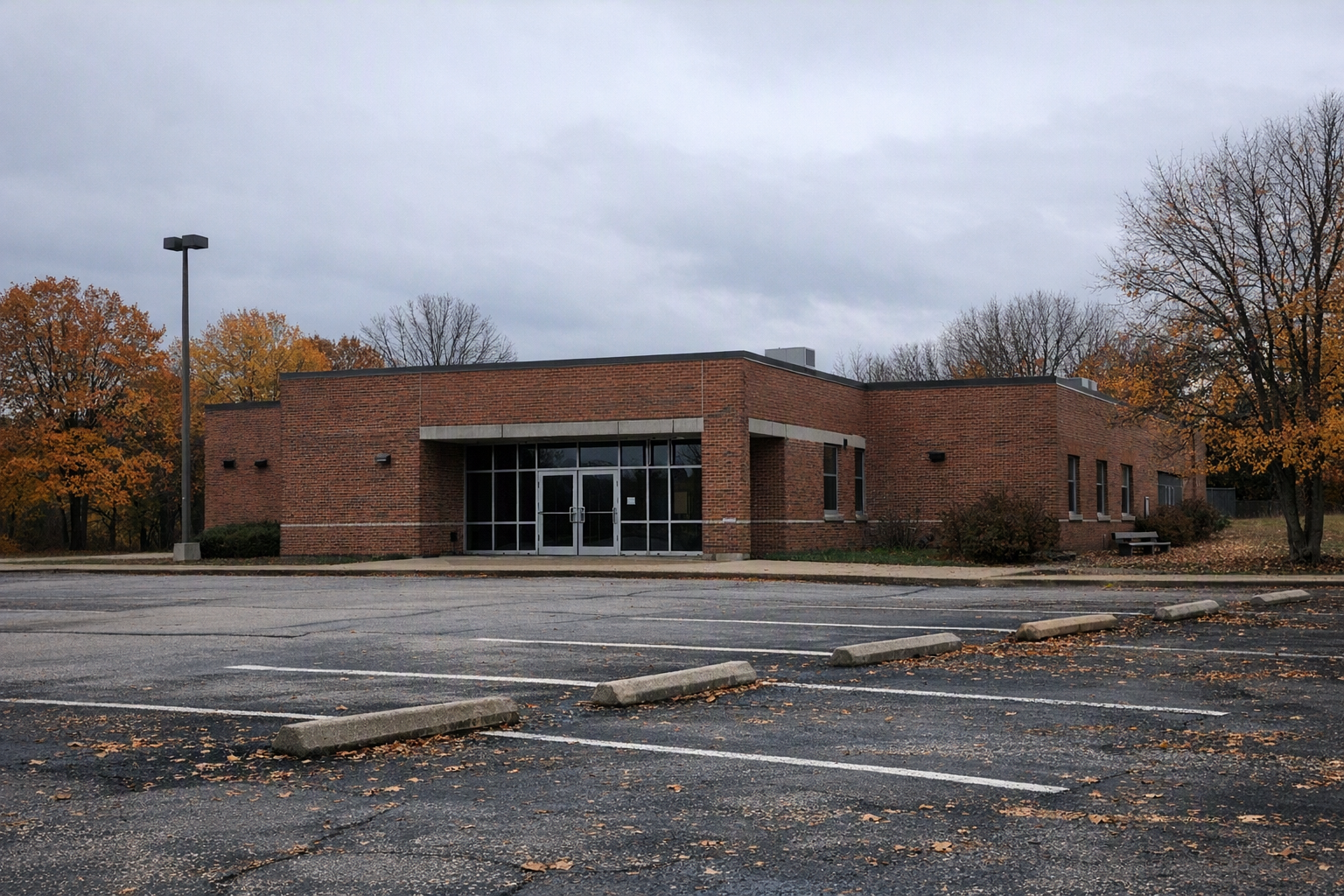
Ohio officials say the case involved Pell Grants, state subsidies, and outsourced college partnerships, sharpening questions about oversight after the community college’s closure.