Penn State sued by DOJ over in-state tuition for undocumented students
The federal complaint challenges Penn State’s residency-based tuition eligibility and warns colleges that applicant webpages and bursar policies can become evidence in court.
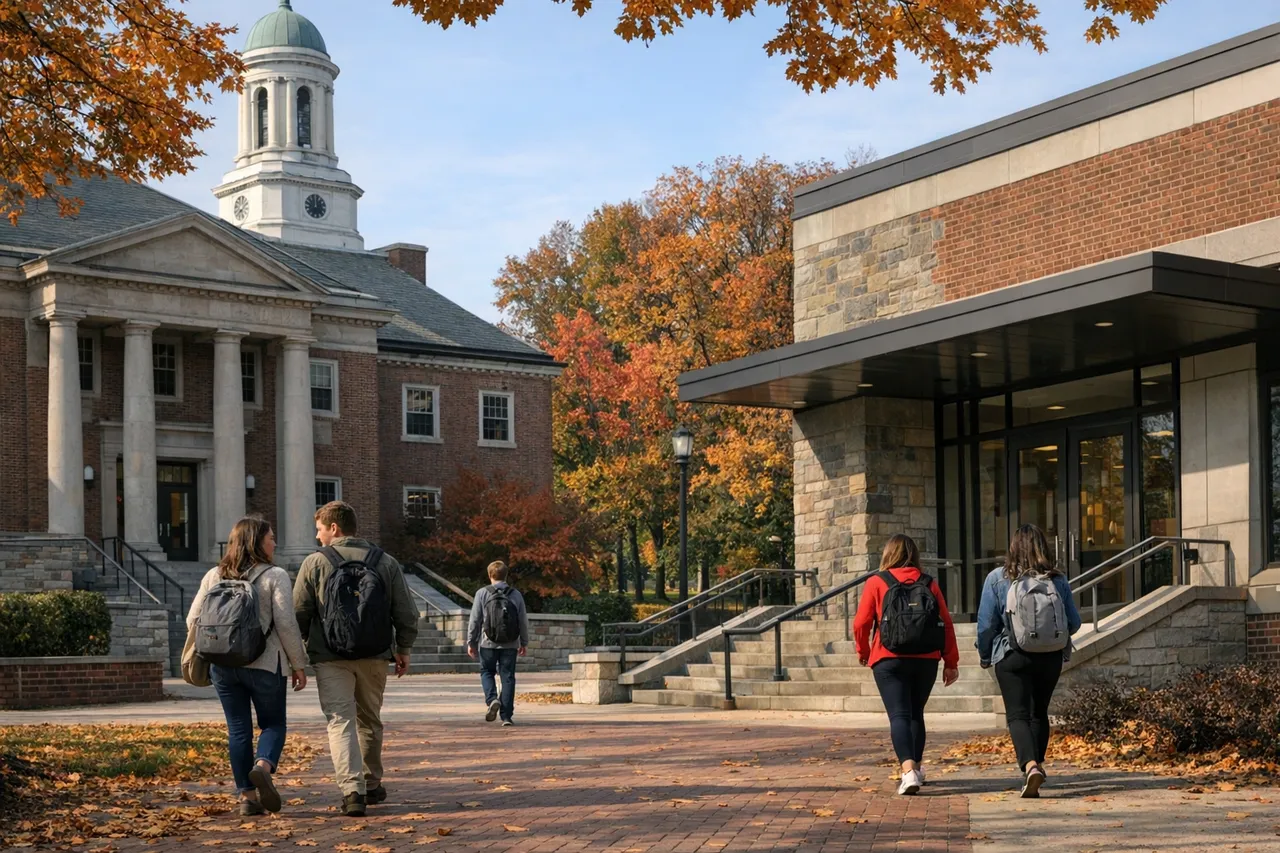
The U.S. Department of Justice sued Penn State on Thursday, Nov. 5, accusing the university of violating federal law by letting some undocumented students who qualify as Pennsylvania residents pay in-state tuition while charging higher rates to U.S. citizens from other states. The complaint, filed in the U.S. District Court for the Middle District of Pennsylvania against both the university and its Board of Trustees, asks the court to block Penn State from enforcing the current policy and from adopting similar ones. For college leaders, the immediate lesson is practical as much as political: the federal government is treating admissions webpages and residency rules as evidence of institutional policy, not just student guidance. (justice.gov)
A Penn State spokesperson told WGAL that the university was aware of the complaint and reviewing it. As of Friday, the admissions page cited in the complaint and Penn State’s public residency policy were still available online. (wgal.com)
What policy is DOJ challenging?
The government’s case centers on two Penn State documents. One is the university’s admissions page for undocumented applicants, which says undocumented students, with or without Deferred Action for Childhood Arrivals, can qualify for in-state tuition if they meet Penn State’s residency requirements. The other is Penn State’s general residency policy, FN36, which says a student is classified as a Pennsylvania resident for tuition purposes if the student has a Pennsylvania domicile and is not in the state primarily for educational purposes. DOJ argues that this arrangement conflicts with 8 U.S.C. § 1623, the federal law barring residence-based postsecondary education benefits for people not lawfully present unless the same benefit is available to U.S. citizens regardless of residence. That is the government’s allegation, not a court finding. (psu.edu)
The case also shows how the federal campaign has widened. DOJ said the Penn State filing is its 27th lawsuit challenging in-state tuition for undocumented students. Earlier suits focused on state laws, including filings in Arizona, New Mexico, Oregon, Washington, Hawaii, Arkansas, Utah and the District of Columbia. But the department also sued the University of Delaware on Oct. 1, signaling that public universities with their own published eligibility guidance may face the same scrutiny even when the dispute is framed around an institutional policy rather than a statute. (justice.gov)
Why the case matters to enrollment and bursar offices
At Penn State, the money at stake is substantial. The university’s 2026 University Park schedule lists annual lower-division tuition of $20,878 for Pennsylvania residents, while Penn State’s own cost table estimates 2026-27 University Park tuition and fees at $21,517 for Pennsylvania students and $45,214 for nonresidents. That gap helps explain why residency classification is not just a back-office question: a website sentence about who may qualify for resident rates can change the price students expect to pay by tens of thousands of dollars over a degree. (tuition.psu.edu)
For other colleges, the audit question is now straightforward. Start with every public page that addresses undocumented applicants, tuition classification, residency reclassification, or campus-specific aid. Then compare that language with the formal residency policy and the actual documentation workflow run through the bursar or registrar. In Penn State’s case, the complaint leans on both the admissions page and the bursar policy, while the university’s residency office separately tells students they must submit documentation for a residency review. That means recruitment copy, FAQ pages and operational policy can all become part of the same legal record. (justice.gov)
What remains unsettled
The largest unanswered question is how courts will handle a case where a university’s public rule is written around domicile and educational purpose, rather than a state law expressly granting resident tuition to undocumented students. Supporters of these tuition policies have argued in similar disputes that the benefit is lawful when the same terms are available to U.S. citizens in the same circumstances; Penn State has not yet publicly laid out its defense beyond saying it is reviewing the complaint. Whether the university changes its web guidance, narrows its residency language, or fights the case on federal preemption grounds will matter well beyond State College. Other public institutions now have fresh reason to assume that an undocumented-student resource page can draw the same federal attention as a statute or board policy. (policy.psu.edu)
More from Higher Education
Cornell investigation: NY attorney general appoints Jacqueline Kelly outside counsel
Jacqueline Kelly will lead New York’s criminal probe while Cornell continues Sally Yates’s board-ordered review, fraternity restrictions, survivor-support changes, and longer-term reforms. The case shows how criminal, institutional, and operational responses can run in parallel on a campus.

Case Western Reserve opens Gemini Enterprise to all students
The rollout gives students a university-approved AI workspace with single-sign-on access, data-use protections, training, and workflow tools, while leaving instructor rules on coursework firmly in place.

Question-chain prompts improved learning over free-form AI use in college study
In a quasi-experiment with 83 undergraduates in one course, students using required, sequenced AI questions showed stronger self-regulated learning, greater metacognitive awareness, and higher achievement than peers using a chatbot without that structure.