Cornell investigation: NY attorney general appoints Jacqueline Kelly outside counsel
Jacqueline Kelly will lead New York’s criminal probe while Cornell continues Sally Yates’s board-ordered review, fraternity restrictions, survivor-support changes, and longer-term reforms. The case shows how criminal, institutional, and operational responses can run in parallel on a campus.
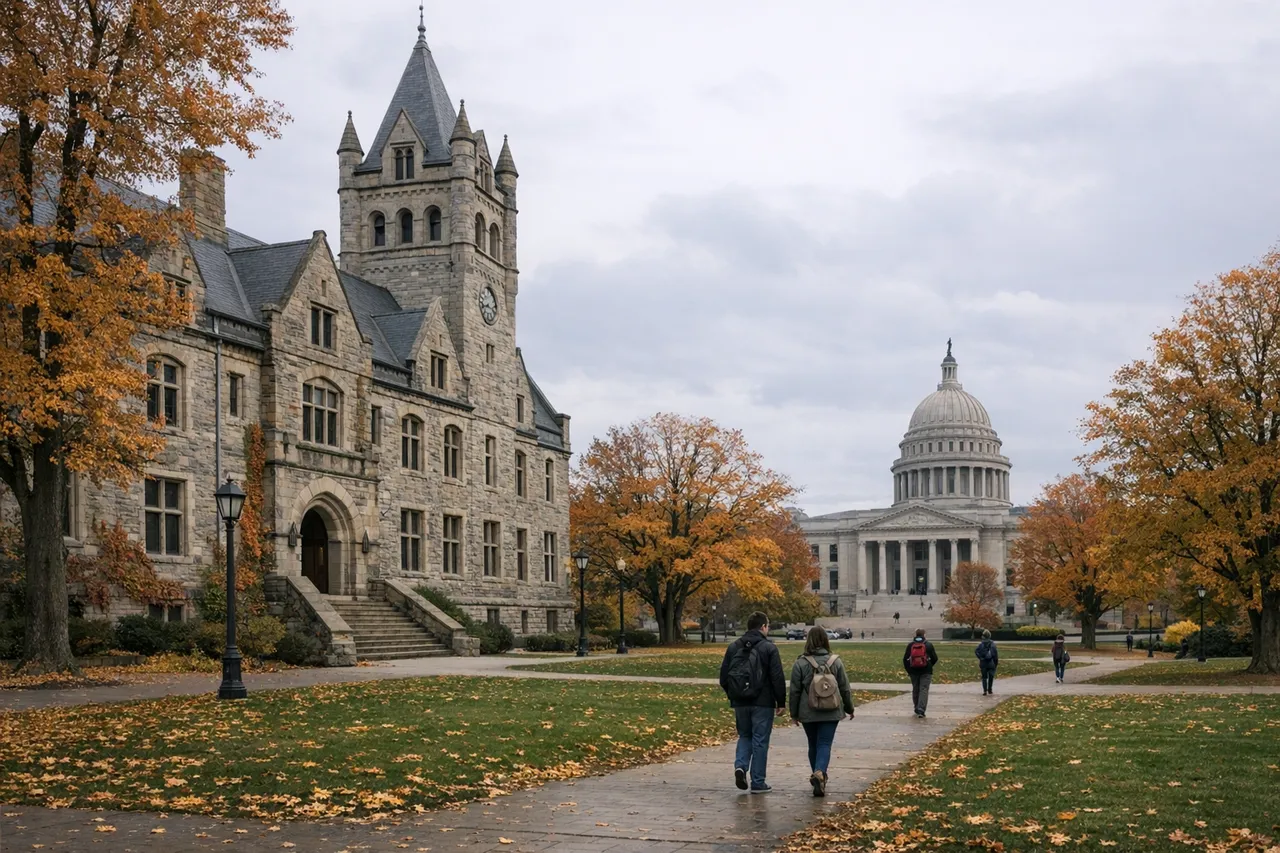
New York Attorney General Letitia James said on November 4, 2026 that former federal prosecutor Jacqueline Kelly will serve as outside counsel leading the state’s criminal investigation into an alleged sexual assault at Cornell University in October 2024. Kelly, now a partner at Boies Schiller Flexner, will lead attorneys and staff from both the attorney general’s office and the firm, giving the state inquiry a named outside leader even as Cornell is already undergoing a separate board-directed review and implementing campus-safety changes of its own. (ag.ny.gov)
For higher-ed leaders, the practical answer is that Cornell is now running several parallel lanes at once: a criminal investigation under the attorney general’s special-prosecutor authority; a board-commissioned review of Cornell’s prevention, reporting, disciplinary, and law-enforcement coordination systems; immediate operational changes on campus; and a longer-term reform agenda from Cornell’s sexual-assault task force. The allegations remain under criminal investigation, and Cornell has said federal privacy law limits what it can publicly disclose about individual disciplinary outcomes. (ag.ny.gov)
Which process handles what?
Kelly’s appointment clarifies who is steering the state criminal lane. Under Executive Order 64, Gov. Kathy Hochul appointed the Office of the Attorney General as special prosecutor on October 1, 2026 to investigate and, if warranted, seek grand-jury action and prosecute offenses arising from the allegations described in Jane Doe v. Cornell University. The attorney general’s November 4 announcement said Kelly’s team will gather and analyze evidence, review prior investigative records, interview witnesses, and report to OAG.
Cornell’s board review is a different mechanism with a different audience. In its October 6 announcement, a special committee of Cornell’s Board of Trustees said former U.S. Deputy Attorney General Sally Yates would lead an independent review of how the university prevents and responds to sexual harassment, sexual assault, and related misconduct. That review covers reporting and investigations, student support, hearings and appeals, campus police, coordination with other law-enforcement agencies and prosecutors, campus-safety reporting, fraternity and sorority oversight, and the board’s own oversight; Cornell said Yates will assess university practice against Title IX, the Clery Act, the Campus SaVE Act, New York law, and higher-ed best practices. (statements.cornell.edu)
That division matters. A criminal investigation can answer whether charges are warranted; a board-ordered systems review can answer whether a campus built trustworthy reporting, response, and oversight structures. One cannot substitute for the other. The public statements from the attorney general and Cornell describe those scopes in detail, but neither the November 4 AG announcement nor the October 6 Cornell statement gave a public completion date, leaving students and campus leaders without a clear timetable for when either set of findings may land. (ag.ny.gov)
What Cornell has already changed
Cornell is not waiting for either outside process to finish before changing operations. On October 13, President Michael Kotlikoff announced that all parties and social events in Interfraternity Council houses would be suspended for the rest of the 2026-27 academic year, with emergency suspension for violations. The same statement said Cornell would add staff to the Office of Civil Rights, including a dedicated case manager to help people reporting sexual misconduct navigate issues such as financial aid, academic accommodations, housing, and bursar matters. (statements.cornell.edu)
Then on October 29, Cornell said it had signed an agreement with the New York State Police so sexual-assault survivors who choose to pursue criminal charges can decide whether State Police or Cornell Police will serve as the designated investigatory agency. Cornell said that option will remain in place during the independent review, that survivors retain full autonomy over whether and when to engage law enforcement, and that cases handled by State Police will be independent from Cornell. (statements.cornell.edu)
Those moves suggest a governance lesson other campuses should pay attention to: external reviews are often necessary for credibility, but they do not relieve institutions of the need to make immediate decisions about student life, reporting navigation, and investigative trust. Cornell’s own task-force materials show why. The university’s March 17, 2026 task-force report emphasized clearer reporting options, stronger communication, public-health messaging, and expanded education; Cornell’s public materials say that implementation work is still underway. In other words, Cornell is now trying to run crisis response, criminal review, governance review, and culture-change work at the same time. (statements.cornell.edu)
The next question is not just what Kelly or Yates finds. It is whether Cornell can keep those lanes distinct enough that students understand who handles evidence, who handles institutional accountability, and what support is available right now. That is the harder test for campus safety governance, and it is the one other colleges will be watching just as closely as the investigation itself. (ag.ny.gov)
More from Higher Education

Case Western Reserve opens Gemini Enterprise to all students
The rollout gives students a university-approved AI workspace with single-sign-on access, data-use protections, training, and workflow tools, while leaving instructor rules on coursework firmly in place.

Question-chain prompts improved learning over free-form AI use in college study
In a quasi-experiment with 83 undergraduates in one course, students using required, sequenced AI questions showed stronger self-regulated learning, greater metacognitive awareness, and higher achievement than peers using a chatbot without that structure.
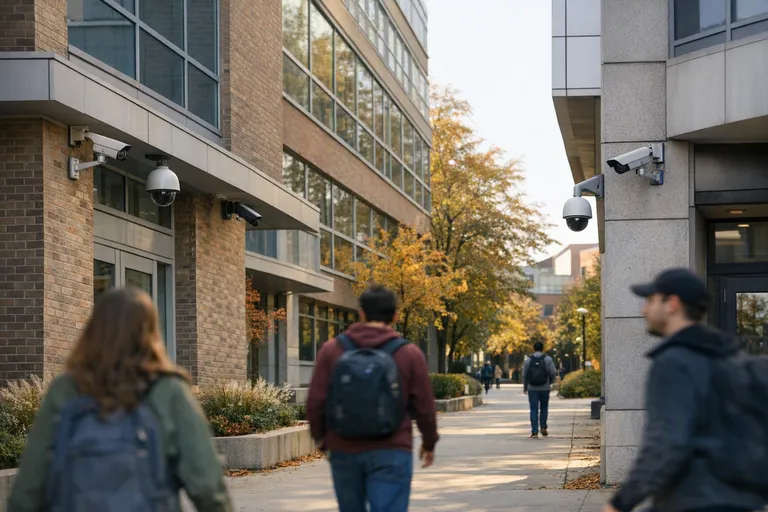
MIT stops exploring AI for campus security cameras
MIT says its roughly 4,600-camera network will continue without AI, facial recognition, or audio recording, giving higher-ed leaders a concrete example of written surveillance guardrails.