OpenAI offers free ChatGPT research workspaces to eligible faculty, postdocs
The 12-month program gives approved academic teams up to five seats with business data protections, but access is limited by institution, country, field, and recent preprint history.

OpenAI on July 29 opened applications for ChatGPT for Academic Researchers, a new program that offers eligible faculty members and postdoctoral researchers at participating institutions 12 months of free access to a dedicated ChatGPT workspace for a small research team. The company says it is starting with 10,000 researchers this summer and plans to expand to 100,000 researchers through 2027. (openai.com)
For provosts, research offices, and libraries, the announcement matters less as a headline-grabbing giveaway than as a new procurement and governance option. OpenAI is not offering a blanket campus license. It is offering a narrow, verified route for certain researchers to move from personal AI use into a managed workspace with collaboration seats, product controls, and business-style data protections. Who gets that route, and under what institutional rules, will now shape how campuses advise faculty. (help.openai.com)
The offer is more limited than many campuswide AI rollouts. According to OpenAI’s help documentation, applicants must be research faculty or postdoctoral researchers at an eligible academic institution, in a supported country, and must have a paper posted within the last three years on arXiv, bioRxiv, or ChemRxiv in one of several fields: biological sciences, chemistry and materials, computer science, earth and planetary sciences, engineering, mathematics, or physics. Applicants also have to verify their affiliation through SheerID and submit a short explanation of how they plan to use ChatGPT for research. OpenAI also says not all institutions qualify and directs applicants to a current eligibility list before applying. (help.openai.com)
If approved, a researcher can create a workspace with up to five complimentary seats: one owner and up to four verified collaborators. OpenAI says those collaborators must come from the same institution. The workspace includes business data protections, workspace controls, and ChatGPT Pro-level usage limits; OpenAI’s launch materials say researcher data in these workspaces is not used to train its models by default. At launch, participants are being offered access to OpenAI’s frontier models, including GPT-5.6 Sol Pro, plus training and hands-on support. (openai.com)
One practical detail campuses may want to flag before promoting the program: OpenAI says the research plan creates a separate workspace for a verified team, rather than upgrading or replacing a researcher’s personal ChatGPT account. Approved applicants also complete a $0 checkout with a valid card before creating the workspace. That means this is not simply a coupon for existing personal use; it is a shift into a different account environment with different administrative and collaboration rules. (help.openai.com)
A product aimed at a real campus problem
The real problem OpenAI is addressing is familiar in higher ed: many faculty researchers are already experimenting with consumer AI tools, but universities often prefer work that involves collaborators, unpublished drafts, or institutional data to happen inside a workspace with clearer controls. OpenAI has been pitching ChatGPT Edu as that broader institution-managed option, with features such as admin controls, SSO, SCIM, group permissions, GPT management, and a promise that conversations and data are not used to train models. The new researcher program is much smaller, but it gives qualifying labs some of the same managed-workspace logic without requiring a full-campus purchase first. (help.openai.com)
That makes the launch strategically important even if a campus has no interest in the company’s rhetoric about scientific acceleration. OpenAI says roughly 1.3 million people a week already use ChatGPT for advanced science and mathematics, generating about 8.4 million messages. Those are company-reported usage figures, not independent evidence that the tool improves research quality or speed. But they do explain why universities are under pressure to decide whether faculty work should stay in personal accounts, move into paid small-team workspaces, or be folded into an institutional AI environment with clearer oversight. (openai.com)
The governance split campuses now have to manage
The program could sharpen, not solve, the AI-access divide on campus. At institutions that already run ChatGPT Edu, OpenAI says approved researchers will be handled through the institution’s existing workspace rather than through a separate consumer-style setup. That strengthens central oversight. But at campuses without Edu, qualifying faculty labs may now get a protected collaborative workspace while students, staff, and non-qualifying departments remain on personal plans, consumer free accounts, or no sanctioned tool at all. In practice, that creates a governance split research offices will have to explain. (openai.com)
The pricing context helps show why some institutions may welcome the program. OpenAI’s public pricing page lists ChatGPT Business at $20 per user per month when billed annually or $25 monthly, while its Pro tiers cost $100 or $200 per month for individual users. Business includes a secure workspace and no training on business data by default; Pro offers higher individual usage but is still an individual subscription, and OpenAI’s Pro documentation says users may not share their account credentials. For a small lab that needs collaboration seats and stronger data handling than a consumer account, a free five-seat research workspace is a meaningful offer. It is also clearly not the same thing as a campuswide deployment. (openai.com)
There are also important limits. OpenAI says the program covers ChatGPT access, not API credits, so it is not a substitute for labs building custom research pipelines on the API. And the help documentation explicitly says researchers remain responsible for complying with any university terms and restrictions tied to their affiliation. That means campuses still have to do the harder policy work themselves: deciding what kinds of data can be used, when IRB or grant rules apply, how export-control or contracting constraints are handled, and whether centrally supported tools should be preferred over researcher-by-researcher adoption. That last point is an inference from OpenAI’s product design and eligibility rules, but it is the operational question most institutions will have to answer next. (help.openai.com)
What remains uncertain is how broadly the program will actually reach. OpenAI has named the Institute for Advanced Study and École normale supérieure as places where access is already available, and it says it will scale from 10,000 researchers this summer to 100,000 through 2027. But the public materials reviewed for this story do not spell out how those seats will be distributed across institutions, how selective approvals will be, or what path—if any—teams will have after the free year ends. For now, the product looks most useful not as a universal higher-ed AI solution, but as a narrow new bridge between personal experimentation and institution-managed research use. Whether campuses treat it as a stopgap, a pilot, or the start of a broader licensing strategy is the next development worth watching. (openai.com)
More from Higher Education

DOJ sues Hawaii, D.C., Arkansas and Utah over in-state tuition rules
The new lawsuits target tuition and, in some cases, student aid for undocumented students, creating immediate planning questions for public college legal, registrar and financial-aid teams even before any court ruling.

Berkeley Law Title VI finding raises admissions compliance pressure
Federal agencies say the law school discriminated against Asian and white applicants in its 2024 and 2025 classes, a finding Berkeley disputes. For admissions teams, the case shows how essay prompts, race-data handling, and proxy variables are being scrutinized during the current cycle.
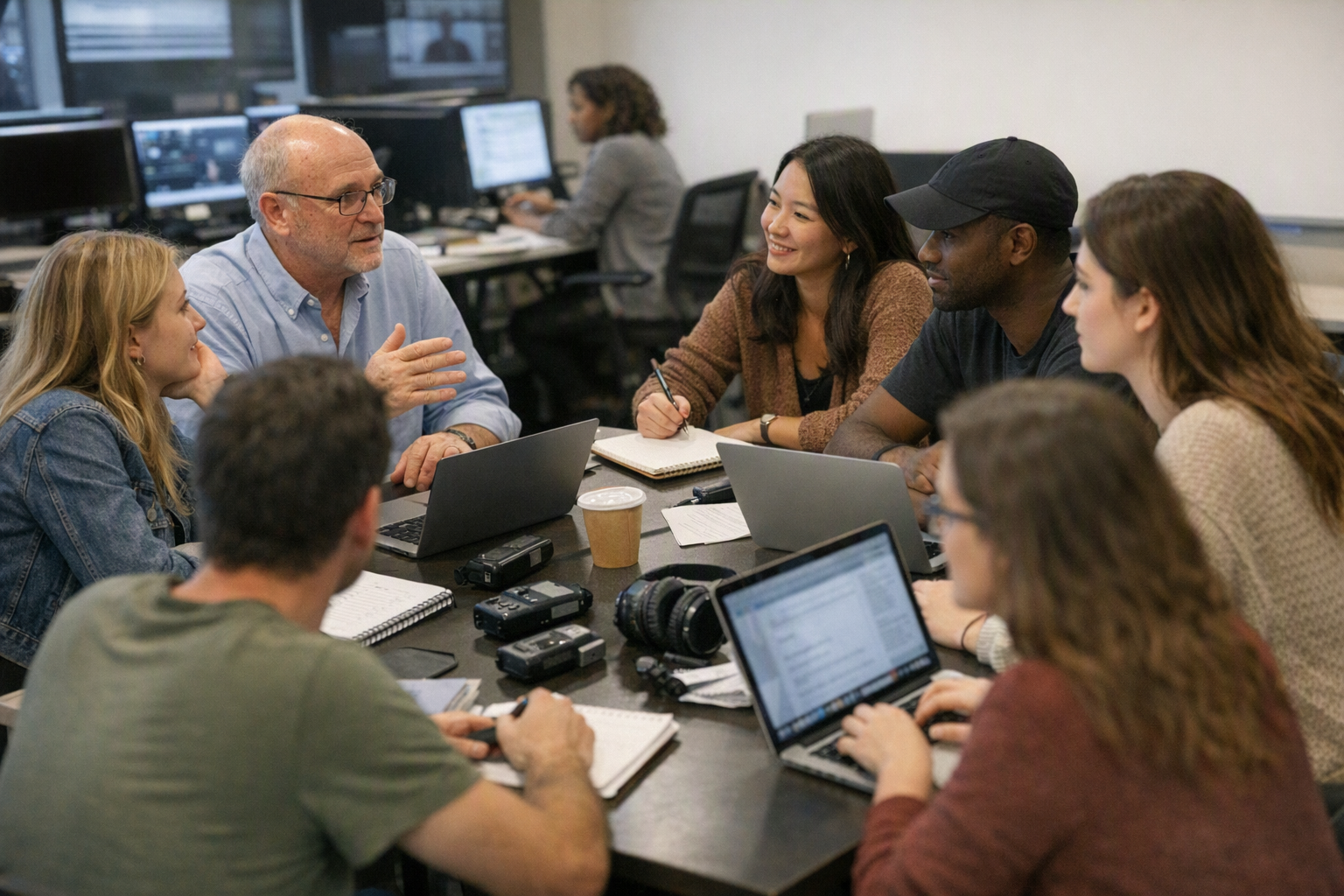
OpenAI brings 400+ ChatGPT Edu seats to two journalism schools
CUNY Newmark and Northwestern Medill will offer institution-managed access for 2026-27, putting privacy settings, sourcing rules, and assignment design at the center of AI rollout decisions.