Three indicted in alleged $20 million Eastern Gateway aid scheme
Ohio officials say the case involved Pell Grants, state subsidies, and outsourced college partnerships, sharpening questions about oversight after the community college’s closure.
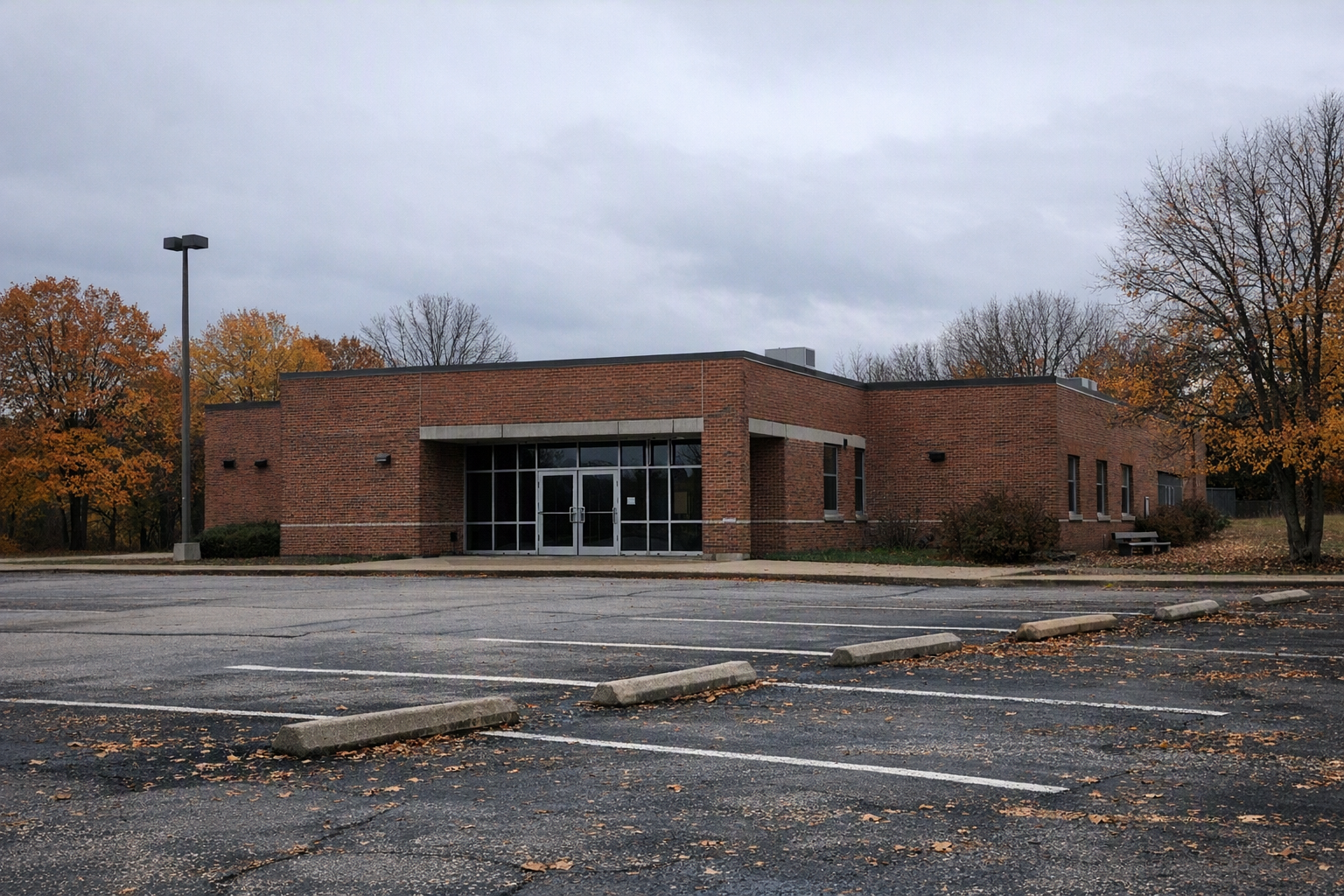
A Jefferson County grand jury has indicted former Eastern Gateway Community College president Michael Geoghegan and two former Student Resource Center leaders, Michael Perik and Nicole Rowe Colclasure, in what Ohio officials describe as a racketeering scheme that diverted about $20 million in Pell Grants, other federal student aid, and state subsidies from the now-closed community college. For Ohio’s colleges, the news is bigger than one criminal case: it turns a yearslong financial and regulatory breakdown at Eastern Gateway into a test of whether public systems can catch aid abuse before a regional campus collapses. (ohioauditor.gov)
The state auditor’s office said Perik and Colclasure each face 12 felony counts and Geoghegan faces nine, including engaging in a pattern of corrupt activity, aggravated theft, theft in office, telecommunications fraud, bribery and related charges. The auditor’s investigation page identifies the indictment as dated October 7, 2026, while the charges were announced publicly on October 8. All of the conduct remains alleged, and the case has not been proved in court. Attorneys from the Auditor of State’s Special Investigations Unit were appointed as special prosecutors in Jefferson County. (ohioauditor.gov)
What is established already is that Eastern Gateway had been in deep trouble well before the indictments. State auditors last year questioned more than $17 million in spending in a single-year audit, saying the college could not verify key pieces of federal aid compliance and suffered from what the auditor called pervasive deficiencies in recordkeeping and controls. Ohio and the college’s own closure materials show a separate but overlapping institutional collapse: accreditation ended in late 2024, and the college ceased operations by law on September 30, 2025. What remains uncertain, and will likely be contested, is exactly how much of Eastern Gateway’s downfall flowed from the alleged diversion scheme versus the college’s broader failures in governance, accounting, enrollment strategy, and federal compliance. (ohioauditor.gov)
From regional access point to criminal case
Eastern Gateway mattered because it was not just another distressed campus. Founded in Steubenville and later operating in Youngstown as well, the college served a part of eastern Ohio that state and auditor records describe as economically fragile and short on nearby higher-ed options. Today, the Ohio Department of Higher Education is the records custodian for former students, and its public guidance is now mostly about transcripts, teach-out pathways, and degree verification rather than ongoing campus life. (ohioauditor.gov)
The warning signs predated this week’s indictments by years. The Higher Learning Commission placed Eastern Gateway on probation in November 2021. The Ohio auditor’s timeline says the U.S. Department of Education put the college on Heightened Cash Monitoring 2 status on August 8, 2022, a serious restriction that requires a college to disburse aid before seeking federal reimbursement. In February 2024, Eastern Gateway paused registration and enrollment beyond the spring term, citing ongoing financial difficulties partly linked to delayed federal funding; the Ohio chancellor placed the institution under Fiscal Watch the next month. (egcc.edu)
The unraveling accelerated from there. Eastern Gateway voluntarily resigned accreditation effective November 1, 2024. Ohio records show the state later advanced more than $6 million to help the institution finish the academic year, then installed a conservator and governance authority to oversee wind-down, records, teach-outs, and closure. By the state’s account, the college was closed by operation of law on September 30, 2025. (egcc.edu)
Those events matter because they show the indictments are landing on top of a documented compliance failure, not in a vacuum. In the 2025 audit, state auditors reported 44 findings and said they were unable to obtain evidence supporting Eastern Gateway’s compliance with federal requirements for the student-aid programs they reviewed. The audit also found the college did not fully track enrollment and attendance, failed to reconcile accounts monthly, and let spending proceed without core state-law appropriations and records practices in place. Auditors wrote that, collectively, those failures contributed to the cash-flow crisis and eventual closure. (ohioauditor.gov)
The aid model at the center of the allegations
According to the indictment summary posted by the auditor, Eastern Gateway entered a June 30, 2017 collaboration agreement with Student Resource Center to run a “Free College Benefit Program.” The indictment alleges that the arrangement was designed so that the education of all students in the program would be funded primarily through Pell Grants received on behalf of the neediest students, with public dollars then diverted through fraudulent reimbursements and illegal incentive payments. Ohio officials say the alleged enterprise operated through multiple related entities, including Student Resource Center, Student Services Center, Higher Education Partners, and U.S. Skills. (ohioauditor.gov)
That theory, if prosecutors can prove it, would make Eastern Gateway an especially stark cautionary tale for community colleges experimenting with third-party growth models. Public colleges can outsource technology, recruitment support, call centers, or online-program operations. They cannot outsource responsibility for Title IV compliance, attendance verification, state subsidy reporting, or conflicts of interest. The Eastern Gateway record suggests that once a college’s enrollment engine, vendor relationships, and aid disbursement systems become tightly intertwined, the same model that fuels rapid expansion can also make oversight harder for trustees, accreditors, and state agencies to read in real time. That is analysis, but it is grounded in the audit’s findings on internal controls and in Ohio’s broader campus-accountability framework, which is supposed to flag financial distress before a collapse. (ohioauditor.gov)
There is a second lesson for finance chiefs and boards. When a college’s business model depends on fronting federal aid, rapidly reconciling student eligibility, and waiving or offsetting tuition through complex outside arrangements, a federal cash-management restriction can become existential very quickly. Eastern Gateway’s own public timeline says HCM2 hit in 2022; by 2024 the state was helping orchestrate transfer options, and by 2025 Ohio was still financing the final wind-down to avoid even deeper harm to students and state credit programs. In other words, weak controls at one institution do not stay contained there; they spill into teach-out costs, records recovery, and diminished local access. (ohioauditor.gov)
That broader damage is why this case will resonate beyond Ohio. Eastern Gateway’s students were not abstract victims in a fraud filing; they were working adults, union families, and place-bound students using a community college as a low-cost route into credentials and retraining. When such a college fails, the immediate loss is not only money. It is trust in financial aid, confidence in transfer promises, and a local rung on the postsecondary ladder that can be hard to rebuild once it disappears. The state’s transcript and teach-out infrastructure softens that blow, but it does not replace a campus. (ohioauditor.gov)
The next formal step is court. Local Ohio outlets reported that arraignments were scheduled for 9 a.m. Wednesday before Jefferson County Common Pleas Judge Michelle Miller. For higher-ed leaders, though, the more important question is larger than the criminal docket: whether states, boards, and accreditors will use Eastern Gateway as a case study in how to scrutinize outsourced partnerships and aid-funded growth before the warning signs become an epitaph. (morningjournalnews.com)
More from Higher Education

What IronCircle’s collapse reveals about university boot camp oversight
Months after the cybersecurity boot camp provider shut down, SDSU and UNLV support pages show how difficult it is to transfer students, replace coursework, and sort out refunds when a university-branded program depends on an outside vendor’s platform.

DHS proposes $70,000 OPT fee for colleges, $30,000 for extensions
Under the proposal, SEVP-certified colleges would have to pay before a designated school official can enter an OPT recommendation in SEVIS. That would shift a student work-authorization step into institutional budgets and force campuses to model recruitment, advising and pricing impacts while public comments are still open.

University of Arizona proposes tuition and fee freeze for fall 2027
The university says undergraduate and graduate tuition and mandatory fees would stay flat next fall if regents approve the plan, but housing and other attendance costs will still shape what families actually pay.