First Workforce Pell approval lets Iowa EMT students use federal aid
The Education Department cleared Iowa Central Community College’s 14-week EMT course, giving colleges the first practical model for how a short workforce program can qualify for Pell.
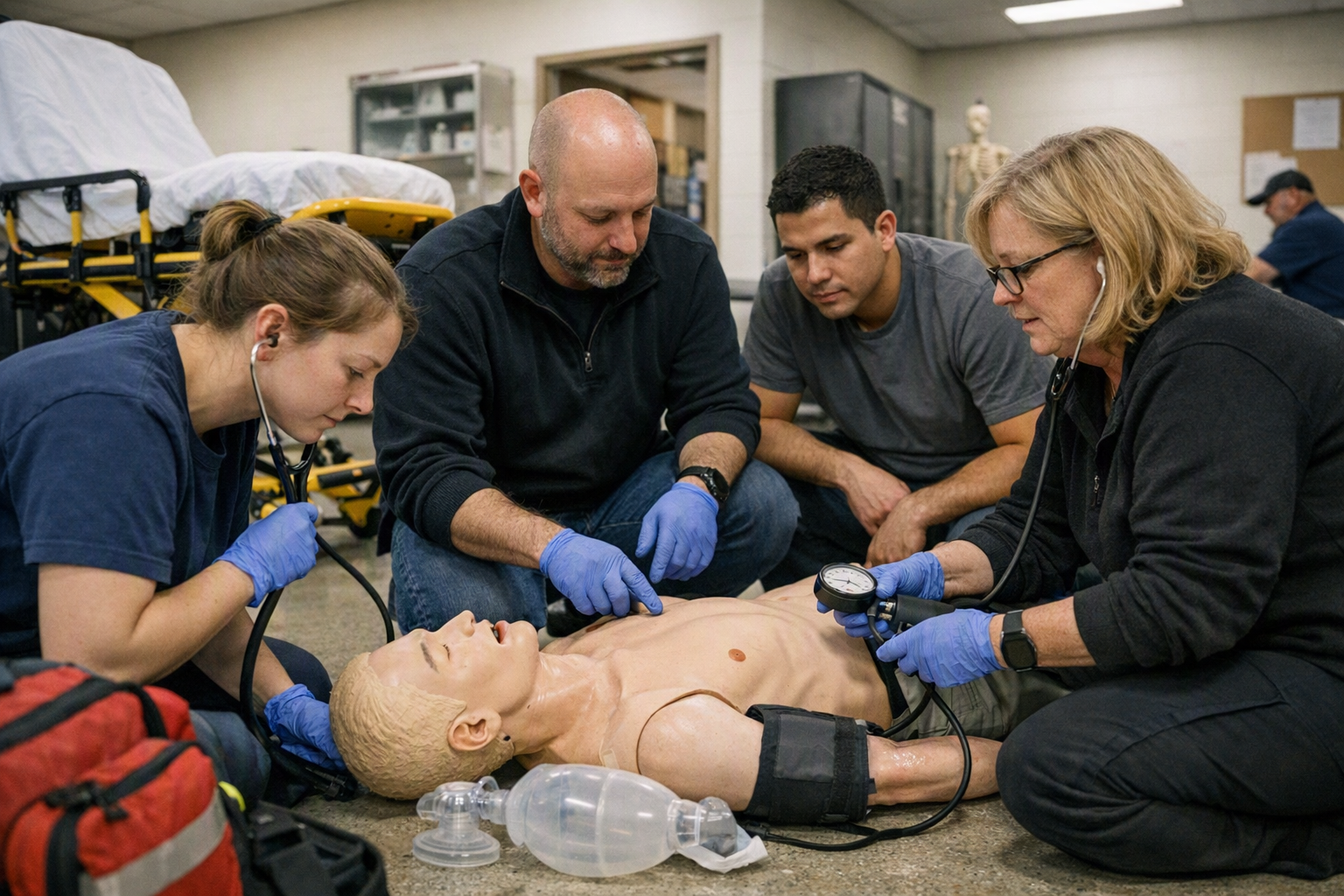
The U.S. Department of Education on Tuesday approved the nation’s first Workforce Pell program, clearing the way for eligible students at Iowa Central Community College to use federal Pell Grant aid immediately for a 14-week emergency medical technician course. The August 4 decision turns a long-debated policy idea into a live program: short-term workforce training is now Pell-eligible in at least one real college, in one real state, with one real student pipeline. (ed.gov)
That matters because Workforce Pell has moved unusually fast from statute to implementation. The department announced its final rule on May 18, 2026; the rule was published in the Federal Register on May 19; schools were allowed to begin applying for approval on July 1; and the eligible-workforce-program provisions take effect July 20, with early implementation available beginning July 1. Iowa Central’s EMT approval arrived just over a month after that application window opened. (ed.gov)
For community colleges and workforce teams, the Iowa decision is more than a headline. It is the first concrete example of what the federal government and a governor’s office will actually sign off on: a short public-safety program tied to a recognized credential, with documented completion and placement expectations, and enough structure to fit inside federal aid rules rather than outside them. That practical signal may be more useful to colleges than the policy rollout itself. (ed.gov)
The first approval is narrow by design
Federal and state documents make clear that Workforce Pell is not a general invitation to put aid on any short course. Iowa says eligible programs must run 150 to 599 clock hours over at least 8 but less than 15 weeks, lead to a recognized credential in a high-skill, high-wage, or in-demand field, post at least 70% completion and 70% job-placement rates, beat a value-added earnings test, and have been operating for at least a year. They also must win both state and federal approval, with the governor involved after consultation with the state workforce board. (ed.gov)
Iowa Central’s EMT program fits that picture cleanly. College materials describe a combined lecture, lab, and clinical course that requires at least 32 hours of clinical or field time, background and abuse-registry checks before clinicals, CPR certification, and a high school diploma or equivalent. Iowa Central also says successful completion can yield 8 credits for EMS 200 and feed into its paramedic and fire science pathway, making the program look less like a one-off training class and more like a stackable entry point into a longer health and public-safety ladder. (iowacentral.edu)
That is not accidental. Federal guidance emphasizes that Workforce Pell is supposed to fund short programs with measurable labor-market value, not merely short programs with strong marketing. EMT is a licensed occupation with visible employer demand and a relatively clear training-to-job connection. Nationally, the Bureau of Labor Statistics says emergency medical technicians had a median annual wage of $41,340 in May 2024, while overall employment for EMTs and paramedics is projected to grow 5% from 2024 to 2034, faster than the average for all occupations. In other words, Iowa’s first approved program sits in one of the safer categories for a performance-based aid experiment. (bls.gov)
Students get a new path, but colleges inherit a compliance project
For students, the immediate win is obvious: a short program that previously sat outside traditional Pell rules can now draw on federal grant aid. Iowa says Workforce Pell awards are prorated by program length and can come from the standard Pell maximum, currently listed at $7,395. The state also notes a notable eligibility expansion: unlike traditional Pell, Workforce Pell can be used by students who already hold a bachelor’s degree, though not a graduate degree. Federal Student Aid’s handbook confirms that bachelor’s holders can receive Pell if they are enrolled in an eligible workforce program. (educate.iowa.gov)
That could make the program especially relevant for adult learners, laid-off workers, and career changers who have been locked out of Pell even when they needed short, job-focused retraining. But “eligible immediately” does not mean friction-free. Students still have to file the FAFSA and meet Pell eligibility rules, and their actual award will depend on the usual federal calculations and the short program’s structure. The policy expands access; it does not erase the administrative complexity of aid delivery. (educate.iowa.gov)
For institutions, meanwhile, the Iowa approval underscores that Workforce Pell is as much an operations story as a student-aid story. Federal Student Aid told colleges they must use the E-App in FSA Partner Connect to submit required eligibility information and supporting documentation, including a state certification form, and said the portal would handle workforce-program approvals separately from the rest of an institution’s participation paperwork. That means financial-aid offices, workforce divisions, institutional research teams, and state agencies all have to move in sync. (fsapartners.ed.gov)
Iowa’s own preparation helps explain why it got there first. The state launched what it called the first-in-the-nation Workforce Pell application on May 1, months before the August approval, and its public guidance set a May 15 deadline for institutions seeking the earliest possible eligibility. The state also acknowledged that it needed expanded wage-data access and unit-level reporting capacity to implement and comply with Workforce Pell. That is a useful clue for other states: the bottleneck may not be finding a promising short program. It may be building the data, certification, and governance machinery needed to prove that program’s value. (educate.iowa.gov)
What this first case suggests about the next wave
The Iowa approval is a breakthrough, but it also hints that the early map of Workforce Pell may be narrower than advocates have promised. The first approved program is short, tightly defined, occupationally specific, and easy to explain to both regulators and employers. That sequence suggests the first wave is likely to favor programs with clean outcomes data, obvious workforce alignment, and straightforward credentials over messier fields where earnings, placement, or credential portability are harder to document. (educate.iowa.gov)
That has practical implications for colleges now deciding whether to apply. The strongest candidates are likely to be programs that already operate at scale, already track completion and placement, and already sit inside a broader academic pathway. Iowa Central’s EMT course checks those boxes. Colleges hoping to win approval for newer, niche, or loosely structured offerings may find that Workforce Pell rewards institutional discipline as much as student need. (catalog.iowacentral.edu)
What remains uncertain is how quickly the Iowa example becomes a national pattern. Federal officials have shown that the approval pathway is real. They have not yet shown how many programs can move through it, how many states will stand up comparable systems, or how many students will actually receive awards in the first year. The next approvals will matter as much as this first one: they will show whether Workforce Pell is mainly a proof point for a handful of tightly managed programs, or the start of a broader reshaping of what federal aid can buy. (ed.gov)
More from Higher Education

Review finds broad failures in Connecticut college system harassment response
An independent review said board leaders and administrators failed to follow required reporting and response procedures in harassment complaints involving former interim chancellor O. John Maduko. The findings land as CSCU is in leadership transition and preparing a national search, putting board governance, Title IX oversight, and executive complaint processes under immediate scrutiny.

DOJ sues Hawaii, D.C., Arkansas and Utah over in-state tuition rules
The new lawsuits target tuition and, in some cases, student aid for undocumented students, creating immediate planning questions for public college legal, registrar and financial-aid teams even before any court ruling.
Berkeley Law Title VI finding raises admissions compliance pressure
Federal agencies say the law school discriminated against Asian and white applicants in its 2024 and 2025 classes, a finding Berkeley disputes. For admissions teams, the case shows how essay prompts, race-data handling, and proxy variables are being scrutinized during the current cycle.