FIRST details K-8 robotics shift as LEGO League winds down
New FIRST-run programs for grades K-2 and 3-8 start in 2027-28, while existing SPIKE Essential and Prime kits stay compatible through 2028-29. What schools still do not have is pricing, final program names, or full hardware details.
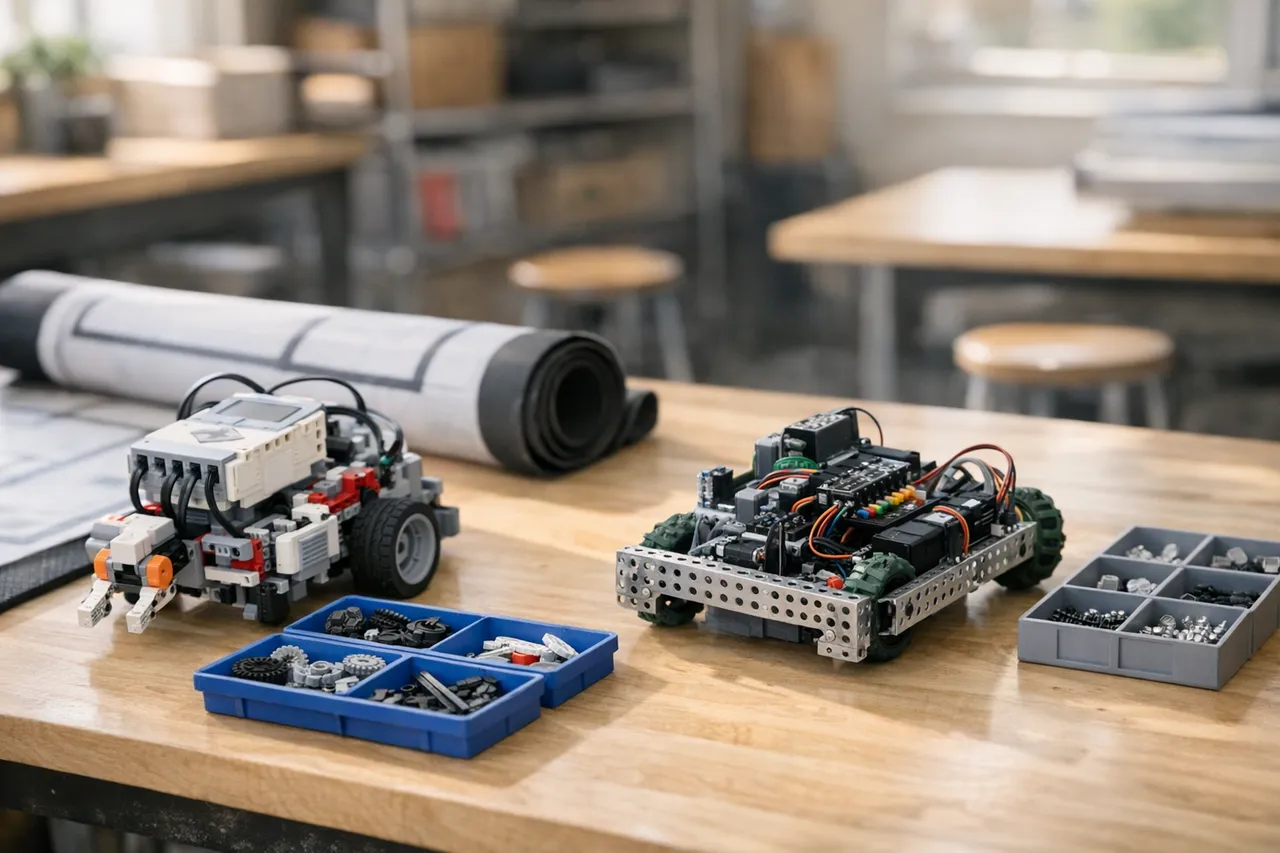
Schools, libraries, and afterschool providers that already own LEGO robotics kits got the clearest post-LEGO answer yet on November 18: FIRST says its next-generation K-8 robotics programs will replace FIRST LEGO League beginning with the 2027-2028 season, split into grades K-2 and grades 3-8, and continue accepting LEGO Education SPIKE Essential and SPIKE Prime through the 2028-2029 season. For educators planning purchases, that means existing SPIKE inventories should remain usable for at least one season after the FIRST LEGO League name goes away, even though the replacement programs themselves are still unnamed and unpriced. (firstinspires.org)
The November guidance also sharpens a transition plan that had looked different earlier this year. In January and August, FIRST materials described a two-track FIRST LEGO League phase-in, with a LEGO Education Computer Science & AI-based “Future Edition” launching in 2026 and Founders Edition continuing into 2027-2028. The updated November help pages now say instead that the 2026-2027 BIOGLOW season is the final FIRST LEGO League season, because LEGO Education chose not to renew the partnership; after that, FIRST says it will run its own K-8 offerings. That change matters because some educators may still be working from older transition documents that suggest the FIRST LEGO League brand itself would last longer. (firstinspires.org)
What can schools keep using?
The practical answer is: more of your current SPIKE investment than the end of the LEGO partnership might suggest. FIRST says the post-2027 K-2 program will allow either SPIKE Essential or new hardware, while the grades 3-8 program will allow either SPIKE Prime or a new platform built on Arduino’s UNO Q with a mechanical system developed through Qualcomm, Arduino, and REV Robotics. In 2027-2028, teams using the new grades 3-8 hardware are still supposed to play the same autonomous game on a single 4-by-8-foot field as SPIKE users, which should make mixed-hardware events more manageable for organizers. FIRST also says the grades 3-8 experience will keep the two features many schools care most about: a robot competition and an innovation project tied to real-world problem solving. (firstinspires.org)
That compatibility runway is especially important because LEGO has already ended sales of the SPIKE line. LEGO Education says SPIKE Prime, SPIKE Essential, and related parts ended sales on June 30, 2026, though the SPIKE app will be supported through June 30, 2031. In other words, schools that already own kits can keep teaching with them for several more years, but districts deciding whether to expand their SPIKE inventory now have to weigh a short-term compatibility benefit against a product line that is already in retirement. (education.lego.com)
What is still missing before budgets are set?
Quite a lot. FIRST says it has not yet released the formal program names, pricing, annual set costs, or full hardware details for the post-LEGO K-8 line. That leaves educators with a timeline, not a procurement guide. For reference, this year’s U.S. and Canada registration fees for FIRST LEGO League BIOGLOW Future Edition run from $250 for an eight-student K-2 team to $285 for an eight-student grades 3-5 or 6-8 team, with higher prices for larger class-pack formats. But FIRST has not said whether the 2027-2028 replacement programs will land above, below, or roughly in line with those prices. (firstinspires.org)
Another open question is how much of this year’s LEGO Education Computer Science & AI workflow survives the transition. FIRST’s current BIOGLOW Future Edition uses those kits in 2026-2027, but the November K-8 FAQ for the post-LEGO era names only SPIKE compatibility and the coming Arduino/REV-based platform. FIRST may clarify later, but for now schools should not assume that buying into Computer Science & AI this year automatically means that same hardware becomes the long-term default after FIRST LEGO League ends. That is an inference from what FIRST has and has not published so far, not a formal prohibition. (help.firstinspires.org)
What this means for educators deciding now
The most useful planning takeaway is that schools do not need to rush into a full hardware replacement just because the LEGO partnership is ending. If you already run SPIKE-based teams, FIRST has effectively granted a two-season bridge: the final FIRST LEGO League season in 2026-2027, then at least one additional post-LEGO season of SPIKE compatibility in 2027-2028, with support continuing through 2028-2029. That buys time for districts to delay large purchases until FIRST publishes real hardware specs, training details, and prices. But it also creates a second-order problem for programs that were hoping November would settle their 2027 budget requests: the timeline is clearer, while the actual cost of switching is still not. (help.firstinspires.org)
There is also a design trade-off embedded in FIRST’s new structure. Moving from Discover/Explore/Challenge branding to simpler K-2 and 3-8 bands could make it easier for schools and youth programs to explain offerings and manage multi-team implementations. At the same time, a single 3-8 pathway asks one program to serve a very wide developmental span. FIRST says it intends to keep the experience familiar in team size, event structure, judging, and the innovation project while adding hardware that is approachable for beginners and scalable for older students. Whether that feels like a smooth classroom-friendly evolution or a harder break from LEGO will depend less on the November partner list than on the still-missing details: the student build system, the software workflow, replacement-part availability, and the total cost per team. (firstinspires.org)
The next thing to watch is not another partnership logo. It is the first release from FIRST that shows the actual kit, the buying model, and the training path for 2027-2028. Until then, the safest move for most K-8 programs is to treat the November 18 announcement as a reason to pause major migration decisions, not to accelerate them. (firstinspires.org)
More from K-12

Nevada halts midyear school cuts with emergency enrollment rule
Nevada will temporarily fund districts, charter schools, and the state’s university school for profoundly gifted students using higher enrollment figures already assumed in the 2025 budget, easing immediate pressure for layoffs and program cuts while leaving a longer-term funding fix unresolved.
Ohio’s 2026 school report cards show gains in reading, math, attendance
New Ohio report cards show statewide five-year highs in English language arts and math, lower chronic absenteeism, and stronger postsecondary readiness. But several of the state’s largest urban districts still posted overall ratings between two and three stars, making the subgroup and component data more useful than the headline star count alone.

Poughkeepsie adopts one K-8 curriculum to replace a patchwork
The district approved HMH across K-8 just before the new school year, pairing the switch with teacher training, parent progress access, and repeated implementation support.