Study finds employers judge student AI use by how it is framed
A Kent State working paper found hiring professionals were more receptive when generative AI was described as assisting student work, and more negative when it was framed as replacing effort. The finding gives colleges and career centers an early signal that AI policy, disclosure, and assessment design may shape how credible graduates look in hiring.
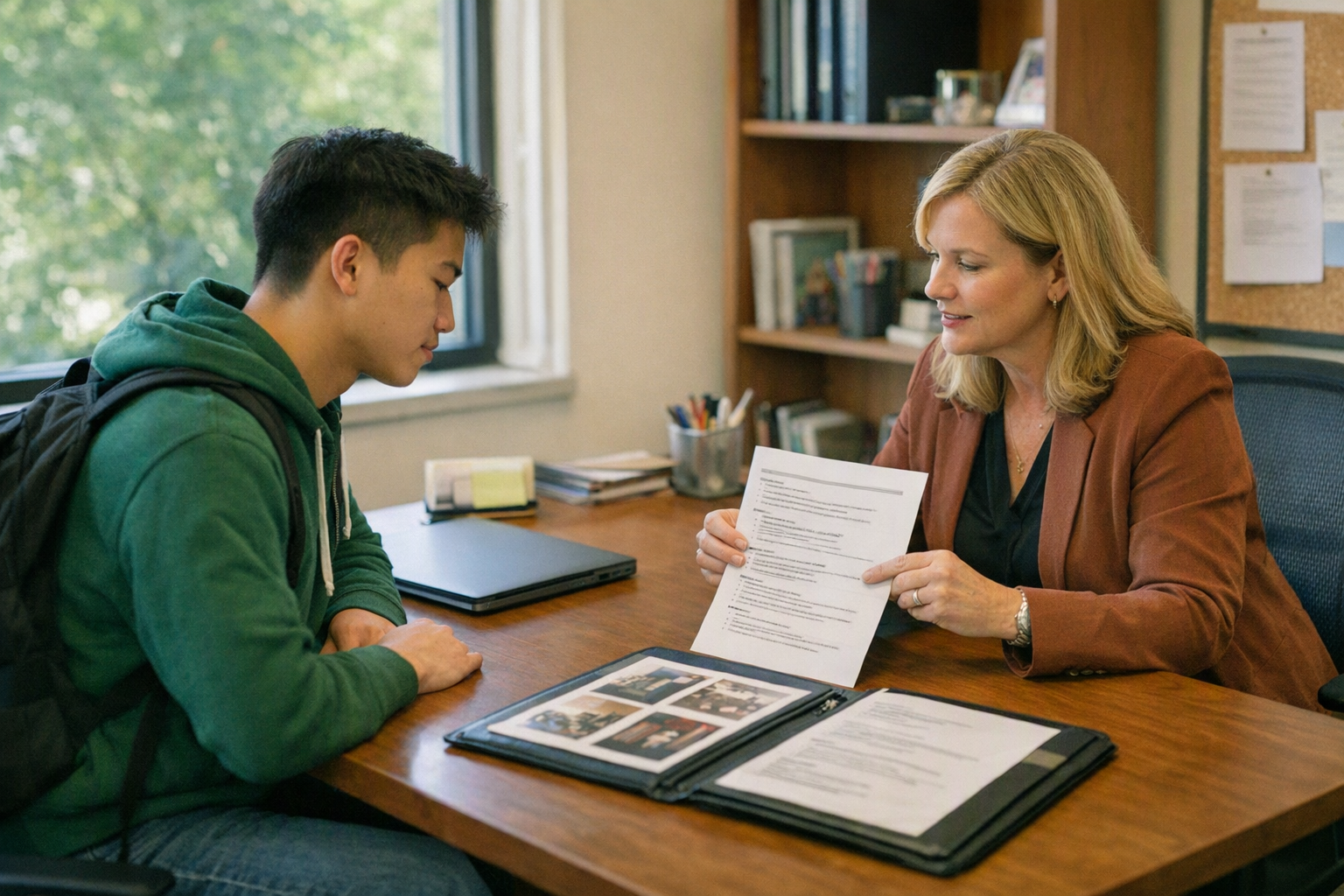
Employers react differently to student AI use when it is framed as help rather than replacement, new working paper finds
How colleges describe student use of generative AI may matter to employers almost as much as whether students used it at all. In a Kent State working paper dated Oct. 2, economists Casey Boyd-Swan and C. Lockwood Reynolds report that professionals with hiring experience reacted more favorably when college students’ AI use was framed as assisting their work, but more negatively when the same use was framed as substituting for students’ effort and ability. (edworkingpapers.com)
The study, posted on EdWorkingPapers, used a survey experiment in which respondents with hiring experience were randomized into a control group or one of two treatment groups before reviewing two resumes. One treatment described AI as helping students complete work; the other described it as replacing student effort and ability. The assistance frame still raised concerns about evaluating applicants, according to the paper, but it also showed some evidence of increasing interview interest and willingness to negotiate starting salaries. The substitution frame, by contrast, clearly reduced both interview interest and willingness to negotiate pay. When respondents were asked what could ease their concerns, in-person tests were the only option selected by both treatment groups. (edworkingpapers.com)
That makes the paper more than another campus-AI debate. It suggests that employer response turns on the signal colleges send about what AI use means. If AI is understood as a tool that helps students think, revise, or practice, employers may read it as closer to ordinary professional workflow. If it is presented as doing the work a student should have done, employers appear to treat it as evidence that transcripts, grades, and resumes reveal less about underlying skill. The study is also clearly early-stage evidence: EdWorkingPapers says its papers are circulated prior to publication for comment and discussion and have not gone through peer review, and this experiment tested reactions to hypothetical resumes rather than observing actual hiring outcomes. (edworkingpapers.com)
A classroom policy can become a labor-market signal
That distinction lands at a moment when student AI use is already routine and campus rules remain unsettled. A Lumina Foundation-Gallup study released in April found that 57% of U.S. college students use AI daily or weekly for coursework, while just 13% say they never use it. At the same time, 53% said their institution discourages or prohibits AI use for schoolwork, and 52% said at least some of their classes lack clear guidance on what is allowed. In other words, many students are already using AI in an environment where institutional signals are mixed. (luminafoundation.org)
Employers, meanwhile, are sending a mixed message of their own. In July, the National Association of Colleges and Employers said more than one-third of entry-level jobs now require AI skills, 28% of employers were seeking early-career hires who can use AI in their work, and nearly 60% said they were assigning interns projects that use AI tools and skills. But NACE also found that many students remain wary: nearly one-third of graduating seniors said AI skills would have little or no importance to their future careers, and slightly more than half said they were not currently building those skills. (naceweb.org)
Placed beside those findings, the Kent State paper points to a sharper interpretation than either “employers love AI” or “employers punish AI.” The more plausible reading is that employers may welcome AI fluency while still distrusting credentials that no longer seem to certify independent competence. That would fit with other labor-market evidence showing that AI can help when it clarifies a candidate’s ability rather than obscuring it. An earlier National Bureau of Economic Research working paper found that jobseekers in an online labor market who received algorithmic writing assistance on resumes were hired 8% more often, with no evidence of lower employer satisfaction. That is not the same setting as college coursework, but it reinforces the idea that assistance and substitution are not the same signal. (nber.org)
What colleges may need to show, not just say
For higher education, the practical implication is hard to miss: AI policy is no longer just an academic-integrity issue. It is also a credential-design issue. NACE reported in January that 70% of surveyed employers now use skills-based hiring for entry-level roles, up from 65% the year before. Among those employers, skills-based hiring was used most often during interviewing and screening, and only 42% still screened candidates by GPA, down sharply from 73% in 2019. Employers, in other words, are already leaning less on institutional proxies and more on demonstrations of what applicants can actually do. (naceweb.org)
That makes one of the Kent State paper’s narrower findings especially important. Asked what would allay concerns about student AI use, both treatment groups converged on in-person tests. That lines up with a broader hiring environment in which students are increasingly being asked to prove skills directly: NACE’s 2025 Student Survey executive summary said nearly 46% of graduating seniors had been asked to demonstrate their skills through an assessment as part of the job application or interview process, even though fewer than 40% said they were familiar with the term “skills-based hiring.” (edworkingpapers.com)
The institutional lesson is not that colleges should ban AI until employers sort themselves out. It is that campuses may need much better ways to separate permitted tool use from proof of mastery. That could mean more oral defenses, live problem-solving, studio critiques, practical exams, timed writing, version histories, annotated portfolios, and internship artifacts that show both process and result. EDUCAUSE reported this year that faculty and staff are already rethinking assessment design in response to AI, with growing interest in changing expectations around academic integrity and the kinds of evidence that count as learning. The Kent State paper gives that assessment work a new rationale: not just protecting coursework, but protecting the labor-market value of the credential itself. (library.educause.edu)
Career services may need to move just as quickly. NACE reported late last year that less than one-third of students said they had guidance on using AI in the job search, and only about one in five had received instruction on using AI as an assistive tool. If employer concern depends on whether AI looks like support or substitution, then students need explicit coaching on disclosure, on preserving work samples that show what they did unaided, and on talking about AI use in ways that foreground judgment rather than convenience. (naceweb.org)
An early signal, not a final verdict
None of that makes the Kent State paper the last word. Its findings depend on a survey experiment, not real employer behavior in live searches. Because the treatments rely on wording, the size of the effects may also depend heavily on how AI use is described. And because the paper sits in a working-paper series rather than a peer-reviewed journal, it should be treated as an early signal, not settled consensus. (edworkingpapers.com)
Still, early signals matter when institutions are writing policy in real time. Colleges have spent much of the past three years arguing about whether AI belongs in coursework. The more urgent question now may be what a degree signals when AI is everywhere: not whether students used a tool, but whether colleges can still give graduates credible ways to prove what they know, what they can do, and what they can do when the tool is not there. (luminafoundation.org)
More from Higher Education

Arizona court approves GCU law school under new non-ABA pathway
The Arizona Supreme Court said future Grand Canyon University law graduates could seek bar admission in the state without first graduating from an ABA-accredited school, while the program remains under court oversight and still needs other approvals before enrolling students.
New Workforce Pell FAQ gives colleges a clearer compliance map
The Education Department’s Oct. 15 guidance does not rewrite Workforce Pell, but it does spell out how approvals, student eligibility and ongoing program requirements work in the first rollout year.

What IronCircle’s collapse reveals about university boot camp oversight
Months after the cybersecurity boot camp provider shut down, SDSU and UNLV support pages show how difficult it is to transfer students, replace coursework, and sort out refunds when a university-branded program depends on an outside vendor’s platform.