DHS proposes $70,000 OPT fee for colleges, $30,000 for extensions
Under the proposal, SEVP-certified colleges would have to pay before a designated school official can enter an OPT recommendation in SEVIS. That would shift a student work-authorization step into institutional budgets and force campuses to model recruitment, advising and pricing impacts while public comments are still open.
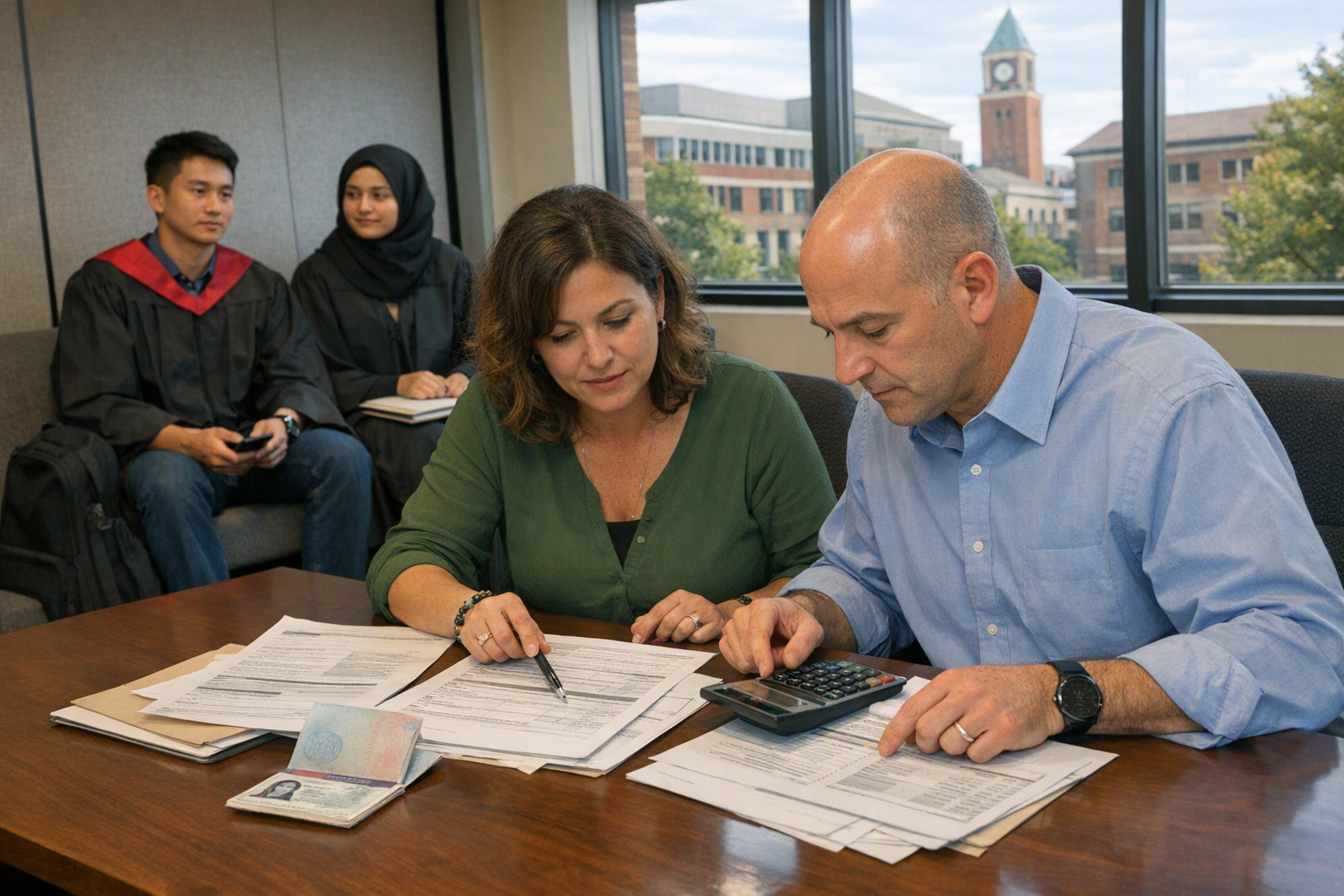
The Department of Homeland Security on Thursday, Oct. 8, 2026, proposed charging colleges and universities $70,000 each time they recommend an international graduate for an initial period of Optional Practical Training and $30,000 for each subsequent OPT recommendation, a shift that would move what has long been a student-side work-authorization process into campus budgets before a graduate can even file with U.S. Citizenship and Immigration Services. The proposal appeared in the Federal Register and in a DHS press release that says SEVP-certified schools would have to pay before a designated school official enters the OPT recommendation in SEVIS. (govinfo.gov)
If finalized, the rule would mark one of the most consequential cost increases yet for the post-study work pathway that many international students factor into where they enroll. It is still only a proposal: DHS is taking comments through Nov. 9, 2026, with a separate information-collection comment deadline of Dec. 7, 2026. But the size of the proposed fees means colleges cannot wait for a final rule to begin scenario planning, because recruitment, advising, yield work, and budget construction for 2027 are already underway. (govinfo.gov)
OPT is temporary employment tied to an F-1 student’s major. USCIS says eligible students can receive up to 12 months of OPT, and STEM graduates can seek a 24-month extension. The Institute of International Education’s latest Open Doors release counted 294,253 international students on OPT in 2024-25, while a Congressional Research Service brief said 418,781 F-1 and M-1 students and recent graduates were authorized for OPT in calendar year 2024 and noted that the program has no numerical cap. (uscis.gov)
The fee lands on the recommendation step
The important operational detail for colleges is where DHS wants to collect the money. Under the department’s Oct. 7 press release, schools must pay before designated school officials recommend OPT in SEVIS and before students apply to USCIS for employment authorization. That is different from today’s structure, in which the school recommendation is required but does not itself carry a federal fee. Immigration law firm Fragomen said the proposal would also allow universities to recoup the new charge from students or employers, though whether campuses could do that cleanly in practice will depend on institutional policy, market leverage, and how the rule is finalized. (dhs.gov)
That sequencing matters because it pushes OPT out of the international office’s advising lane and into the president-provost-CFO lane. An institution that approves 10 initial OPT recommendations and five later OPT recommendations would face $850,000 in new charges under the proposal; 100 initial recommendations and 30 later recommendations would mean $7.9 million. Those are not compliance-office sums. They are the kind of figures that can trigger tuition-pricing changes, reductions in institutional aid, tighter approval processes, or decisions to stop absorbing the cost entirely and send it back to students. (govinfo.gov)
The proposal also dwarfs the current filing cost students associate with OPT. Fragomen said the USCIS employment-authorization filing fee is currently $520 on paper or $470 online. Even if a school ultimately tries to pass the new recommendation fee through, the change would turn a process now measured in hundreds of dollars into one measured in tens of thousands. That is why the headline number is not just regulatory symbolism; it changes the economics of whether the pathway is usable. (fragomen.com)
Recruitment math could change before the rule does
For enrollment leaders, the risk is not limited to final implementation. The public release alone gives overseas recruiters, agents, families, and graduate applicants a new data point about U.S. policy volatility. DHS says the fees are meant to combat fraud, curb abuse, and protect U.S. workers, citing concerns about problematic worksites and “pay-to-stay” schemes. NAFSA, by contrast, said the fees would hurt innovation and the economy by making it harder for international students to gain practical experience after graduation. (dhs.gov)
Whatever side institutions take in that debate, they now have to explain OPT in a more fragile way than they did a week ago. Open Doors reported that U.S. colleges and universities hosted 1,177,766 international students in 2024-25, with OPT participation up 21% year over year. That makes post-study work more than a niche benefit; it is part of the value proposition for a substantial slice of the market, especially in graduate and STEM-heavy programs that promise a bridge from classroom learning to early-career employment. A policy that raises the cost of that bridge by $70,000 to $100,000 per student will be read by many families not as a technical fee change, but as a signal about whether the United States still wants them. (iie.org)
That signal could hit unevenly. Wealthier private universities may have more room to subsidize some cases, at least temporarily. Large research universities may try to reserve support for doctoral students, lab-based graduates, or programs where international yield is central to enrollment and research output. Regional publics and tuition-dependent institutions, though, are less likely to have millions available for a benefit that is not required for degree completion. The second-order effect is that access to OPT could become stratified by institution and program, not just by student eligibility. That would be a major shift for a federal pathway that has been broadly available, at least on paper, to eligible F-1 students. (dhs.gov)
What colleges still do not know
Several practical questions remain unresolved. The Federal Register summary says DHS would charge $70,000 for initial OPT and $30,000 for “any subsequent OPT,” language broad enough to capture the common STEM extension but not limited to it. Secondary analyses also diverge on exactly how later periods would be counted: Fragomen describes the fee as applying to each subsequent OPT recommendation, while NAFSA’s initial statement describes an additional $30,000 per year for extensions. Until the full text is digested in detail and DHS responds to comments, campuses should be careful not to assume more certainty than the proposal provides. (govinfo.gov)
What is clear already is the planning agenda. International offices need counts of likely 2027 OPT and STEM OPT users. Finance teams need scenarios for absorbing, sharing, or refusing the charge. Enrollment leaders need updated talking points for admitted students who ask whether post-study work in the U.S. is still realistic. And government-relations staff now have a narrow window to turn campus anecdotes into formal comments before Nov. 9. Even if the proposal is softened, delayed, or defeated, it has forced a more basic question into the open: how much of the cost of access to the U.S. labor market colleges are willing, or able, to carry for the students they recruit. (govinfo.gov)
More from Higher Education

What IronCircle’s collapse reveals about university boot camp oversight
Months after the cybersecurity boot camp provider shut down, SDSU and UNLV support pages show how difficult it is to transfer students, replace coursework, and sort out refunds when a university-branded program depends on an outside vendor’s platform.
Three indicted in alleged $20 million Eastern Gateway aid scheme
Ohio officials say the case involved Pell Grants, state subsidies, and outsourced college partnerships, sharpening questions about oversight after the community college’s closure.

University of Arizona proposes tuition and fee freeze for fall 2027
The university says undergraduate and graduate tuition and mandatory fees would stay flat next fall if regents approve the plan, but housing and other attendance costs will still shape what families actually pay.