Stanford brief: districts lost students, but not schools or teachers
Using national school census data, researchers found one in four public schools is at least 15% below its pre-pandemic enrollment baseline. For district leaders, the paper points to a real capacity mismatch and budget pressure, not proof that closures are always the right fix.
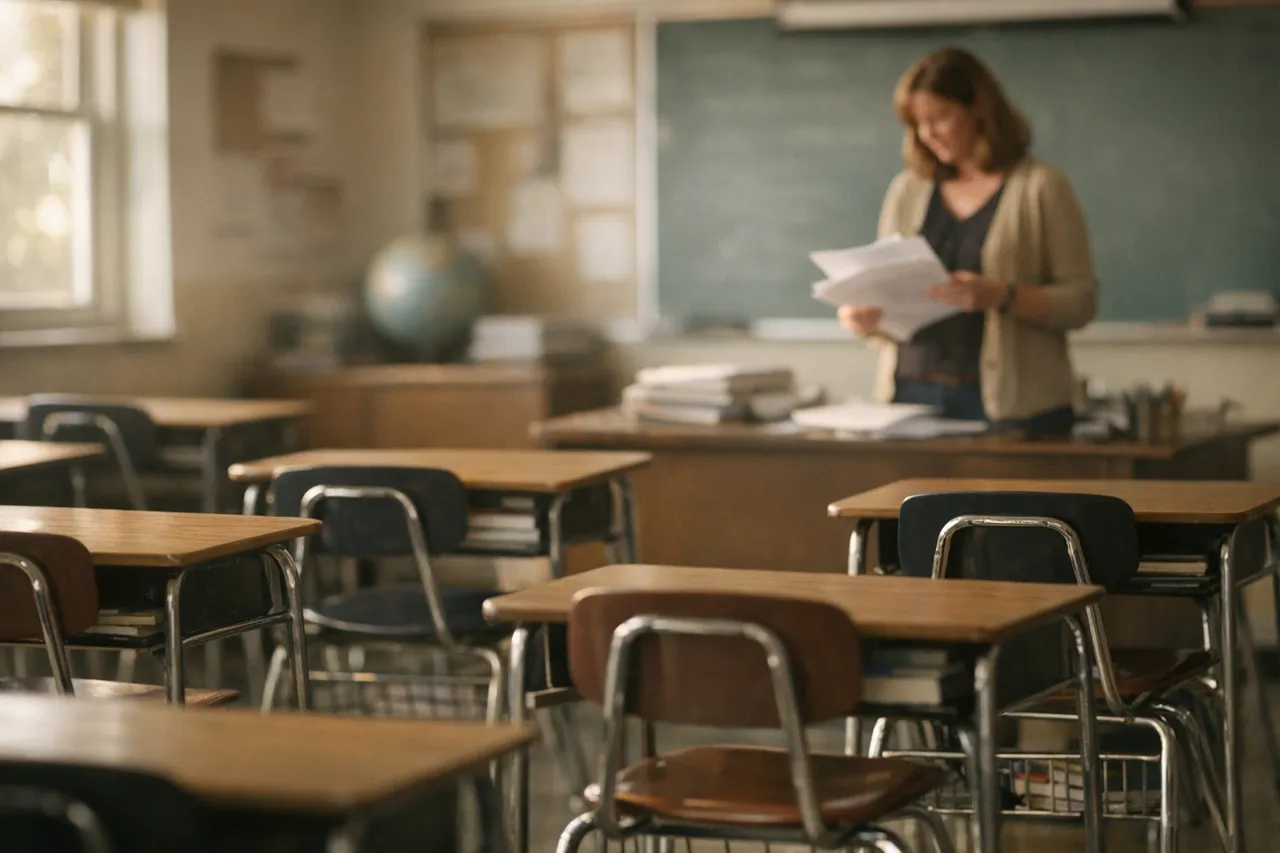
Under-enrollment is not just a few-city problem. A new Stanford-led working paper released in November finds that U.S. public schools lost more than 1 million students after the pandemic while the number of operating schools stayed essentially flat and teacher staffing increased. For superintendents and school boards, the early answer is yes: this now looks like a national structural shift, not a one-off local anomaly. But the paper does not show that every district should close schools or cut staff; it shows that many systems are carrying more buildings and personnel per student than they did before COVID, and that the financial consequences are arriving as federal relief ends. (edworkingpapers.com)
The paper, Empty Desks: Schools and Staffing after the Pandemic, is explicitly descriptive rather than causal. Using National Center for Education Statistics Common Core of Data files from 2010-11 through 2024-25, Thomas Dee and Jaymes Pyne report that one in four public schools is now at least 15% below its pre-pandemic enrollment baseline and that pupil-teacher ratios fell 4% over the same period. Federal CCD tables line up with the paper’s broad picture: national public-school enrollment fell from 50,710,441 in 2019-20 to 49,269,882 in 2024-25, while the number of operating public schools edged up from 98,507 to 99,073. That works out to roughly 17 fewer students per school, on average. (edworkingpapers.com)
That matters because districts have spent much of the post-pandemic period debating closures and layoffs as if they were responses to isolated local decline. The new brief suggests the mismatch is national. NCES has already shown that public-school enrollment dropped from 50.8 million in fall 2019 to 49.4 million in both 2020 and 2021 and had only partially recovered to 49.6 million by 2022. In other words, the system did not simply snap back once buildings reopened. (nces.ed.gov)
What the new brief can tell district leaders
The most useful takeaway is not that smaller schools are inherently a problem. In some places, lower pupil-teacher ratios can preserve programs, improve support for students with disabilities, or make scheduling more humane. The issue is that finance systems do not usually adjust painlessly to a slower-building decline. The Education Commission of the States says 44 states and the District of Columbia use enrollment, and 6 states use attendance, to determine funding allocations. Its K-12 funding primer also notes that salaries and benefits account for about 77% of operating costs. That helps explain why a district can lose students faster than it can reduce spending: fewer students may mean less revenue, but labor, transportation, and building costs do not disappear on the same timeline. (ecs.org)
That helps explain why the brief landed at a sensitive moment. RAND’s spring 2026 American School District Panel found that budget shortfalls had become the top concern for district leaders, named by 54% of respondents, with declining enrollment also rising as a major concern. Read alongside Dee and Pyne’s findings, that suggests many districts still have room to respond through attrition, grade reconfiguration, shared staffing, or program redesign — but probably not unlimited time. That last point is analysis, not a direct finding of the paper: the evidence shows a national capacity mismatch and rising budget pressure, from which it follows that waiting for a broad enrollment rebound now looks less defensible than it did in 2022 or 2023. (rand.org)
What the study does not prove
Just as important, the paper should not be read as a national warrant for school closures. Dee and Pyne do not estimate whether closing schools improves finances or student outcomes in any given district; they document how far national staffing and school counts have drifted from enrollment trends. And separate Stanford research from California suggests closures are not automatically a budget fix. In a statewide study of districts between 2011 and 2019, Francis Pearman found that closure regimes reduced per-pupil spending and per-pupil revenue by about $440 each, leaving deficits and the odds of achieving a balanced budget essentially unchanged on average. The study also found enrollment fell by 287 students, on average, after closure regimes began, with no comparable reduction in teachers or other staff. (gettingdowntofacts.com)
That limitation is especially important for equity. In the new national brief, closures that did occur were more common among schools in lower-income neighborhoods, schools serving higher concentrations of Black students, and charter schools. So the lesson for leaders is not simply “close the smallest schools.” It is to ask a more precise question: where does a district have a real long-term mismatch among enrollment, staffing, facilities, and funding rules, and where is it mistaking a temporary dip or a politically easier target for a sound restructuring plan? (edworkingpapers.com)
For 2027 budget planning, the clearest message is that districts should stop assuming a broad national return to pre-pandemic enrollment is just around the corner. The harder decisions are now local: whether systems can shrink gradually through attrition and program changes, or whether delayed action has made consolidation fights more likely — and more inequitable — in the next round of school board debates. (edworkingpapers.com)
More from School Leadership
Yale model finds school closures are often predictable a year ahead
A November working paper found that the highest-risk 10 percent of schools captured 53 to 63 percent of later closures. The findings suggest districts can start facility, staffing, and family-transition planning earlier, even when per-pupil spending still looks healthy.

Clever adds classroom MFA and student screen-time analytics for K-12
Districts can use bulk password and MFA resets, field-level SIS controls, and custom admin roles now, while per-student active-tab analytics are still rolling out this month.
Anthropic puts Claude for Teachers school safeguards into contracts
A new AFT and UFT agreement makes key privacy, transparency, and human-oversight terms enforceable for school use of Claude for Teachers, giving districts a practical model for AI procurement and policy.