Yale model finds school closures are often predictable a year ahead
A November working paper found that the highest-risk 10 percent of schools captured 53 to 63 percent of later closures. The findings suggest districts can start facility, staffing, and family-transition planning earlier, even when per-pupil spending still looks healthy.
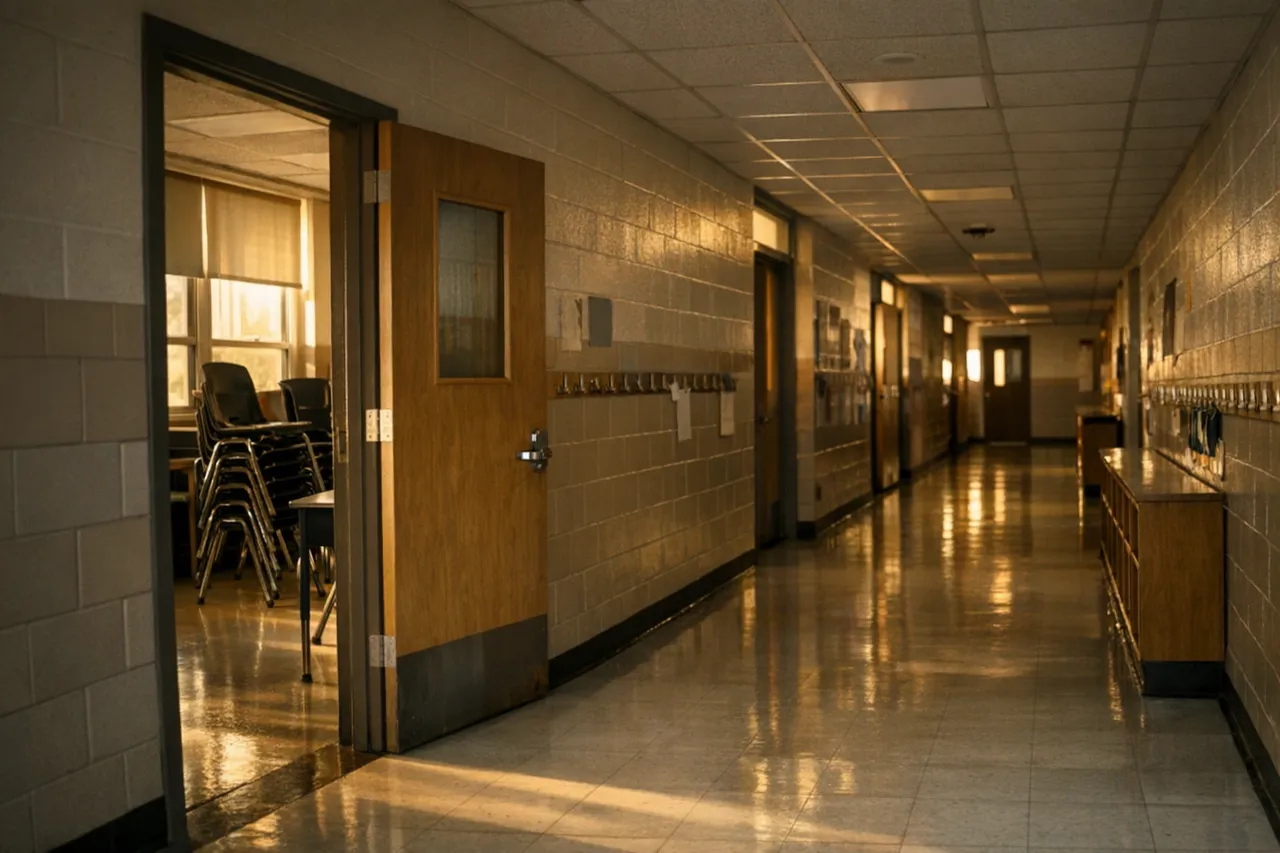
A new national working paper argues that public-school closures are less sudden than many districts treat them. In a November 2026 analysis of national enrollment, demographic, and school-finance data, Yale researcher Sofoklis Goulas found that the 10 percent of schools with the highest predicted closure risk accounted for 53 to 63 percent of actual closures in six annual out-of-sample tests. Applied to traditional public schools open in 2024-25, the model projects about 550 closures in 2025-26 and about 1,700 by 2027-28. For superintendents and boards, the practical takeaway is early: this paper suggests many districts can identify elevated closure pressure at least one budget cycle ahead, and can use a three-year horizon to rank where planning should start first. (edworkingpapers.com)
That matters because many systems still do not look distressed on the metric leaders often cite most. Goulas finds that the share of school-age children in traditional public schools fell from 83.0 percent in 2019-20 to 77.8 percent in 2024-25, yet most districts with steep enrollment losses still maintained real spending per pupil through fiscal year 2024. Even so, 730 districts serving 2.3 million students combined enrollment losses of at least 10 percent with federal revenue losses of at least 2 percent of revenue. The paper’s central warning is that stable per-pupil spending can mask building-level closure risk rather than eliminate it. (edworkingpapers.com)
What should districts watch before a closure fight starts?
The early-warning signs in the model are mostly ordinary administrative data, not exotic forecasts. Higher-risk schools tended to be smaller, farther below their own enrollment peak, and located in districts with continuing enrollment loss, a larger share of children outside traditional public schools, and recent closures already on the books. The model also beat a simpler benchmark that used only enrollment level and change: across the six one-year holdout tests, the gradient-boosting model posted an AUC of 0.82 to 0.88, compared with 0.72 to 0.79 for the enrollment-only version. (edworkingpapers.com)
That is a meaningful shift in how leaders might frame the problem. The paper suggests the most useful trigger is not “the district is broke,” but “this small school’s enrollment has been falling inside a district where fewer children are choosing the traditional system, and closures have already started to cluster.” Read that way, the model is less a verdict than a watch list: an invitation to start capacity checks, staffing-transfer plans, transportation modeling, and family transition support before a board vote turns a planning problem into a public emergency. That is an inference from the paper’s predictive results and its explicit call for targeted facility planning, monitoring, and transition support. (edworkingpapers.com)
Why healthy per-pupil spending can still hide closure pressure
One of the paper’s more useful findings for school leaders is what didn’t predict much on its own. After enrollment, geography, and demographics were accounted for, several district finance measures added limited information, and total revenue growth was not statistically associated with closure in the fully specified regression. In other words, leaders who wait for a broad fiscal crisis may be waiting too long. In the paper’s finance analysis, the median district with enrollment losses of at least 10 percent still saw real revenue per pupil rise 13.7 percent and real current spending per pupil rise 10.9 percent from fiscal 2020 to fiscal 2024. (edworkingpapers.com)
A separate November 2026 working paper by Thomas Dee and Jaymes Pyne points in the same direction from another angle. They found that public-school enrollment fell by more than 1 million students after the pandemic while the number of operating schools was effectively unchanged and the number of teachers increased; one in four public schools now enrolls at least 15 percent fewer students than before the pandemic. Put together, the two studies suggest a post-pandemic pattern of delayed downsizing: districts can look healthier on a per-pupil basis even while carrying more buildings and staffing than current enrollment supports. (edworkingpapers.com)
Goulas’s own tabulations make that point concrete. In the 2024-25 closure window he analyzes, schools in steeply declining districts closed at nearly the same rate whether those districts’ real spending per pupil had fallen or had been maintained or increased: 1.19 percent versus 1.16 percent. That does not mean finance is irrelevant. It means per-pupil spending is a poor “all clear” signal when the operating question is whether a district still has the right number of campuses in the right places. (edworkingpapers.com)
What this model can’t tell a superintendent
The paper is useful, but it is still a working paper, not a peer-reviewed journal article. EdWorkingPapers says its papers are circulated for comment and discussion before rigorous peer review. And Goulas is careful about the limits: the model predicts annual National Center for Education Statistics status changes, while one comparison study found NCES and local records disagreed on about one in seven closures; the finance measures lag the enrollment data by about a year; and fiscal 2024 still captured only part of the federal-relief unwind. (edworkingpapers.com)
The projected national totals also should not be mistaken for a precise closure count. When the author reran the model excluding very small schools or schools without enough history, the predicted 2025-26 total for traditional public schools moved from about 546 to as low as 467, while the broader state ranking signal stayed much more stable. That makes the model more credible as a targeting tool than as a headline number generator. Districts should use it to identify where deeper review is warranted, not to claim that a particular school is “supposed” to close. (edworkingpapers.com)
That distinction matters because the cost of getting closure planning wrong falls on students first. A 2024 Texas study, also released as an EdWorkingPaper, found that school closures led to short-run test-score and behavioral disruptions and to lower postsecondary attainment, employment, and earnings later on. If Goulas is right that closure pressure is concentrated enough to spot early, the practical challenge for 2027-28 is no longer whether districts can see trouble coming. It is whether they will use that warning window to plan humane consolidations and supports before families are asked to absorb the shock. (edworkingpapers.com)
More from School Leadership

Clever adds classroom MFA and student screen-time analytics for K-12
Districts can use bulk password and MFA resets, field-level SIS controls, and custom admin roles now, while per-student active-tab analytics are still rolling out this month.
Anthropic puts Claude for Teachers school safeguards into contracts
A new AFT and UFT agreement makes key privacy, transparency, and human-oversight terms enforceable for school use of Claude for Teachers, giving districts a practical model for AI procurement and policy.

Kendriya Vidyalaya launches AI hub, parent portal and alumni platform
Built on KVS’s existing SAMAGAM backbone, the new stack combines system dashboards, parent services such as leave and certificate requests, and alumni outreach—while leaving open questions about AI safeguards, privacy and whether it actually reduces school workload.