Chicago board passes CPS budget counting on $150 million not yet approved
The July 30 vote reversed more than 1,000 planned layoffs, but CPS says the added state money is still unenacted, leaving questions about payroll, borrowing, and the start of school.
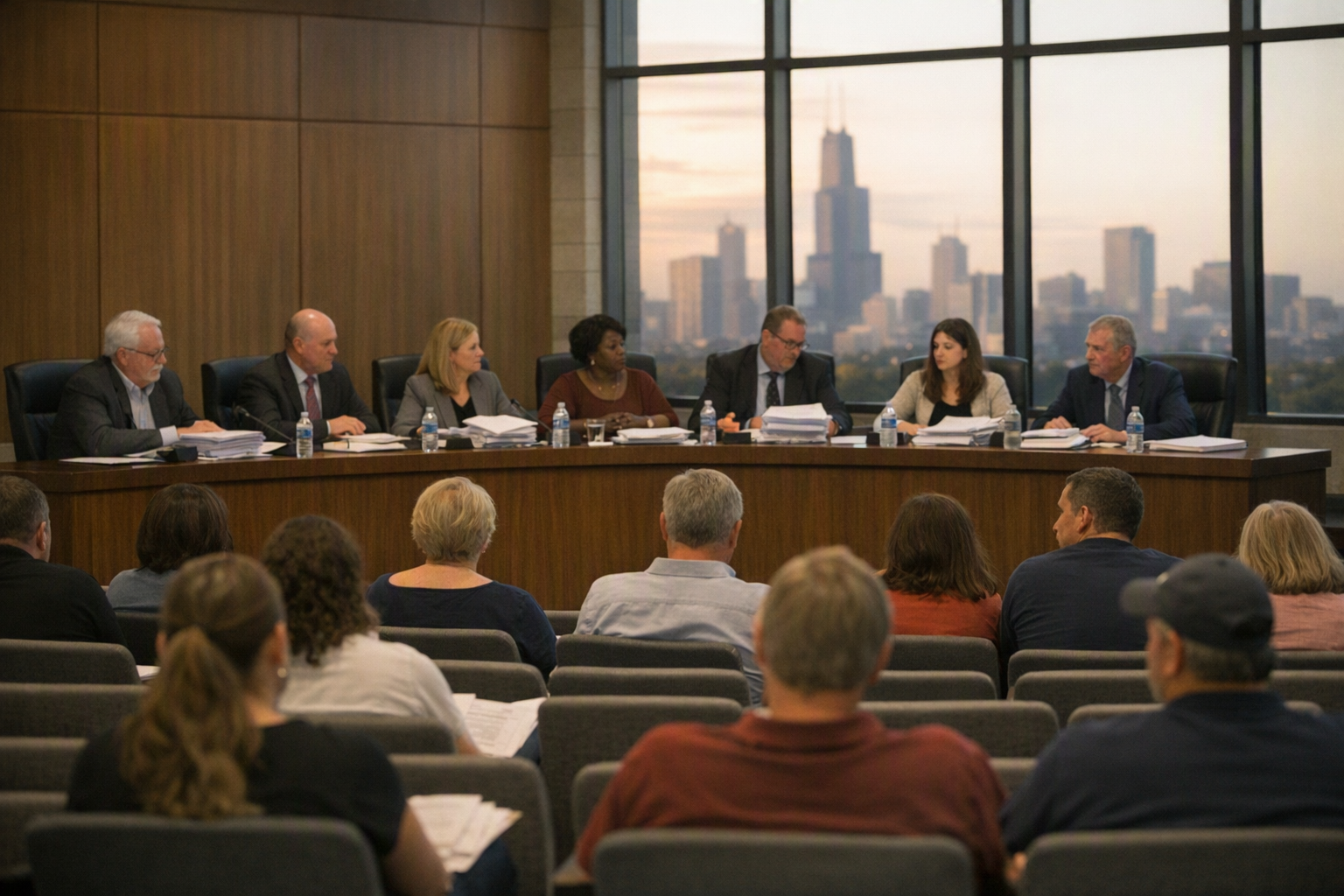
Chicago’s school board approved Chicago Public Schools’ budget for the 2026-27 year on July 30, 2026, but only after amending it to assume $150 million in additional state funding that has not been enacted. The move spared schools from more than 1,000 planned layoffs, according to local reporting, while leaving CPS itself warning the district may struggle to secure the short-term borrowing it uses for September payroll and could even face disruption to the Aug. 24 start of school. (cps.edu)
That date matters. The board vote happened Thursday, July 30; the district’s blunt warning to families and staff came the next day, July 31, in a public letter from Superintendent/CEO Macquline King. In that update, CPS said board members had rejected the district’s balanced proposal, amended it to add hoped-for state revenue, and approved the new version anyway. CPS said the money “has not been approved by the legislature, signed by the Governor, or received by CPS,” and that district leaders were still working through what the decision means “legally and financially.” (cps.edu)
For school leaders, the immediate lesson is not just that Chicago is short on money. It is that the board chose a specific kind of fix: keeping positions alive on paper by substituting contingent revenue for cuts that district staff had already built into the budget. That can reduce disruption in July, but it shifts risk into the opening weeks of school, when payroll, staffing assignments, and lender confidence matter more than political messaging. That analysis is grounded in CPS’ own warning that the district may not be able to secure the short-term financing it needs in September if the budget is treated as unbalanced. (cps.edu)
What changed between the proposed budget and the one the board passed
CPS had already revised its FY2027 budget once before the vote. On July 28, the district increased projected revenues and expenses from $9.88 billion to $9.96 billion, largely by assuming $85 million more in TIF surplus revenue from the city and using that change to remove five planned furlough days. CPS said that revised version remained fully balanced. (cps.edu)
The board did not approve that plan as presented. Instead, members voted 11-7, with one abstention, to reject the superintendent’s version and adopt an amended budget that counts on another $150 million from Springfield. WBEZ reported that the amendment cancels more than 1,000 layoffs; Chalkbeat likewise reported that the adopted budget assumes another $150 million beyond what CPS had already projected from the state. (wbez.org)
District officials argued during the meeting that this was not a routine forecast adjustment. Acting budget chief Emila Zoko said the amended plan would not be regarded as balanced and could trigger a credit downgrade, while acting CFO Wally Stock warned it might jeopardize the short-term loan CPS depends on while waiting for delayed Cook County property tax collections. CPS had already warned before the vote that passing some version of the budget in July was critical to avoid a payroll crunch; after the vote, the district said it now could not say whether school will open on schedule on Aug. 24. (wbez.org)
That is the core governance issue. A contingent-revenue budget does not simply defer a political fight with the state. It can also complicate ordinary district operations: certifying that the budget is balanced, convincing lenders to extend cash-flow borrowing, and giving principals confidence that staffing restored in late July will still be funded in October or January. Those are second-order effects, but they are often where classrooms feel financial decisions first. (cps.edu)
Why CPS was under pressure in the first place
Chicago’s budget problem is real even before the latest amendment. CPS says it had to close a $732 million gap for FY2027, driven by labor costs, pensions, aging buildings, debt service, and higher needs among students, especially students with disabilities. The district says it protected direct school funding overall, increased funding provided directly to schools by $143 million year over year, and tried to keep cuts away from classrooms by reducing central office and citywide spending. (cps.edu)
At the same time, the budget debate exposed a tension many districts recognize: overall school funding can rise while individual schools still lose positions. CPS says enrollment fell by 45,000 students from 2019 to 2026, even as staffing increased by nearly 10,000 over that span, which is why it argued that some staffing formulas had to change. Chalkbeat’s staffing analysis found that districtwide staffing was down by less than 1% overall, but some campuses were facing much sharper losses. That helps explain why layoffs became the pressure point that drove board members to reopen the budget math rather than accept the district’s summer reductions. (cps.edu)
For principals and operations teams elsewhere, Chicago is a vivid reminder that “holding schools harmless” at the system level can still produce very visible cuts building by building. When that happens, the politics of a budget can turn quickly from abstract deficit management to concrete questions: Which positions disappear, when are staff notified, and can the district reopen school budgets after local planning is supposedly done? Chicago’s answer, at least for now, is yes — but only by replacing executed revenue with hoped-for revenue. (cps.edu)
Springfield has not said where the extra money would come from
The board’s gamble rests on a promise that remains highly incomplete. Illinois already enacted its FY2027 budget in June; Gov. JB Pritzker called it a $55.9 billion balanced general-funds plan, and his office said it invested over $300 million in new funding for Illinois public schools. But neither the governor’s budget materials nor the budget-signing announcement identified an extra $150 million specifically for CPS beyond enacted appropriations. (gov-pritzker-newsroom.prezly.com)
The political opening for the board’s amendment came from House Speaker Emanuel “Chris” Welch, who told Chicago Teachers Union members he was “committed” to backing a supplemental budget bill for CPS. Yet even the Capitol News Illinois account of that pledge underscored how uncertain the path is: lawmakers are not scheduled back for veto session until Nov. 17-19 and Dec. 1-3, Gov. Pritzker said he had not discussed a plan with Welch, and reporters noted that it remains unclear what revenue source would cover the additional aid. (newsfromthestates.com)
That timing problem is hard to ignore. A supplemental appropriation debated in late fall may be politically meaningful, but CPS says its cash problem arrives much sooner, when employee paychecks come due in September and schools are trying to settle into the year. In other words, the board solved a July staffing crisis with a state-revenue strategy that, even in the best case, may not line up with the district’s immediate cash calendar. (cps.edu)
The next question is not whether CPS deserves more state support; even the district’s own materials say it is funded at about 73% of adequacy under Illinois’ formula. The nearer question is whether Chicago can bridge the weeks ahead without reopening the budget yet again. If lenders, state officials, and district leadership do not converge on an answer fast, the board’s vote will be remembered less as a rescue of school jobs than as a case study in how contingent revenue can keep positions alive for the opening bell while making the rest of the year less predictable. (cps.edu)
More from School Leadership
Texas study suggests special ed formulas miss much of district spending
Analyzing 6,116 Texas district-year observations, researchers found that placement and disability mix do track some special education costs, but explain only a modest share of spending differences, especially across smaller districts.
OpenAI expands ChatGPT for Teachers to 55 more districts
The bigger development for school leaders may be OpenAI’s 16-state National Data Privacy Agreement path, which could reduce contracting friction as districts move teacher AI use into managed, admin-controlled workspaces.
GAO says DoDEA schools need better screening to catch reading and math gaps
A new GAO report found referral bottlenecks, uneven access to student data, and poorly rated training alongside weak screening in DoDEA schools. With new universal screeners planned for later in 2026, the findings offer a practical MTSS audit for district leaders.