GAO says DoDEA schools need better screening to catch reading and math gaps
A new GAO report found referral bottlenecks, uneven access to student data, and poorly rated training alongside weak screening in DoDEA schools. With new universal screeners planned for later in 2026, the findings offer a practical MTSS audit for district leaders.
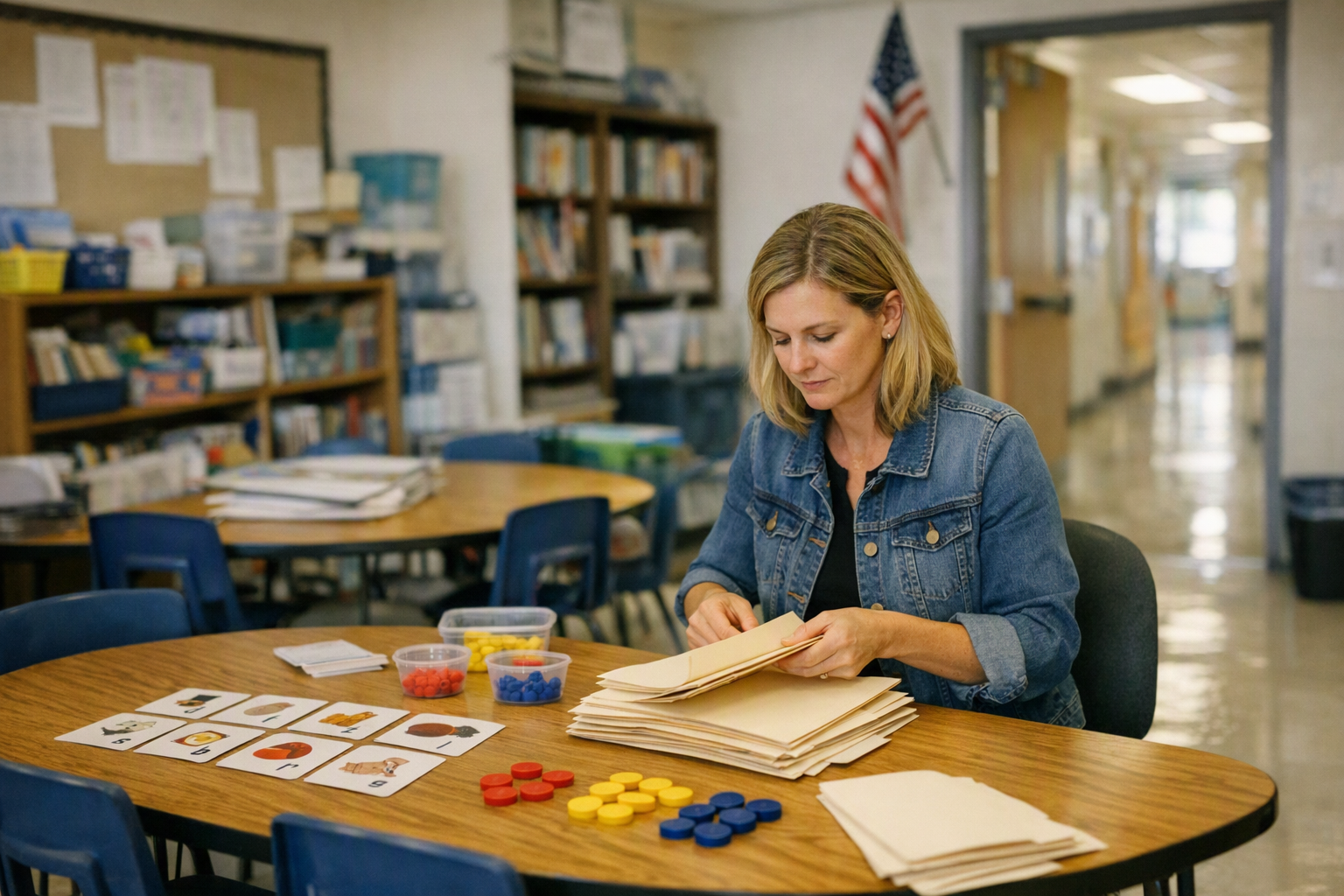
The Government Accountability Office said in a report released August 26 that the Department of Defense Education Activity needs stronger screening, faster referral processes, better access to student data, and professional learning designed with teachers—not just for them—if its schools are going to catch literacy and math problems early enough to change outcomes. In school year 2024-25, GAO found, about 10 percent of DoDEA’s roughly 60,000 full-time K-12 students received strategic instruction, a short-term small-group intervention, and about 5 percent had a specific learning disability such as dyslexia or dyscalculia. The number of DoDEA students identified with specific learning disabilities rose 29 percent from 2018-19 through 2024-25. (gao.gov)
The immediate news is not only the critique but the timing. GAO visited 11 schools in five of DoDEA’s nine districts—districts serving 63 percent of the system’s students with specific learning disabilities—and found recurring problems: limited screening tools, incomplete referrals for intervention or special education, delayed evaluations, uneven access to grades and other student information, and training that many intervention and special education teachers said was poorly matched to their jobs. GAO made eight recommendations; the Defense Department agreed with five and partially agreed with three. At the same time, DoDEA told GAO in July that it had procured universal screening tools for all grades and planned to begin administering them in late 2026, and the agency’s 2026-27 assessment calendar now includes a table for screeners. What remains uncertain is whether new tools will fix the workflow problems GAO says schools are already experiencing. (gao.gov)
For superintendents and principals outside the military school system, the report lands as a practical MTSS case study more than a federal one-off. DoDEA operates 160 schools in nine districts across the United States and abroad, serving military-connected students in a system where mobility is part of the daily operating reality. That makes the report especially useful because it shows how intervention systems break down in ordinary, unglamorous ways: the wrong screener, the incomplete referral, the missing permission to see a gradebook, the training session that never gets close enough to classroom decisions. (dodea.edu)
When screening is not truly universal
One of GAO’s sharpest findings is also one of the most transferable. At nine of the 11 schools it visited, staff said they needed more or better screening tools. GAO said the screening tools then in use did not directly assess elementary students’ foundational phonics skills and were not available for all students. In a system with frequent student moves, that matters twice: schools need to know quickly whether a new student is behind grade level, and they need tools precise enough to tell whether the issue is likely decoding, language comprehension, math concepts, or something else. (gao.gov)
DoDEA’s own assessment materials define a universal screener as a tool intended to find indicators of exceptionality across groups of students. By GAO’s account, the system had not yet met that standard for literacy and math deficits, especially in the early grades. That gap helps explain why the agency’s procurement of new screeners matters, but it also suggests a broader lesson for district leaders: a screening program is only as strong as its coverage, timing, and fit with the skills teachers actually need to identify. A district can say it screens universally and still miss students if the measure does not touch phonics-related skills, is not given to all students, or is not used when students enter midyear. (dodea.edu)
The official assessment calendar suggests DoDEA is trying to move from patchwork screening to a more systemwide approach this school year. That is a meaningful operational step. But the report argues, implicitly, that better assessments are necessary rather than sufficient. If schools cannot convert results into timely referrals and instructional changes, the screener becomes a compliance event instead of an early-warning system. (dodea.edu)
The bottleneck is often the referral, not the diagnosis
GAO’s school visits also found that identifying students was only part of the problem. Staff described challenges submitting complete referrals for strategic instruction and special education, along with delayed special education evaluations. That is the sort of procedural snag educators know well: the student concern is visible, but the documentation threshold, scheduling burden, or handoff between general education and specialized staff slows action until a short-term need becomes a semester-long one. In practice, students do not experience MTSS as a framework. They experience it as time—how long it takes an adult to notice, decide, refer, and respond. (gao.gov)
This is not the first time GAO has described DoDEA’s special-education and support systems as being undermined by operations rather than intent. In an April 2025 report, GAO found that DoDEA’s staffing formulas for special education teachers were based on student headcounts rather than the service minutes required in students’ individualized education programs. Read alongside the new report, the pattern is hard to miss: when systems are designed around broad categories instead of the real intensity and timing of support, students can qualify on paper yet wait too long for the right help. (gao.gov)
The data-access problem fits the same pattern. GAO said staff in all 11 schools cited obstacles that included inadequate access to students’ grades and varied practices across schools that meant eligible students did not always receive needed help to meet grade-level expectations. That finding is striking because DoDEA’s own assessment office says it is responsible for broad access to accurate, timely student and school-level information for educational decision-making. The tension here is a familiar one in district systems: data may exist centrally, but intervention teachers still cannot see what they need quickly enough to act. (gao.gov)
Teachers said the training missed the job
The report’s most pointed finding may be about professional learning. During GAO’s interviews, 32 of 44 strategic instruction and special education teachers rated their professional learning opportunities as "bad" or "very bad," and staff at all 11 schools said they wanted teachers to have input into the professional learning they needed, including training on identifying literacy and math deficits and specific learning disabilities. That is more than an employee-satisfaction problem. In an intervention system, poor role-specific training raises the odds that screening data will be misunderstood, referrals will be incomplete, and support will vary from school to school. (gao.gov)
GAO’s recommendation that DoDEA solicit teacher input also lines up with the watchdog’s broader work on professional development. A separate March 2026 GAO review found mixed evidence on professional development’s overall effectiveness, but teachers reported collaborative learning opportunities as especially useful for classroom practice. In other words, the DoDEA finding points toward a lesson many districts already know but do not always build into training design: intervention teachers are more likely to improve practice when they help shape the agenda, not just attend the session. (gao.gov)
That may be the most transferable takeaway in the report. School systems often respond to intervention concerns by buying a new assessment or issuing a new referral form. DoDEA is now doing part of that by rolling out screeners. But GAO’s findings suggest the sturdier checklist is wider: screen all students with tools that measure the right early skills; re-screen or assess newcomers quickly; make referral requirements clear and realistic; give intervention teachers access to the data they need; and let the people doing the work help design the training. Those are not glamorous reforms, but they are the ones most likely to determine whether a struggling reader or mathematician gets help in weeks instead of months. (gao.gov)
The next thing to watch is whether DoDEA’s late-2026 screener rollout changes the daily mechanics GAO described—or merely adds another tool to a system that still has referral bottlenecks, uneven data access, and training gaps. If the rollout is paired with cleaner handoffs and teacher-shaped professional learning, the agency could turn an oversight report into a usable model. If not, the new assessments may simply produce faster evidence of problems schools still struggle to address. (gao.gov)
More from School Leadership
New model offers districts same-year teacher turnover signals
An October 2026 working paper uses two decades of district, labor-market, and economic data to estimate current-year turnover and benchmark districts against comparable peers before official numbers arrive.
Tasmania gives The Smith Family live student data for earlier support
ABC reports that The Smith Family can now see real-time attendance and academic indicators for many supported students in Tasmania, with family consent. The case is most useful as an operating model: live signals tied to named staff and a defined menu of supports, though public evidence of impact is still limited.

ClassLink makes Insights available for districts comparing app use and scores
The $2-per-user tool lets school systems compare ClassLink usage data with local assessment growth, but its findings are correlations rather than proof of impact.