JAMA Pediatrics trial questions 4 common ADHD school accommodations
In FIU summer treatment classrooms, extra time, frequent breaks, standing while working, and low-distraction spaces did not significantly improve behavior or academic performance. The findings suggest schools should monitor whether common accommodations help a specific student instead of assuming they will.
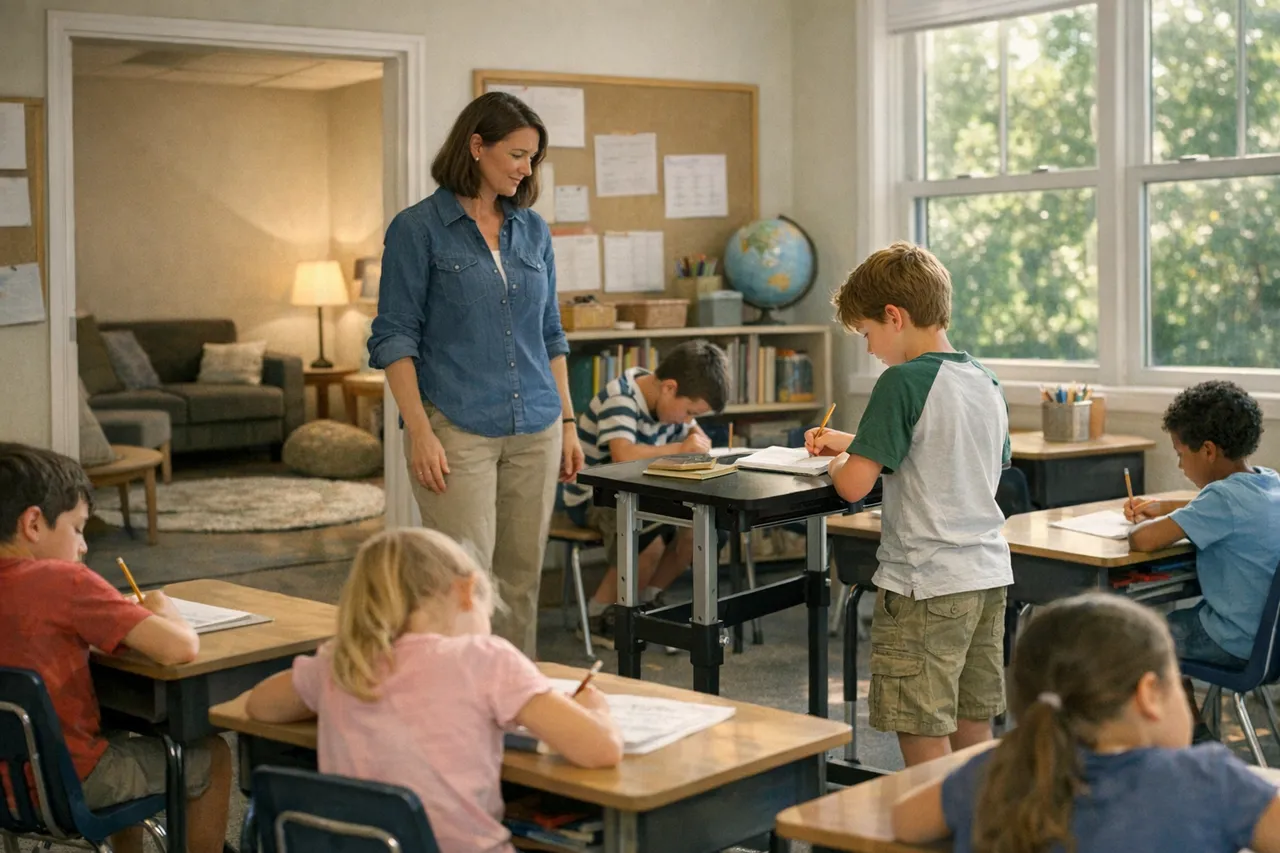
A randomized clinical trial published online Nov. 13 in JAMA Pediatrics found that four of the classroom accommodations schools commonly give students with ADHD — extra time, frequent breaks, a low-distraction workspace, and permission to stand while working — did not significantly improve classroom behavior or academic performance in the study setting. In the same trial, behavioral intervention and stimulant medication did improve some outcomes.
For school teams, the practical answer is not that accommodations should disappear. It is that these four supports should stop being treated as automatically helpful for every child with ADHD. The study is narrower, and more useful, than that: it suggests schools should treat common accommodations as hypotheses to test for a particular student, not as a default list to copy into every 504 plan or IEP. (pubmed.ncbi.nlm.nih.gov)
What the trial actually tested
The study used a crossover design in Florida International University summer treatment program classrooms, so each child experienced multiple conditions rather than being assigned to only one. Researchers enrolled children with ADHD in kindergarten through sixth grade; 255 started the intervention and 235 completed it. The accommodations were randomized daily, stimulant medication and placebo alternated weekly, and the classroom behavior setting alternated every two weeks between a general classroom and an enhanced behavior-intervention classroom. The trial measured rule violations during class, the amount of seatwork completed correctly, and quiz scores. (pubmed.ncbi.nlm.nih.gov)
Across those conditions, none of the four accommodations significantly improved classroom behavior or academic performance, according to the trial abstract and FIU’s summary of the study. By contrast, FIU reported that behavioral intervention reduced rule violations during independent work by 37% and stimulant medication reduced them by 61%, compared with periods when children received neither treatment. FIU also said medication helped children complete more work and earn higher quiz scores. (pubmed.ncbi.nlm.nih.gov)
That distinction matters for schools because the accommodations tested here are among the most common, least controversial supports written into plans. The study does not show that every ADHD support is ineffective. It tested only four accommodations, and it tested them in a structured summer program rather than a typical school year classroom, where academic demands, peer dynamics, teacher workloads, and implementation quality can look very different. (pubmed.ncbi.nlm.nih.gov)
What readers should and should not change
The main takeaway for teachers, school psychologists, and 504 or IEP teams is to raise the evidence bar for routine accommodations. If a student is getting extended time or a quieter workspace, the next question should be concrete: What problem is this supposed to solve, and what data will show whether it is working? This trial does not justify stripping supports away wholesale, but it does undermine the idea that these particular accommodations are inherently beneficial simply because they are common. (pubmed.ncbi.nlm.nih.gov)
It also points schools away from a familiar mistake: confusing easier task completion with stronger learning. In a 2022 FIU study conducted in the same summer treatment program model, stimulant medication improved seatwork productivity and classroom behavior but did not increase how much curriculum content children learned over multiweek instructional blocks. Put together, the two studies suggest that a support can make a classroom run more smoothly without necessarily building academic skill or durable knowledge.
That is why the strongest school-side implication here is behavioral, not medical. Schools cannot prescribe medication, and medication decisions belong to families and clinicians. But schools can do something the new trial suggests matters more than default accommodations alone: build, resource, and monitor behavioral supports that target the classroom behaviors actually getting in the way of learning. In practice, that could mean tighter feedback cycles, explicit routines during independent work, and progress checks that ask whether a support is reducing disruptions, increasing completed work, or improving performance on actual class tasks. (pubmed.ncbi.nlm.nih.gov)
The next question worth watching is whether similar results hold in ordinary school-year classrooms and for other accommodations schools use with students with ADHD. Until then, this study gives educators a defensible middle position: don’t assume common accommodations work, don’t pretend one trial settles every case, and don’t leave behavior supports out of the conversation just because an accommodation is easier to write into a plan. (pubmed.ncbi.nlm.nih.gov)
More from Research & Evidence

Virginia G3-eligible community college fields paid off differently by gender
In programs later designated as G3-eligible, women and men were both more likely to land field-related jobs, but early earnings gains were much larger for men. The paper suggests advisers should separate job alignment from likely wage payoff when steering students into high-demand pathways.

Denver teacher coaching study finds no gains in retention or test scores
A new study of Denver Public Schools’ teacher-leader model found no measurable effect even after it scaled to more than 6,000 mentee teachers. For districts, the bigger lesson is to examine whether coaching time is protected or diluted by evaluation duties and oversized caseloads.

Science study backs phone-free classrooms, especially for struggling students
A large randomized trial in higher education found that enforced in-class phone collection modestly improved academic performance, with the biggest gains among lower-performing students. The result gives educators stronger evidence on classroom restrictions while stopping short of proving every schoolwide ban will work.