Student-loan auto-pay 1% rate break extended to Dec. 31, 2026
Eligible federal borrowers who enroll in auto pay by the new deadline can receive the temporary 1 percentage-point interest-rate reduction through June 30, 2028, giving colleges and financial-aid teams a new date for repayment outreach.

The U.S. Department of Education said on September 29 that federal student-loan borrowers now have until December 31, 2026, to sign up for auto pay and still receive the temporary 1 percentage-point interest-rate reduction through June 30, 2028. The change, announced in a department press release, extends the enrollment window by three months and gives colleges, financial-aid offices, and student-support teams a new date to push out to recent graduates and other borrowers already in repayment. (ed.gov)
The timing matters because the extension arrived one day before the earlier September 30, 2026 cutoff the department set when it first rolled out the higher auto-pay discount on June 18. The department also said nearly 2 million borrowers have enrolled in auto pay since the summer announcement, a sign that a relatively small interest-rate incentive is reaching borrowers at scale as federal repayment rules shift again. (ed.gov)
One practical complication remains: not every official borrower-facing page appeared to be updated immediately. As of the September 30 crawl, the main Federal Student Aid payment page still referenced the old September 30 deadline, while the department’s September 29 press release and at least some servicer pages, including MOHELA and Edfinancial, reflected the new December 31 deadline. For campus staff, that means borrower outreach needs to cite the new date clearly and point people back to their servicer account, where enrollment actually happens. (ed.gov)
Who is actually eligible
This is not a universal student-loan rate cut. Federal Student Aid says the additional reduction applies to Direct Loans disbursed on or after July 1, 2012. Other loan types, including Federal Family Education Loan Program loans that are not eligible for the added reduction, Federal Perkins Loans, and Health Education Assistance Loans, are outside the temporary 1 percent benefit. The reduction also applies only while a borrower is in repayment and remains enrolled in auto pay. (studentaid.gov)
That distinction matters for colleges advising current students. A borrower who is still in school, in a grace period, or in deferment or forbearance will not receive the discount during those periods, even if auto pay is set up. In other words, the most immediately affected group is not every currently enrolled student with federal debt; it is borrowers who are already being billed, plus graduates who are close enough to repayment to act on the new window. (edfinancial.studentaid.gov)
The department’s June announcement raised the long-standing auto-pay interest reduction from 0.25 percentage point to 1 percentage point starting July 1, 2026, but only as a temporary benefit scheduled to end on June 30, 2028. Borrowers who were already enrolled in auto pay were included in the upgraded rate, and the September 29 announcement preserves that benefit while extending the deadline for late enrollees. The policy is temporary, not a permanent reset of federal student-loan pricing. (ed.gov)
A small rate change with real campus consequences
On its face, the policy change sounds narrow. But for institutions that work with students at the handoff from school to repayment, it is an operations story as much as an affordability story. The department explicitly tied auto pay to on-time payment behavior and to access to benefits under the new Repayment Assistance Plan, or RAP. It also said eligible borrowers making on-time monthly payments can qualify for Public Service Loan Forgiveness after 120 payments. That means the department is using a rate incentive not just to lower borrowing costs, but to steer borrowers into a more regular repayment habit. (ed.gov)
For borrowers, the dollars are real even if they are not life-changing on their own. A 1 percentage-point reduction translates to about $100 a year in interest savings on a $10,000 principal balance and about $300 a year on a $30,000 balance, assuming the balance stayed flat for a full year. Over roughly 21 months from October 2026 through June 30, 2028, that works out to about $175 on $10,000 and about $525 on $30,000 under the same simplifying assumption. Actual savings will vary because federal loan interest accrues on the unpaid principal and many borrowers’ balances will fall, pause, or change repayment status over that period.
The bigger institutional point may be behavioral rather than arithmetic. In June, the department said that before the COVID-19 pandemic, more than 80 percent of borrowers in active repayment were enrolled in auto pay, compared with only 40 percent now. Read that alongside the nearly 2 million new enrollments since summer, and the policy looks less like a simple discount and more like a federal attempt to rebuild repayment routines after years of disruption, pauses, plan changes, and litigation-driven churn. Colleges do not control that system, but they do influence whether students and alumni understand it early enough to act. (ed.gov)
That creates a fairly specific job for financial-aid offices, completion teams, and alumni-support staff. The useful message is not merely that auto pay exists. It is that eligible borrowers with Direct Loans should check their servicer account now, confirm whether their loans qualify for the temporary 1 percent benefit, and decide before December 31, 2026 whether to enroll. For institutions that already send graduation checklists or loan-exit reminders, this is the kind of concrete deadline that can turn a vague repayment warning into an actionable step. (ed.gov)
What borrowers should be told next
The department says borrowers who are not already in auto pay must log in to their student-loan servicer account and select auto pay from the navigation menu, then enter bank-account information and confirm payment amounts. Federal Student Aid also reminds borrowers that their servicer handles billing and payments, so the practical next step is through the servicer rather than through a campus office. Staff members helping students or alumni should therefore keep their guidance narrow: verify your loan type, verify your repayment status, verify your servicer, and enroll there if you want the temporary rate break. (ed.gov)
The caution for institutions is that auto pay is not a magic fix. It helps borrowers avoid missed payments, but it only works if the borrower is eligible, in repayment, and comfortable authorizing automatic withdrawals from a bank account. Schools that promote the incentive too broadly risk confusing students who are still years away from repayment or borrowers whose loans do not qualify for the extra reduction. Schools that explain it precisely, though, can offer something more useful: a realistic estimate of savings, a clearer deadline, and a better chance that graduates enter repayment without missing early payments. (studentaid.gov)
What happens next is worth watching for two reasons. First, the department and servicers will need to get borrower-facing guidance aligned so people are not looking at conflicting deadlines. Second, the extension creates a new test of how many more borrowers will actually sign up when given one extra quarter to do it. If the nearly 2 million figure keeps rising, colleges may start treating this less as a minor federal update and more as a standard part of repayment counseling for the class of 2027 and beyond. (ed.gov)
More from Higher Education

California creates AANHPI-serving designation pathway for colleges
AB 2374 sets up a cross-sector application process, public student-outcome goals, and five-year designation terms for California campuses. The new law creates recognition and accountability rules, but not an automatic funding stream.
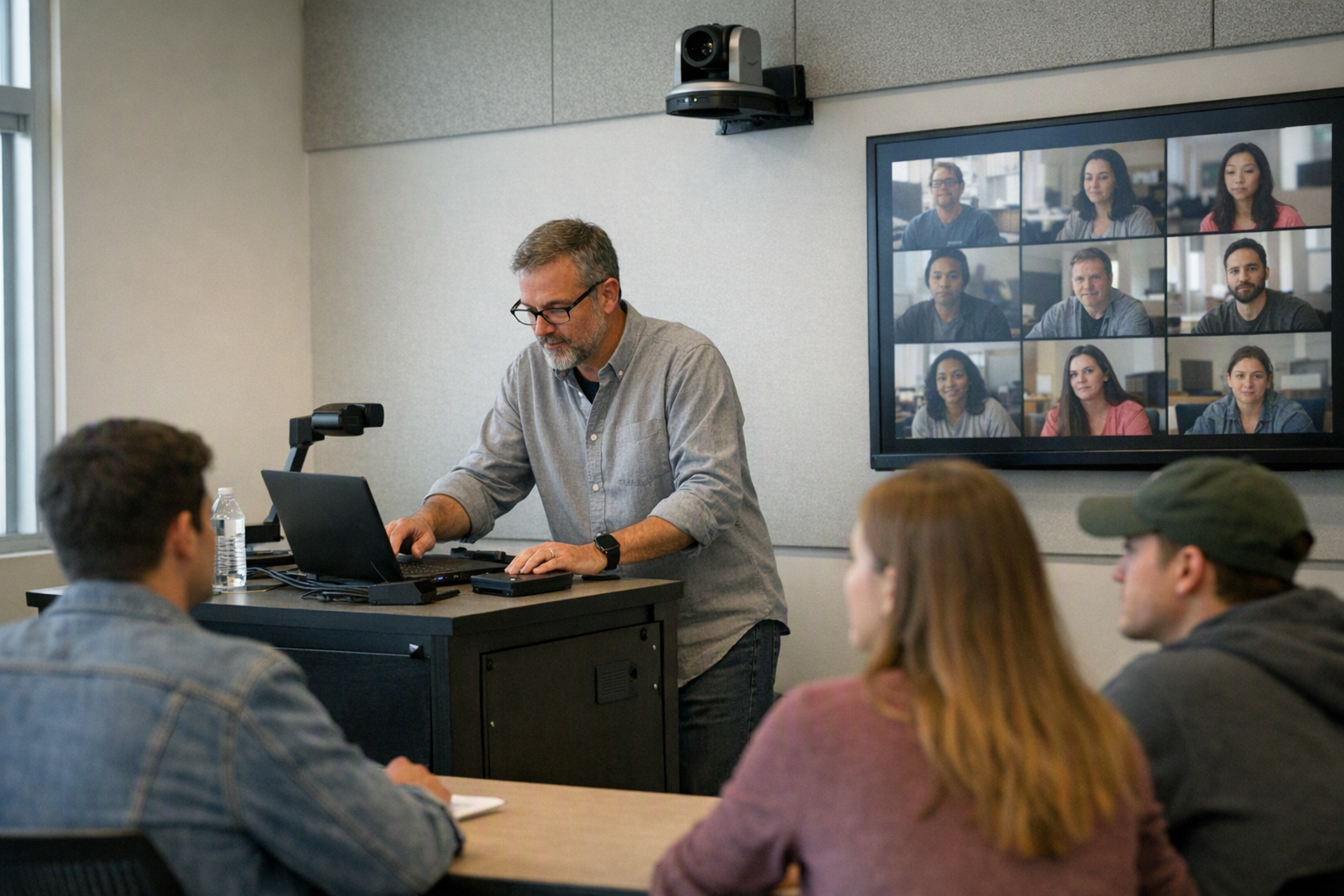
Zoom Classroom is now available for U.S. colleges, with new video analytics
The higher-ed release brings more live teaching tasks into LTI 1.3 LMS platforms such as Canvas and Blackboard, while Zoom Video Management 2.0 adds analytics on views, completion, and engagement for recorded course videos.

North Carolina gets its first federally approved Workforce Pell programs
Forsyth Technical Community College won federal approval for six short-term workforce programs, with eligible students able to use Pell aid starting in January 2027. The move makes North Carolina the fifth state with approved Workforce Pell offerings and shows the advising, FAFSA, and compliance work colleges still have to build around them.