Richmond voters will weigh a 1% sales tax for school construction
City Council unanimously placed a November 2026 referendum on the ballot, giving Richmond an early test of Virginia’s new local option for school capital funding.
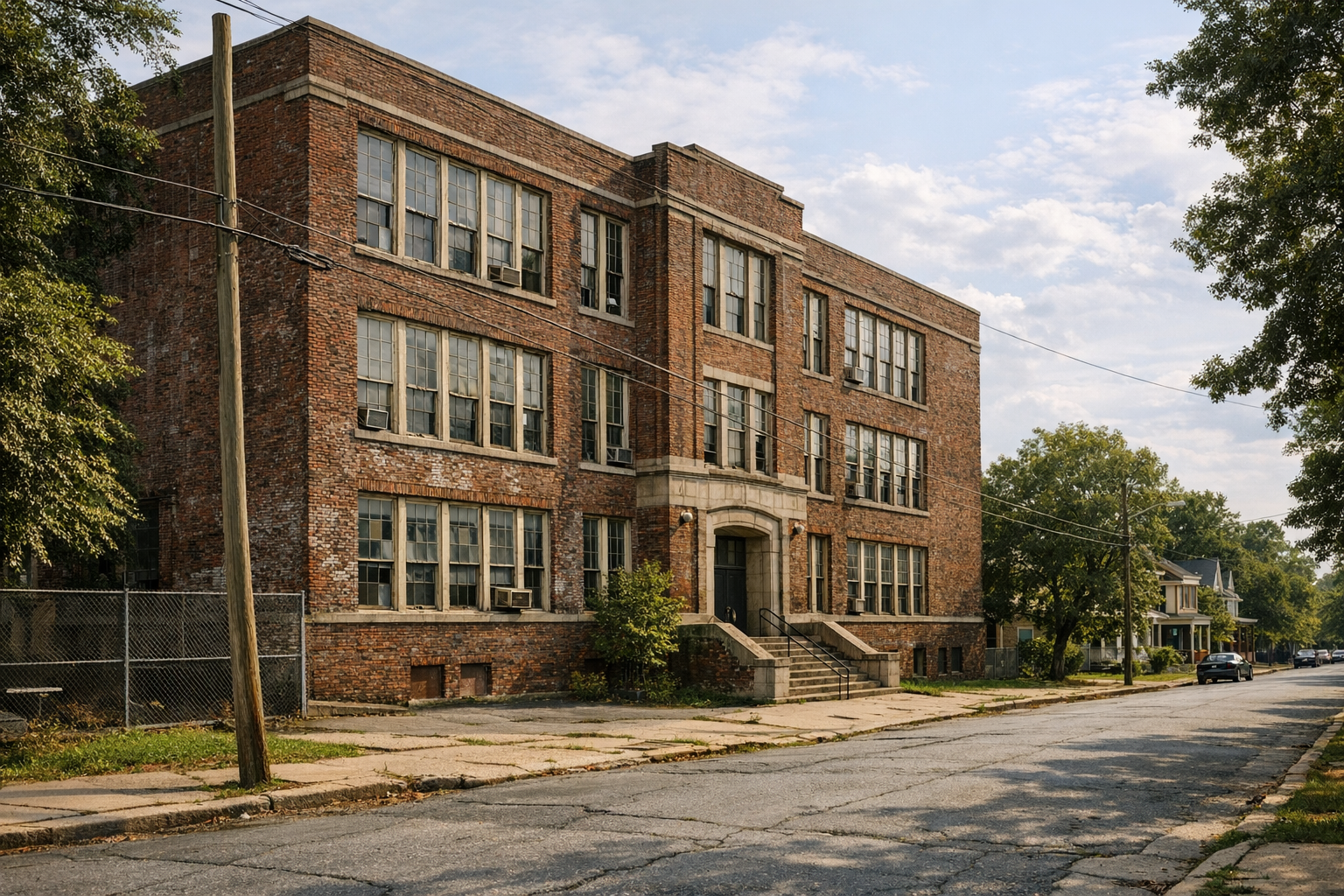
Richmond voters will decide this November whether to authorize an additional 1% local sales tax for school construction after the City Council voted unanimously on July 27 to send the question to the ballot. The measure would give Richmond a dedicated facilities revenue stream for Richmond Public Schools rather than forcing every major building decision back into the city’s annual capital budget debate. VPM and WTVR both reported the unanimous vote, and the city had previewed the proposal in a July 23 announcement from Mayor Danny Avula.
If voters approve it, Richmond could levy up to an extra 1% sales tax dedicated only to school capital projects such as construction, renovation and major repairs. Under Virginia law, that money cannot be used for salaries, classroom materials or other day-to-day operating costs, and ballot language must specify that the revenue is for school capital work and include an expiration date. City officials estimate the added tax would generate about $47 million a year and support as much as $850 million in school projects through 2034, but those figures are projections, not guaranteed collections. What remains unsettled is as important as what changed: Richmond still needs voter approval, a credible long-range facilities plan, and public trust that the city will spend the money in a way families can see.
State tax rules also shape who would feel the increase. The city says groceries, essential personal hygiene products and prescription medicines would not be hit by the added school-construction tax. That aligns with Virginia Tax guidance on food and essential hygiene products, Virginia’s sales-tax exemption rules for prescription medicines, and the state regulation providing that local sales-tax exemptions track state exemptions. For schools, that matters politically: Richmond leaders are trying to sell the referendum as a broader-based facilities tool, not a tax on basic necessities.
From annual budget fights to a dedicated construction stream
For educators and district operators, the practical significance is not simply that Richmond may raise more money. It is that the city is trying to separate school construction from the annual scramble over operating needs, wage pressures and other city infrastructure demands. In the mayor’s rollout, Avula argued that a dedicated sales tax could accelerate school modernization while freeing general-fund dollars for other priorities; he also said that, if voters approve the referendum, he would later introduce legislation to cut the meals tax by one percentage point and build a March budget around a one-cent real-estate tax reduction. Those offsetting tax cuts are not part of the November referendum itself, which means voters will be judging both the school pitch and a broader fiscal promise that would still require later city action. (rva.gov)
Richmond Public Schools has the facilities case to make. On its facilities assessment page, the division says it conducted its first condition assessments of all properties in 2024 and described the work as a first step toward repairing or rebuilding infrastructure after decades of disinvestment. On its school construction page, RPS says the average age of a Title I school in Richmond is 87 years old. Those numbers help explain why a capital-only tax could resonate with principals and teachers who are less interested in finance structures than in whether roofs, HVAC systems and classrooms are fit for learning.
At the same time, the past few weeks have shown why capital funding and operating funding cannot be conflated. In a July 23 budget update, RPS said the final state budget left the division with $8.9 million less than expected. The city pledged $4.78 million in short-term-rental tax revenue to narrow that hole, but the school system still moved to cut another roughly $4.25 million, including vacancy freezes and other reductions. For school leaders, that is the core trade-off: a construction tax may help replace buildings, but it does nothing directly for staffing or program cuts happening now.
That distinction is visible in actual projects. RPS says it is already building a new Richmond High School for the Arts and planning a new technical center on Maury Street. But VPM reported in June that the replacement of 72-year-old Woodville Elementary had been delayed indefinitely because of a funding gap. A dedicated revenue source does not guarantee fast delivery, but it can make it easier to borrow, phase projects and tell school communities something more concrete than “wait for next year’s budget.” (rvaschools.net)
Richmond is an early test of Virginia’s new authority
Richmond’s move is also one of the first real tests of a new state tool. This year’s Virginia budget and the current text of § 58.1-605.1 of the Code of Virginia allow counties and cities like Richmond to seek voter approval for an additional local sales tax of up to 1% for school construction or renovation. The change followed a years-long push from local governments and school advocates for a facilities funding mechanism that captures some spending by visitors and commuters instead of leaning so heavily on property taxes and annual appropriations. Richmond is not alone in moving quickly: Chesterfield County and Powhatan County have also approved November referendums for school-capital sales taxes. (budget.lis.virginia.gov)
That broader context matters for superintendents and school boards across Virginia. If Richmond succeeds, other localities with aging buildings may see a workable template: secure state authority, build local political alignment, frame the tax around visible facilities needs, and promise a project pipeline people can understand. If Richmond fails, the lesson may be the opposite — that voters will not approve a new sales tax without a sharper project list, firmer accountability guarantees or stronger proof that the tax burden is worth the payoff in classrooms. Either way, the referendum is not just about one city’s ballot language; it is an early market test for a new state-sanctioned financing model. (law.lis.virginia.gov)
What voters still need to see before November
The strongest argument for the referendum is predictability. The biggest vulnerability is credibility. The city has attached large revenue and bonding estimates to the proposal, but the mayor’s announcement also acknowledged that the School Board still needs to develop a long-term facilities plan with public input. That means Richmond is asking residents to approve a financing mechanism before the full sequencing of projects is settled. For families at schools waiting on repairs, that may feel overdue but acceptable; for skeptical voters, it may feel backward.
What happens next, then, is less about whether Richmond has a school facilities problem than about whether city and school leaders can translate that problem into a ballot case that feels specific, fair and durable. Teachers and principals know what aging buildings do to attendance, morale and program quality. The question between now and November is whether Richmond can persuade voters that a dedicated sales-tax stream will produce faster, more visible improvements than another decade of piecemeal capital fights — and whether the result becomes a model other Virginia localities copy. (rvaschools.net)
More from Policy & Funding

Fifth Circuit restores Mississippi DEI law for schools and colleges
The appeals court lifted the injunction against H.B. 1193 and reassigned the case, putting the law back in effect while districts and campuses review training, hiring, and programming.

Supreme Court to hear magnet admissions case over proof in race-bias claims
The justices limited review to whether challengers to a race-neutral K-12 admissions policy must show group-wide disparate impact against the applicant pool, a technical question with big consequences for selective programs.
Some Maryland districts will miss the state’s AI policy deadline
The Oct. 22 mandate requires every school system to adopt local rules on AI use, privacy, academic integrity, procurement, and human oversight — but board calendars and review timelines are getting in the way.