Ohio expands spring testing probe to 52 more school buildings
A statewide vendor review found significant spring 2026 test anomalies beyond the original Columbus case. Ohio has not alleged misconduct at the newly flagged schools, but districts may face deeper reviews, score questions, and report-card uncertainty.
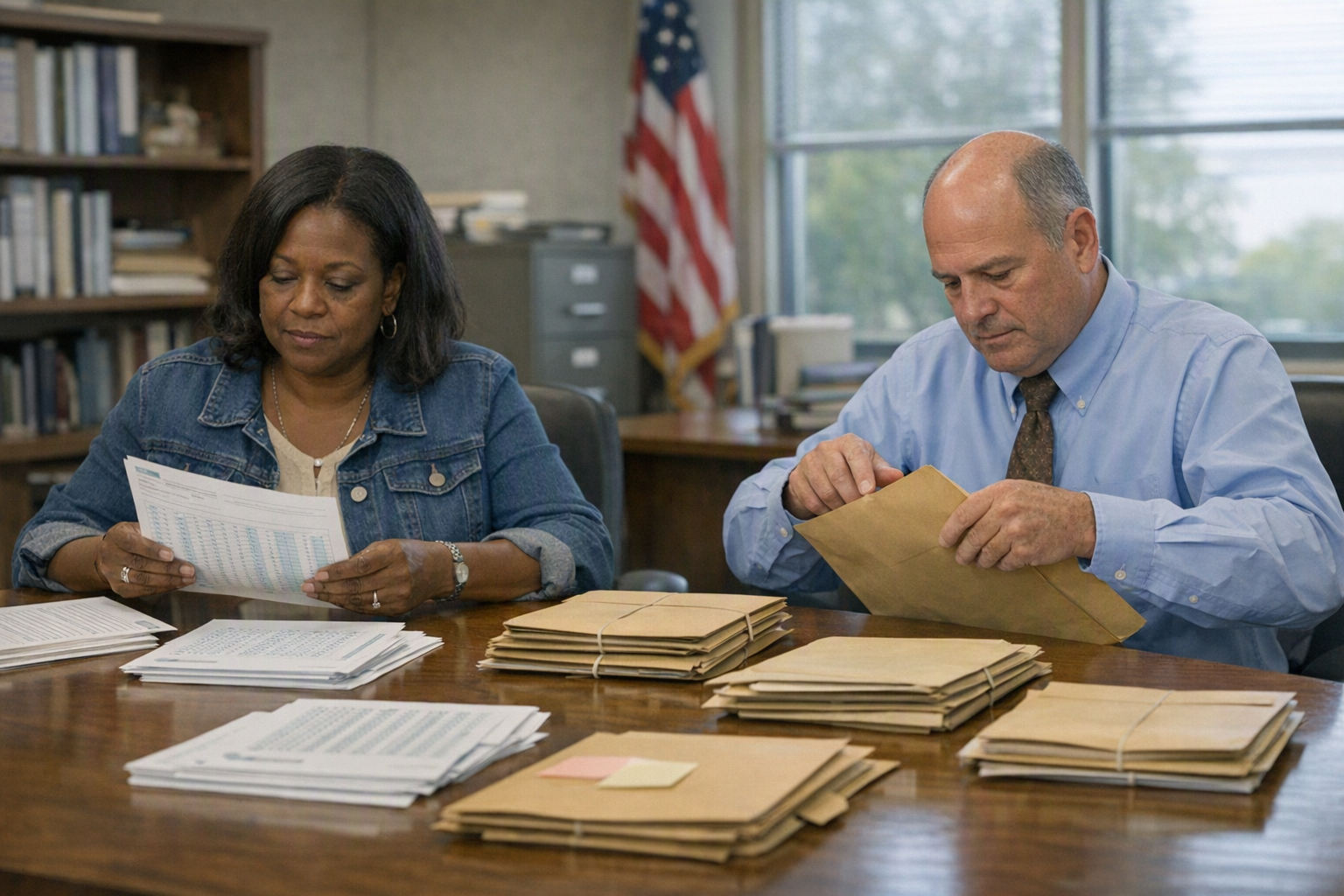
Ohio has widened its spring testing-integrity investigation from two Columbus high schools to 52 additional school buildings across the state, a sharp escalation that turns what first looked like a district problem into a statewide accountability story. In a September 4 release, the Ohio Department of Education and Workforce said a comprehensive review by its state testing vendor found “significant testing anomalies” in spring 2026 data that may lead to further investigation. That is on top of the July 2 probe already opened after Columbus City Schools self-reported anomalies at Independence High School and Walnut Ridge High School. (education.ohio.gov)
The immediate takeaway for district leaders is not that Ohio has proved misconduct at 52 more buildings. It has not. What the state has announced is a broader screening result and the possibility of more case-by-case inquiries. But the expansion means at least 54 buildings are now wrapped into the matter if the two previously identified Columbus schools are counted, and it raises harder questions about how Ohio audits test integrity, what evidence triggers a deeper review, and whether spring scores that feed public ratings can still be trusted in every affected school. (education.ohio.gov)
The department’s own release shows how geographically broad the review has become. The schools named in the visible portion of the state list include Bellaire Middle School in Belmont County, George Hays-Jennie Porter School in Cincinnati, and three Cleveland Metropolitan buildings — Clark School, Paul L. Dunbar Elementary School, and Robinson G. Jones Elementary School — along with Dawson-Bryant schools in Lawrence County. Even from that partial view, the pattern is clear: this is not confined to one city, one grade span, or one kind of community. (education.ohio.gov)
What the state has said — and what it has not
So far, DEW has described the trigger in broad terms only. The September 4 release says the statewide vendor review was launched as a proactive step during the ongoing Columbus investigation and identified “significant testing anomalies” at 52 additional buildings. The release does not publicly define the statistical threshold the vendor used, the specific test subjects or grade levels involved at each school, or the timeline for deciding which of the 52 buildings will face a formal inquiry. That missing detail matters because an anomaly is a red flag, not a finding of cheating or score tampering by itself. (education.ohio.gov)
Ohio’s own test-security materials sketch the process that usually follows when the Office of Assessment believes an allegation warrants scrutiny. Under the state’s August 2026 test-security procedures, a district conducts an investigation when an alleged test-security violation has been reported and the Office of Assessment determines the case warrants an inquiry. The department’s investigation template asks districts to document the incident, the evidence or lack of evidence, whether scores were invalidated, any disciplinary action, and a corrective plan of action. (education.ohio.gov)
That distinction between a data screen and a formal finding will matter in the weeks ahead. Ohio’s public-facing security guidance says violations or other irregularities can lead to breach testing, corrective action against staff, and even licensure suspension. But those are potential consequences after investigation, not automatic penalties for landing on the 52-school list. (education.ohio.gov)
What this could mean for scores, report cards, and staff
The clearest precedent remains Columbus. On July 2, DEW said Columbus City Schools had self-reported anomalies at Independence and Walnut Ridge and would invalidate spring 2026 scores for all state tests in all subjects at those two schools. The department also said information from that case had been forwarded to the State Board of Education’s Office of Professional Conduct. DEW has not announced the same outcome for the 52 newly flagged buildings; for now, those schools are at the review stage, not the sanction stage. (education.ohio.gov)
For school boards and superintendents, the bigger policy issue is accountability. Ohio School Report Cards are built to give the public a school-by-school picture of performance, and the state’s traditional report card framework says the achievement component relies on performance levels from Ohio’s State Tests. If investigations lead to more invalidations, the state will have to decide how those schools’ accountability results are handled. As of September 5, DEW had not publicly spelled out that approach for the newly identified buildings. (education.ohio.gov)
For students, the effects could vary widely by grade level. Ohio requires schools to administer state tests in grades 3-8 and in several high school end-of-course subjects, and for students in the classes of 2023 and beyond, the English II and Algebra I exams can be part of demonstrating competency for graduation. At the same time, Ohio’s graduation rules provide multiple pathways beyond a single test score. That means a school-level invalidation can create immediate logistical headaches and counseling work without necessarily derailing every student’s path to a diploma. (education.ohio.gov)
In practical terms, that is where districts may feel the strain first. Testing coordinators may need to preserve records, reconstruct who administered which exams, and answer parent questions before the state has finished its work. Principals may also have to manage staff anxiety because Ohio’s security rules explicitly contemplate personnel consequences, including referrals that can affect licensure. (education.ohio.gov)
The larger lesson for districts
The broader significance of this episode is that Ohio appears to be treating the Columbus case as a trigger for statewide forensic review rather than an isolated local incident. The September 4 release says DEW directed its vendor to conduct a comprehensive sweep of statewide testing data after Columbus self-reported. That suggests districts should assume unusual patterns can now prompt secondary review even when no complaint has yet gone public. (education.ohio.gov)
That is not necessarily a sign of overreach. Ohio publishes school-level statistical summaries and item-analysis reports from its state tests, and its security rules emphasize that districts are responsible for protecting both test content and the integrity of student results. In that environment, vendor-led anomaly checks are a logical back-end control. Still, there is a trade-off: statistical screening can identify schools that merit a closer look, but numbers alone do not explain whether the cause was deliberate misconduct, weak supervision, a procedural mistake, or something more mundane. (education.ohio.gov)
That leaves districts with a communications problem as much as a compliance problem. Families deserve to know when a school’s scores are under review, especially when those scores feed report cards and, in some cases, graduation-related testing. But administrators also have to avoid implying guilt before the state has finished investigating. Ohio’s own paperwork reflects that balance by asking districts to document both evidence and “lack of evidence” before reaching a conclusion. (education.ohio.gov)
The next thing worth watching is whether DEW releases more specifics: what patterns its vendor flagged, how many of the 52 buildings move into full investigation, whether any additional scores are invalidated, and how the department will handle accountability reporting for affected schools. Until then, Ohio’s message is clear but limited: the state believes the anomalies are serious enough to pursue, and districts now have to prepare for a much more scrutinized testing system than they had a week ago. (education.ohio.gov)
More from Exams & Assessment

California starts notifying families in ETS student data breach
California says notices to affected current and former public school students began October 16 and will continue into early November, with free identity-protection services offered through ETS.

Kentucky report cards show reading gains as top school ratings fall
The 2025-26 results released Oct. 15 are Kentucky’s last report cards under the current accountability formula before House Bill 257 changes how schools are measured next year.

GCSE 2026 results inch up as Ofqual adds local benchmarking data
England’s latest GCSE results show a small gain for 16-year-olds and a clearer lift in top maths grades, while Ofqual’s updated area tools let leaders compare outcomes and subject uptake locally.