New York Times posts 2026-27 student contest calendar for classroom planning
The year-ahead lineup starts with a 100-word narrative contest in September, then moves through visual, video, open-letter and podcast challenges teachers can build into coursework.
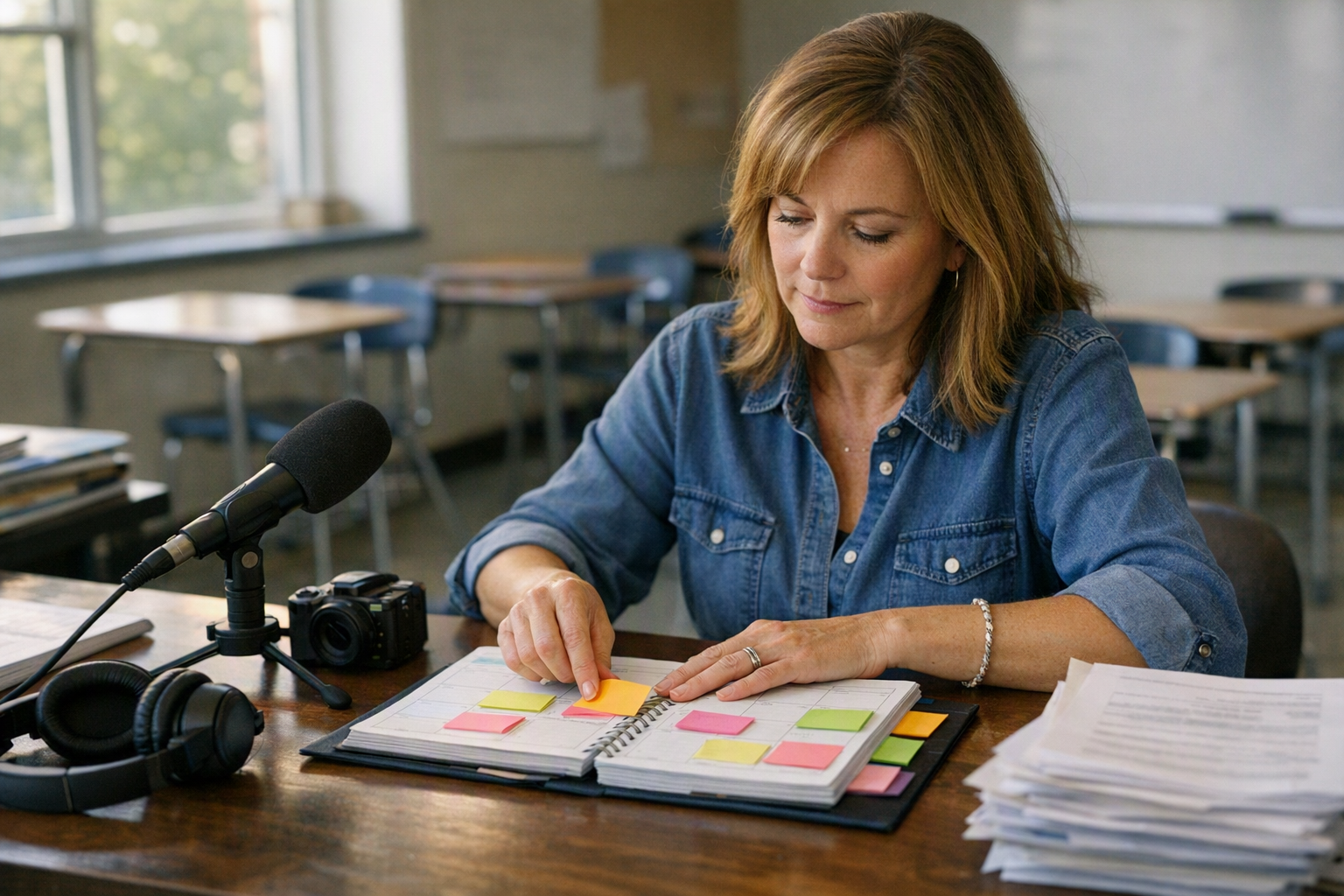
The New York Times Learning Network has posted its 2026-27 student contest calendar, giving middle and high school teachers something they rarely get from a national publisher: a full-year, no-fee map of authentic-audience assignments they can build into classes before school starts. The first contest, the 100-Word Personal Narrative Contest, is scheduled to open on Sept. 16, 2026, and run through Oct. 28. (static01.nyt.com)
The bigger value is the sequence. After the fall narrative contest, the calendar lists “What It’s Like to Grow Up in 2026: A Visual Contest” from Oct. 28 to Dec. 9, a STEM Video Interview Contest from Jan. 6 to Feb. 17, an Open Letter Contest from Feb. 17 to March 31, and a Podcast Contest from March 31 to May 12. Summer is not an afterthought: the Summer Reading Contest is slated for three windows, June 4-11, July 2-9, and July 30-Aug. 6, 2027, and the Learning Network also continues its Weekly Current Events Conversation throughout the school year. (static01.nyt.com)
For teachers deciding whether this is worth planning around, the basic access terms are unusually broad. Official rules pages for current Learning Network contests say entries are open to students ages 13 to 19 in middle or high school anywhere in the world, and official rules documents for current contests including podcast and summer reading are labeled “No purchase necessary to enter or win.” (static01.nyt.com)
Which contests fit which parts of the year
The September personal-narrative contest is the easiest place for many teachers to start. A 100-word cap makes it realistic for the first month of school, when classes are still establishing routines and teachers are still learning who can draft quickly, revise carefully, and write with specificity. In practical terms, that makes this contest a good match for back-to-school autobiography units, advisory writing, journalism icebreakers, or a short ELA mini-unit on voice and detail. Because the task is small, the barrier to entry is small too. Because the audience is public, it can still feel consequential. (static01.nyt.com)
The fall visual contest looks useful for a different reason. Its prompt asks students to show, in a visual medium, what it is like to be a teenager now. That makes it a natural fit for media-literacy, photography, art, English, and interdisciplinary humanities courses that want students to interpret the moment they are living through rather than just summarize it. The likely trade-off is classroom time: even without the full rules page yet, a visual project usually requires more planning, revision, and curation than a 100-word narrative, especially if teachers want students to discuss audience, ethics, and representation rather than simply make something eye-catching. (static01.nyt.com)
The January-through-March stretch may be the most instructionally useful part of the calendar. The STEM Video Interview Contest asks students to create a video of up to two minutes interviewing an expert about a question related to science, health, math, engineering, or technology. Then the Open Letter Contest asks for a 500-word-or-fewer letter that draws on at least one Times source and one reliable non-Times source. In school terms, that is a ready-made progression from asking a real question, to interviewing, to building an evidence-based public argument. Science departments, library programs, journalism classes, and ELA teams could plausibly share that stretch of the year instead of treating contests as extras. (static01.nyt.com)
The podcast contest is the highest-lift assignment on the calendar, but also one of the most transferable. Current rules say student podcasts can be up to five minutes, may be created collaboratively, and cannot use copyrighted music or sound effects unless they fit limited fair-use exceptions. The contest page says favorites are featured on The Learning Network. For teachers, that means the assignment is not just about speaking into a microphone; it is about scripting, editing, sourcing, sound choices, and publication standards. That makes it especially strong for journalism, media production, English, and advisory programs that want students to practice voice and structure in a format they actually consume outside school. It also means teachers should budget more than a couple of class periods. (static01.nyt.com)
Summer reading is the lowest-stakes reentry point. The 2027 calendar shows three monthly submission windows, and current rules say students can respond to something published in The Times in writing or by video; written entries are capped at about 250 words and video entries at 90 seconds. Students can participate in any or every week of the contest when it runs. That makes the contest adaptable for summer assignments, independent reading responses, or a gentle current-events bridge between school years. It also gives teachers an option for students who are more comfortable speaking than writing. (static01.nyt.com)
The real payoff, and the real constraints
The main reward here is recognition, not money. Current contest pages say podcast favorites are featured on The Learning Network, summer reading winners are published there, and official rules for at least one current contest state that the prize has no cash value. That matters because schools should frame these opportunities honestly: students are competing for publication, visibility, and validation from a recognizable newsroom, not for scholarships or large awards. For many adolescents, that is still powerful. An audience beyond the teacher often changes the seriousness of revision. (static01.nyt.com)
But the calendar also points to some practical constraints teachers should think through now, before building a unit around any one contest. The Open Letter Contest requires both a Times source and a reliable non-Times source, and the Summer Reading Contest asks students to choose material from the Times. That can be pedagogically useful: it pushes students toward close reading, source evaluation, and evidence. It can also create access and planning questions. Teachers may need to preselect articles, check what students can open from home, and decide whether the contest is serving the unit or the unit is being bent around the contest. (static01.nyt.com)
There is another caution worth making explicit: the calendar is a planning tool, not the final word. Individual prompts, rubrics, and technical rules can shift from contest to contest, and the current rules already show how much those details matter. The Open Letter Contest has source requirements, the podcast contest has audio-rights restrictions, and summer reading allows recurring submissions in a way other contests do not. Teachers who want to use the calendar well should treat it as a syllabus sketch, then verify each contest page once its submission window opens. (static01.nyt.com)
That is still a meaningful service from the Learning Network. In a school year crowded with pacing guides, testing windows, and last-minute changes, a free, public contest schedule gives teachers something concrete to work with months ahead of time. The next date worth watching is Sept. 16, 2026, when the first contest in the cycle opens and teachers can see whether the final entry page matches the planning promise of the calendar. (static01.nyt.com)
More from Opportunities

Michigan Reconnect reopens for 21- to 24-year-olds
The live application creates a timely fall enrollment window for eligible Michigan residents seeking community-college or Tribal college credentials.

UNU Macau opens global AI and education competition, deadline Sept. 15
The 2026 contest is aimed at teams with credible education-AI projects, not just ideas, and ends with staged judging plus a Macau final on Nov. 26. Finalists get hotel accommodation and limited travel support, but applicants should verify eligibility details in the live form.

Knowles opens 2027 fellowship for new high school math and science teachers
The national program plans to select up to 40 teachers entering years one through three and offers four years of mentoring, stipends, grants, and peer support. The final deadline is Jan. 19, 2027.