Illinois school aid rose, but fewer districts meet adequacy targets
Illinois’ FY2027 Evidence-Based Funding distributions added $350 million, yet the statewide gap to 90 percent adequacy widened as cost updates, poverty data, and replacement-tax revenue shifted.
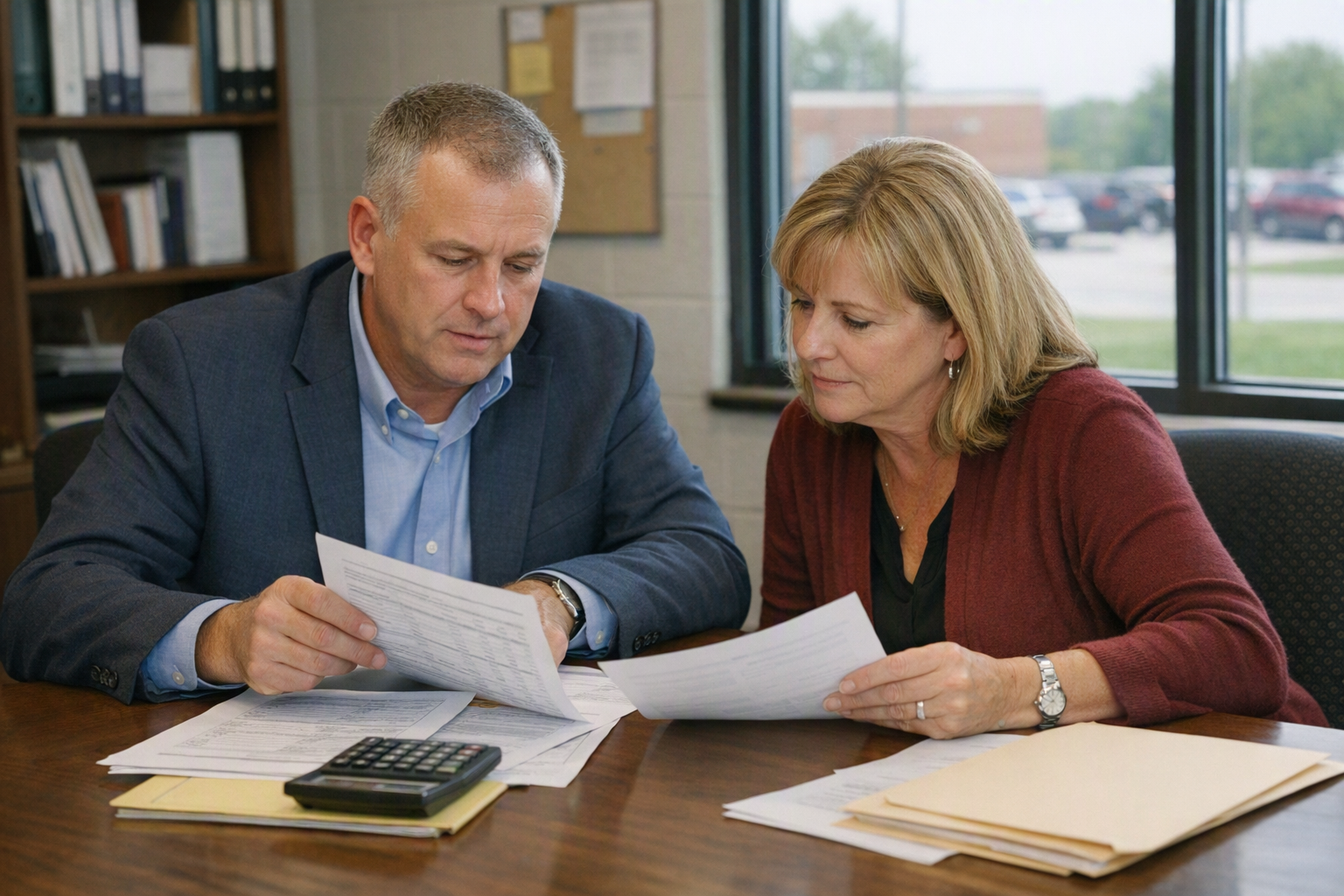
Illinois’ new school-aid distribution shows adequacy is slipping again even after a $350 million increase
Illinois has posted its fiscal 2027 school-funding distributions, and the headline number is bigger: the state budget provides about $9.286 billion through the Evidence-Based Funding formula, up $350 million from fiscal 2026. But the more consequential number for district leaders is moving the other way. Capitol News Illinois, analyzing the newly released state figures, reported that only 292 of Illinois’ 850 elementary, high school, and unit districts will be funded at or above 90 percent of their adequacy target this year, down from 327 in fiscal 2024. At the same time, the Illinois State Board of Education says the statewide gap to bring all districts to at least 90 percent adequacy has grown from $3.024 billion to $4.078 billion, extending the projected timeline to reach that benchmark from 11 years to 14 if annual new tier funding stays at $300 million. (isbe.net)
That combination is the real news in Illinois school finance this summer: districts can receive more state aid and still look farther from “adequacy” because the benchmark itself is recalculated every year. ISBE’s own FAQ makes that explicit. No district receives less EBF than it did the year before, the agency says, but annual updates to the formula can still push a district’s percentage of adequacy down. For superintendents trying to explain fall budgets, that means a larger state-aid line item does not automatically translate into room for new staff, restored programs, or relief from local budget pressure. (isbe.net)
Illinois’ formula, adopted in 2017, was designed to send more new money to districts furthest from adequacy, and by some measures it has done that. ISBE says 691 school districts are now at or above 70 percent of adequacy, up from 433 in 2019, and 99 percent of new tier funding still goes to Tier 1 and Tier 2 districts. So this is not a story about the formula suddenly stopping its redistributive work. It is a story about the state’s minimum annual increase no longer keeping pace with the rising cost assumptions and changing student-need data inside the formula. (isbe.net)
More money, weaker standing against the benchmark
The fiscal 2027 state budget kept the statutory school-funding increase intact, with $300 million in new tier funding and roughly $50 million restored for Property Tax Relief Grants, bringing the total EBF appropriation to about $9.286 billion. That is the figure many districts will cite in budget presentations. But ISBE’s FAQ points to the harder fiscal reality: the amount needed to get every district to at least 90 percent adequacy rose by more than $1 billion in a single year. Separately, Capitol News Illinois reported that the broader statewide gap to full adequacy now totals $6.8 billion. Those are different measures, but they point in the same direction — the target is receding faster than the annual increase is closing it. (isbe.net)
That distinction matters because adequacy is not a mood or a slogan. On the Illinois Report Card, ISBE defines a district’s percentage of adequacy as its calculated resources divided by its adequacy target. Resources include local capacity, Corporate Personal Property Replacement Tax revenue, and the base funding minimum. The target is built from 34 cost factors in statute. In plain English: if the state updates salary assumptions, regional cost factors, or student-need counts faster than revenue grows, a district’s standing can worsen even while its dollar allocation rises. (irc.isbe.net)
Why the formula says districts slipped
ISBE identifies three main reasons for the larger gap in fiscal 2027: updated low-income student data, annual salary and cost-factor updates required by the formula, and declining Corporate Personal Property Replacement Tax revenues. The CPPRT piece is especially important because those revenues count as part of the resource side of the adequacy calculation. When that local-corporate tax stream weakens, some districts look less able to fund schools on their own, and the statewide distance to adequacy grows unless the state fills the hole. (isbe.net)
This is also why the current debate can sound so strange to families and even to school employees. A district may truthfully say, “We got more from Springfield,” and also truthfully say, “We still cannot afford everything the formula says students need.” Those are not contradictory claims. They reflect a formula that is dynamic by design. ISBE said as much in its 2024 and 2025 superintendent messages, stressing that adequacy shifts with local need and local resources, and that the state had already seen the number of fully funded districts dip from 327 in fiscal 2024 to 313 in fiscal 2026 before this year’s drop to 292. (isbe.net)
For classrooms, the second-order effect is less abstract than the finance language suggests. ISBE’s EBF spending-plan materials say districts commonly connect these dollars to staffing, substitutes, central office services, and special education programming. That means when adequacy slips, extra state money often gets absorbed by maintaining existing positions and services before a district can add anything new. That is an inference from how districts are told to describe spending, but it fits the budgeting logic educators already know: higher costs first eat the raise. (isbe.net)
What district leaders will be explaining this fall
The state can still argue, with evidence, that EBF is more equitable than the system it replaced. ISBE says the floor has risen substantially since implementation began, and the formula continues to steer almost all new tier dollars to the highest-need districts. But district leaders heading into budget hearings and labor talks are likely to focus on a different message: hold-harmless protection prevents a nominal funding cut, not a squeeze. If the adequacy denominator keeps rising, even districts that receive more aid may have to delay hires, postpone service expansions, or lean harder on local revenue. (isbe.net)
Chicago Public Schools offers one high-profile example of that tension. In an August 6 budget update, CPS said its approved fiscal 2027 budget added $100 million in EBF revenue and $50 million in mandated categorical revenue from the state. Yet on its fiscal 2027 revenue page, the district says that under the state’s model as of fiscal 2026 it was at 73 percent adequacy, down from 79 percent in fiscal 2025 and 81 percent in fiscal 2024, and estimated it would need another $985 million to reach 90 percent adequacy by fiscal 2027. Chicago is not every district, but it is a clear illustration of the statewide problem: more state money can still leave a district substantially short of the state’s own benchmark. (cps.edu)
What remains uncertain is political, not mathematical. ISBE’s projection to 14 years assumes the state continues adding $300 million annually in new tier funding. If lawmakers hold to that pace, Illinois can still make progress, but recent data suggest it may be slower and more fragile than the state once hoped. If they go above it, the state could stop the slide sooner. The question to watch this fall is no longer whether Evidence-Based Funding still points money toward the neediest districts. The official data say it does. The question is whether the annual increase is now simply too small to keep adequacy from slipping backward again. (isbe.net)
More from Policy & Funding
Supreme Court to hear magnet admissions case over proof in race-bias claims
The justices limited review to whether challengers to a race-neutral K-12 admissions policy must show group-wide disparate impact against the applicant pool, a technical question with big consequences for selective programs.
Some Maryland districts will miss the state’s AI policy deadline
The Oct. 22 mandate requires every school system to adopt local rules on AI use, privacy, academic integrity, procurement, and human oversight — but board calendars and review timelines are getting in the way.

Ohio schools must address chronic absence earlier under new attendance rules
For 2026-27, Ohio districts must do more than wait for truancy triggers: they now have to notify families by a locally set threshold capped at 5% of school hours, use tiered supports, and involve absence intervention teams before missed time becomes entrenched.