Howard County backs 22 teacher pilots with more than $30,000 in microgrants
The Bright Minds awards fund educator-led tests in AI literacy, peer mental health support, literacy access, adaptive life skills, environmental learning, and school culture across more than 20 schools.
Howard County Public School System educators will spend the 2026-27 school year testing 22 small, school-based ideas with more than $30,000 in Bright Minds Foundation funding, a new round of awards that reaches from AI literacy in elementary math to peer-led mental health transition support in high school. HCPSS published the awards on Sept. 25, 2026, and both the district and the foundation said recipients were recognized at the Board of Education’s Sept. 24 meeting. Bright Minds says the projects span more than 20 schools and are expected to touch about 4,800 students. (news.hcpss.org)
That matters less as a grant roundup than as a picture of what classroom-scale innovation looks like when teachers get modest money and unusual autonomy. Bright Minds says its staff and teacher grants have been running since 2009 and are meant to back projects that support student success, strengthen school communities, enrich teaching, and pilot ideas that could later spread more broadly. This year’s total is slightly above the levels publicly reported in the previous two cycles: more than $29,000 for 27 projects in 2025-26 and more than $28,000 for 21 educators in 2024-25. (brightmindsfoundation.org)
Small money, specific bets
The scale of the grants helps explain the kinds of projects Howard County chose. If the total were exactly $30,000, it would average about $1,364 per project; because the foundation says the pot is more than $30,000, the real average is slightly higher. Bright Minds has also described its staff and teacher grants as awards of up to $2,000. That is not enough to redesign a curriculum or hire staff. It is enough to buy a narrow set of tools, launch a targeted club or routine, and see whether a problem becomes more manageable in real classrooms. (news.hcpss.org)
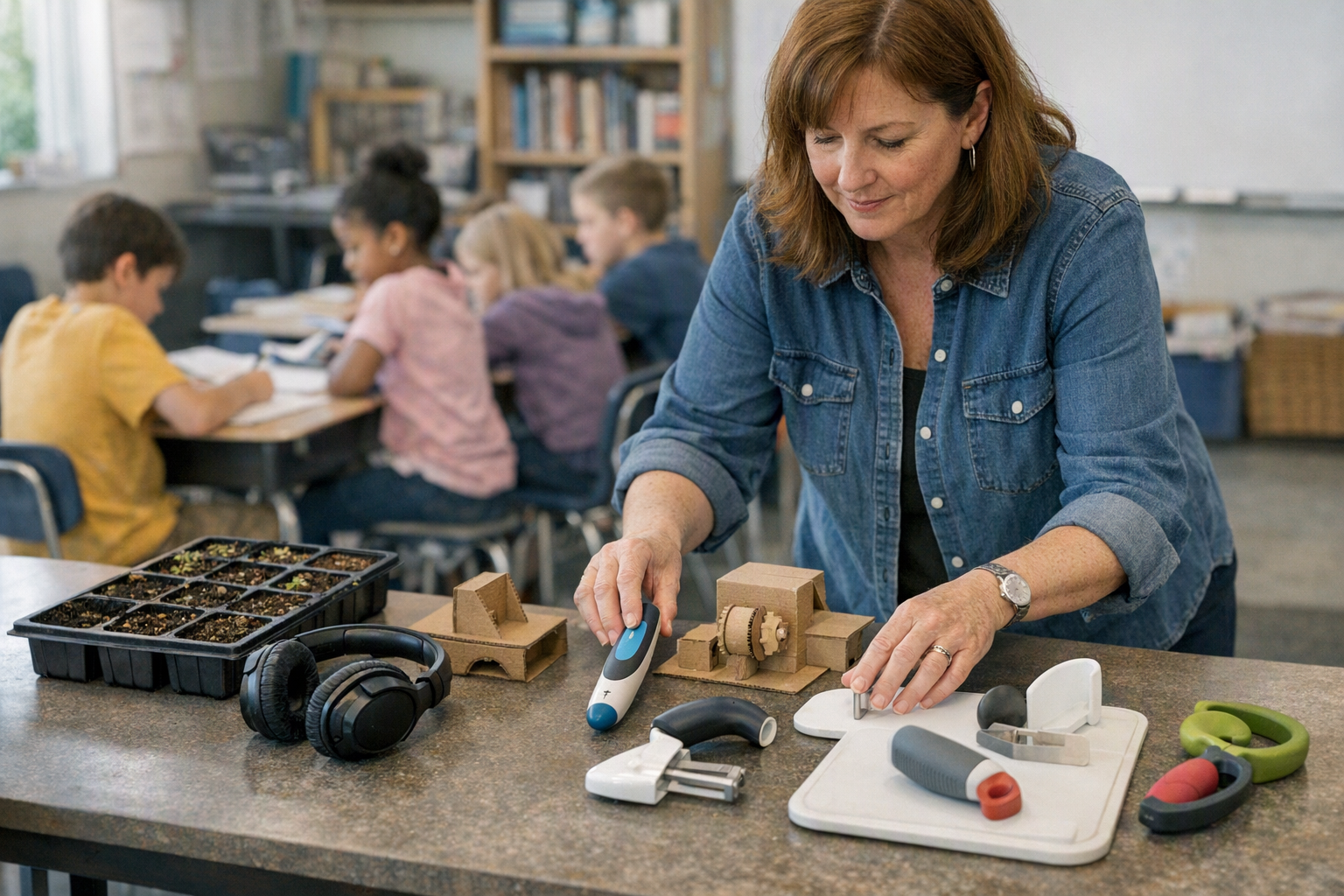
You can see that logic in the awards list. Running Brook Elementary’s literacy pilot uses WonderBooks so emergent and reluctant readers can listen while following the text. Deep Run Elementary plans to use a WorldPenScan reading pen. Marriotts Ridge High’s Unified Kitchen Project centers on adaptive tools for life-skill independence. Ellicott Mills Middle will expand hands-on engineering with cardboard fabrication tools. These are not sweeping reform packages. They are tightly scoped attempts to remove one barrier at a time: decoding, access, independence, or safe prototyping. (news.hcpss.org)
Hanover Hills Elementary’s AI Literacy and Mathematical Reasoning Lab is one of the clearest examples of that approach. Rather than asking students to accept AI output, the project has GT math students analyze, refine, and improve AI-generated explanations. In a district that has recently framed school-issued technology as a tool for meaningful, responsible learning rather than constant screen time, that is a notable distinction. The bet is not on AI as shortcut; it is on AI as flawed draft material that can force students to explain their own reasoning more precisely. The practical challenge will be teacher design work: these kinds of lessons succeed only if educators can spot where the model is wrong, thin, or misleading and build routines that make critique visible. (news.hcpss.org)
The student-support projects point in a similar direction. Oakland Mills High’s award backs a peer-ambassador model in which students in the school’s Active Minds chapter will work with feeder middle school eighth graders on relationships, regulation strategies, and mental health resources before the jump to high school. Dayton Oaks Elementary will create a nature-based SEL regulation station for recess. Both ideas are modest enough to start quickly, and both focus on transitions and self-regulation rather than trying to substitute for formal clinical services. For other schools, that may be the real lesson: some mental health supports are most workable when they live in routines students already encounter, such as recess, peer leadership, or transition programming. (news.hcpss.org)
What other schools can borrow now
The easiest ideas to copy are the ones that turn an abstract concern into a concrete purchase and a visible routine. Reluctant reading becomes access to audiobooks or scanning pens. School culture becomes a house system or a collaborative art project. Visual-impairment services become adaptive kitchen tools and planned practice in budgeting, shopping, and cooking. Even without a foundation partner, these are the kinds of pilots a principal, PTA, or department chair can often fund on a small scale because the materials list is finite and the use case is clear. (news.hcpss.org)
The environmental and engineering projects are slightly less plug-and-play, but they may be even easier to evaluate. Reservoir High students will create a campus heat map to compare hotter and cooler surfaces and connect those findings to climate change, heat illness, and social impact. Dunloggin Middle students will plant milkweed and nectar-rich wildflowers for monarch restoration. Cedar Lane and Bonnie Branch are backing greenhouse and hydroponics projects, while Glenwood Middle and Ellicott Mills are pushing further into hands-on science and engineering. Those projects can produce artifacts that adults can actually inspect: maps, prototypes, growing systems, habitat plans, and student explanations. That matters because small grants often fail not when the idea is weak, but when no one can tell what counted as success. (news.hcpss.org)
The harder question is what happens after the pilot
Howard County’s own recent grant history suggests these projects can become more than one-year novelties, but the strongest evidence so far still comes from foundation-backed follow-up stories. Bright Minds reported that a 2025-26 Hanover Hills fitness project using heart-rate monitors and trackers improved average health-related fitness assessment scores by 58% against the fall baseline and by 18% over the prior year’s fifth graders. In another follow-up, the foundation said a $1,500 Vision Services cooking-club grant bought adaptive kitchen equipment that students with visual impairments used for budgeting, shopping, cooking, and independent-living practice, with tools intended to serve future cohorts too. Those examples show two workable paths for a microgrant: either produce measurable short-term gains or buy durable equipment that extends beyond one class. (brightmindsfoundation.org)
Still, this year’s awards are promises, not results. The district and foundation have described what educators plan to do in 2026-27, but they have not yet published a common evaluation framework for the new projects, and not every pilot will lend itself to clean before-and-after numbers. Some of the strongest ideas here, especially the school-culture and peer-support efforts, may show up first in participation, attendance, student belonging, or teacher observation rather than in fast test-score movement. That makes follow-through important: without public updates, the sector is left with a gallery of good ideas but little evidence about which ones were sustainable, which ones raised teacher workload too much, and which ones were worth expanding. (news.hcpss.org)
For schools outside Howard County, the most useful takeaway is not the grant list itself. It is the operating model behind it: give educators a small amount of money, ask them to define one stubborn problem precisely, and fund pilots that are concrete enough to observe. The next thing worth watching is whether HCPSS and Bright Minds publish the kind of follow-up they have posted for earlier grants. If they do, the 2026-27 cohort could become something more valuable than a feel-good announcement: a tested catalog of ideas that other schools can copy without waiting for districtwide reform. (brightmindsfoundation.org)
More from Teaching & Learning
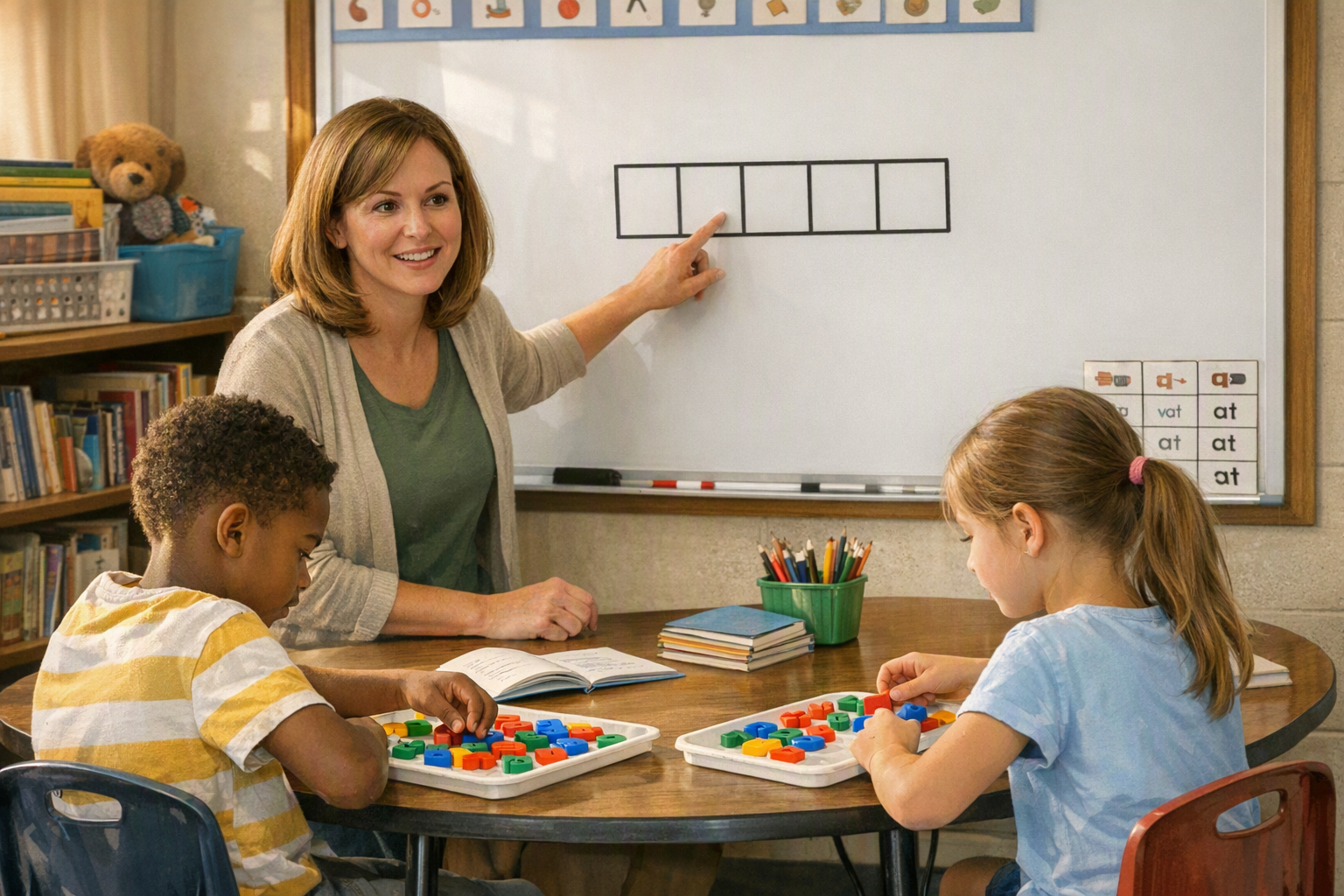
A 10-Minute Wordle-Style Routine for Second-Grade Phonics
In Betsy Follansbee’s classroom-tested version, students solve a decodable target word from a limited letter bank while the teacher gives position-based feedback.
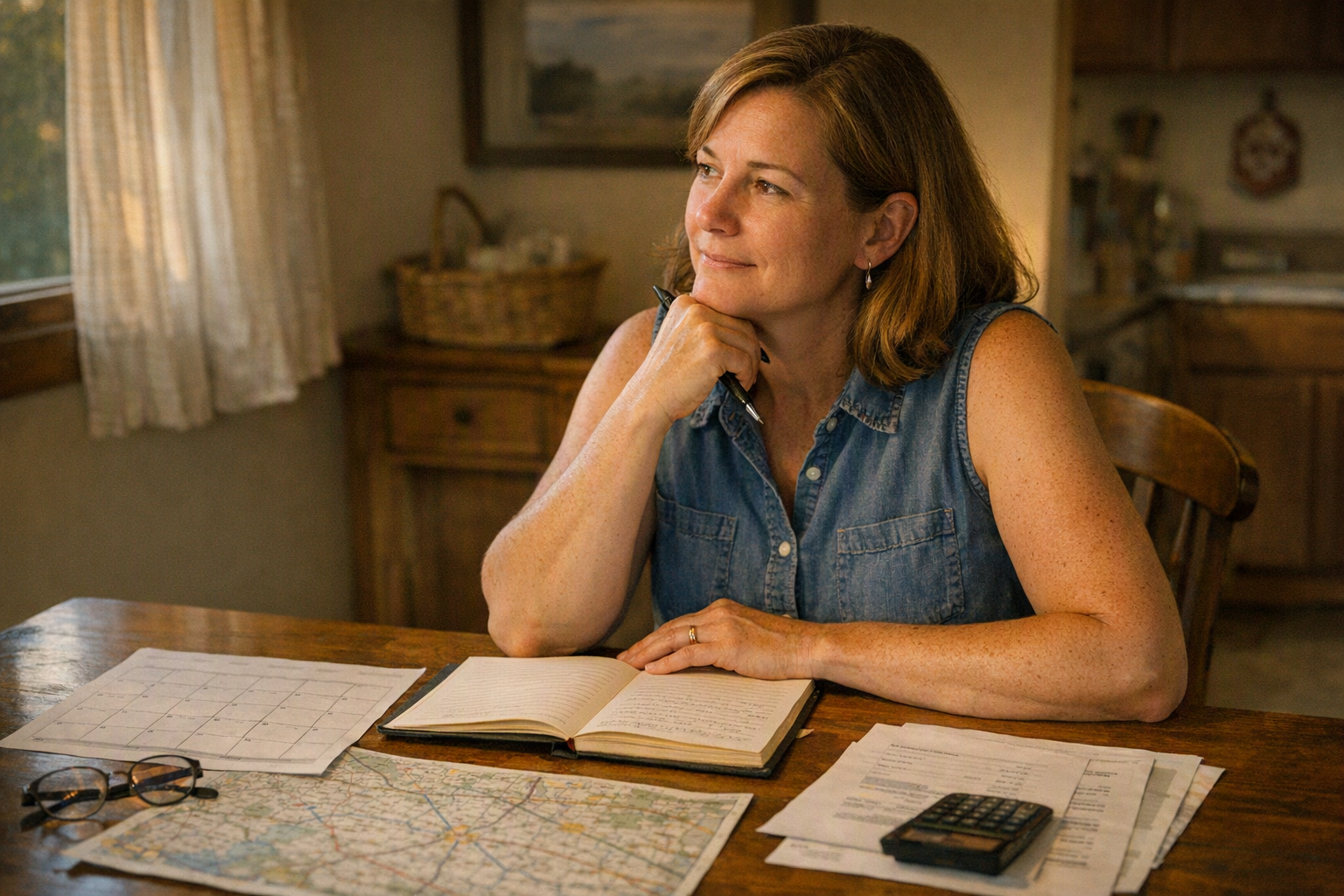
Indiana educators can still apply for Lilly renewal grants up to $15,000
Applications for Lilly Endowment’s 2027 Teacher Creativity Fellowships close Sept. 8. Eligible Indiana K-12 educators can seek funding for planned personal renewal projects, not classroom purchases or routine professional development.

Pulitzer Center opens paid fall 2026 teacher fellowship on global health
U.S. educators in grades 4-12 have until Sept. 1 to apply for a virtual fellowship that offers a $600 stipend, 30 PLUs, and guided support for building and teaching a short unit tied to global health reporting.