House panel backs bills to move Education Department work to Treasury and Labor
The House Education and Workforce Committee approved a 10-bill package that would shift student aid to Treasury and move major K-12 and higher education programs to Labor, with other functions going to HHS, State, and Interior. The measures are not law, but they offer districts and campuses their clearest map yet of how a federal breakup plan could reshape grants, reporting, and compliance.
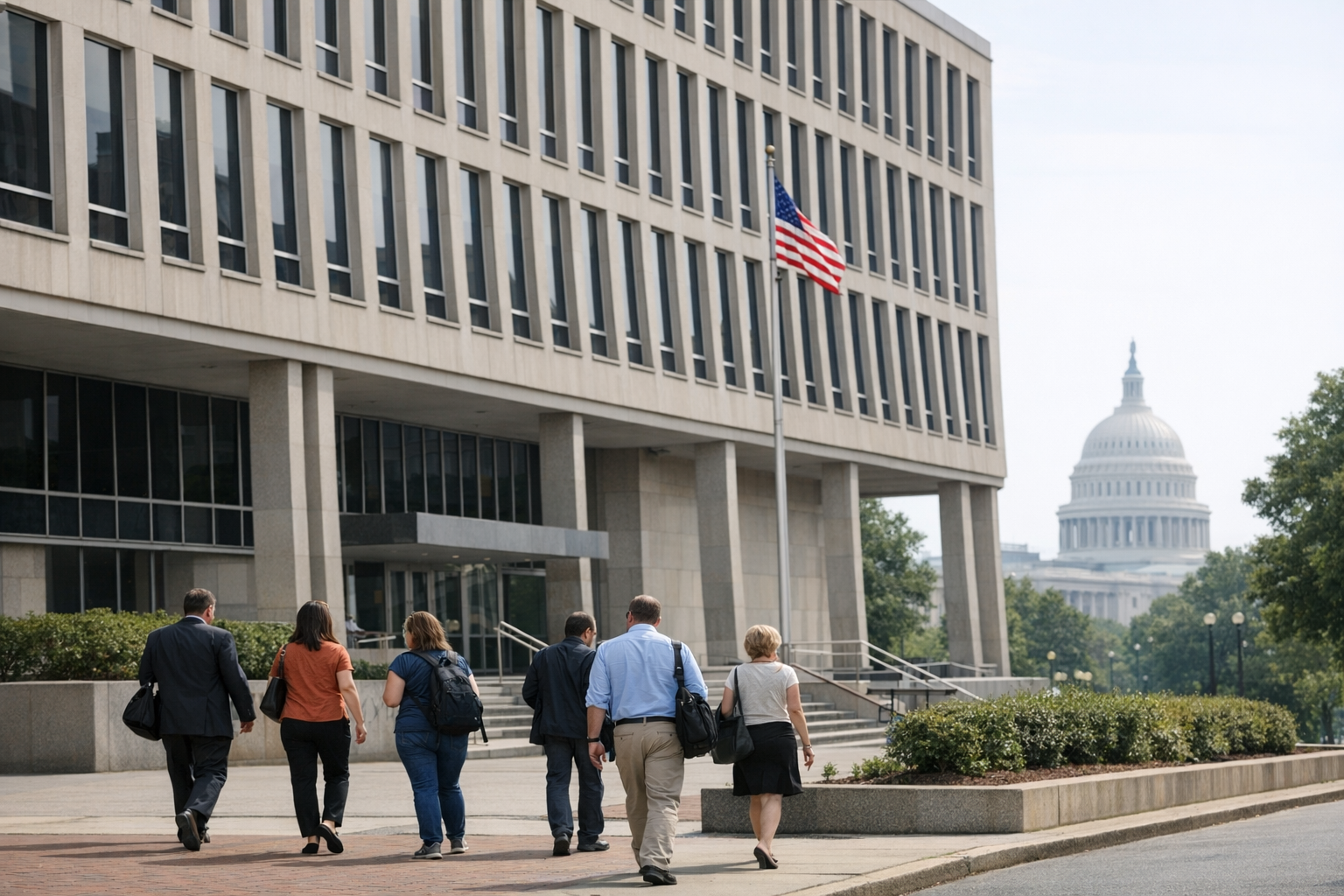
House panel advances 10-bill plan to move core Education Department work to Treasury, Labor, and other agencies
The House Education and Workforce Committee on Wednesday, July 15, approved a 10-bill “Less Bureaucracy, Better Education” package that would begin writing President Donald Trump’s Education Department breakup plan into statute. The package would shift major functions now housed at the U.S. Department of Education to the Departments of the Treasury, Labor, Health and Human Services, State, and Interior, and the department itself endorsed the committee action the same day. But the measures are still only House bills: for any of them to become law, both chambers would have to pass the same text and send it to the president.
For school systems, colleges, and student-aid offices, that means the committee vote is a significant policy marker, not an immediate operating change. The Education Department’s own “Returning Education to the States” page says the current interagency agreements already underway do not change funding levels, program eligibility, or legal protections under laws such as ESEA, HEA, IDEA, and Section 504. And as of Thursday, the House majority leader’s posted weekly schedule for the week of July 13 did not list this package for floor consideration, leaving the timing of any next step uncertain.
Where the biggest functions would move
The clearest operational change for colleges would come through H.R. 9609, the Less Bureaucracy, Better Student Aid Act. The bill transfers to Treasury the functions now carried out through Federal Student Aid related to servicing defaulted and non-defaulted federal student loans, collections, and the remaining administrative authorities tied to student-aid delivery and eligibility policy. That would turn a March Education-Treasury student-aid partnership into a statutory shift of responsibility, not just an operational collaboration. For financial-aid administrators, bursars, registrars, and loan servicers, that would matter because the agency handling both repayment operations and core aid-administration policy would no longer be Education.
The Labor Department would inherit the broadest school-and-college portfolio. H.R. 9607 moves the Office of Career, Technical, and Adult Education’s work, including Perkins and adult-education functions under WIOA Title II. H.R. 9610 shifts major K-12 functions, including Title I formula grants, state assessment grants, migrant education, and teacher-focused grant programs. H.R. 9611 sends a large set of higher-ed programs to Labor, including Strengthening Institutions, HBCU support, TRIO, GEAR UP, Title V programs, and Graduate Assistance in Areas of National Need. Those bills would formalize a set of Education-Labor partnerships the administration has already been piloting for workforce and postsecondary programs since 2025.
The rest of the package breaks up smaller but still consequential compliance and grant functions. H.R. 9602 moves Section 117 foreign gift and contract reporting to State. H.R. 9603 sends Title VI international and foreign-language programs and Fulbright-Hays to State, while also repealing the Institute for International Public Policy. H.R. 9604 transfers tribal education and Native career-technical programs to Interior. And three HHS bills — H.R. 9605, H.R. 9606, and H.R. 9608 — would move foreign medical school accreditation, the child-care program for low-income student parents, and several family-engagement, school-support, school-safety, and Ready to Learn programs to HHS.
More than a pilot
What makes the package more than a symbolic endorsement of the administration’s current strategy is that the bills generally go beyond the interagency agreements already in place. The department’s earlier Education-Labor, Education-Treasury, and other agency deals have been framed as management partnerships. By contrast, several of the bills explicitly transfer personnel, records, assets, liabilities, and unspent appropriations along with the programs, and instruct the Office of Management and Budget to avoid a net increase in federal full-time staffing. That is a structural rewrite of where federal education work lives, not just who helps process it.
That distinction matters for educators because, if Congress ever enacts this package, Washington would not be stepping back from education so much as redrawing the federal org chart. Districts could find themselves dealing with Labor on Title I and assessment issues, while colleges might work with Treasury on loans, Labor on institutional and access grants, State on foreign-gift reporting and Title VI, and HHS on student-parent child care or family-facing programs. That could support the administration’s stated goal of placing programs with agencies it considers better matched to them. It would also, as an inference from the bills’ design, likely create a more fragmented compliance map for institutions that now look primarily to one cabinet department. (ed.gov)
What is not in this package
The committee’s action also leaves a conspicuous gap. On June 16, the Education Department announced new partnerships with HHS and DOJ covering special education and rehabilitative services, civil-rights enforcement, student privacy protection, and training and advisory services. But none of the 10 bills marked up Wednesday would codify those newer arrangements. Ranking Member Bobby Scott said at the markup that the package would codify “10 of the Department of Education’s 14 interagency agreements,” which matches the gap between the committee’s bill list and the department’s broader partnership count. In practical terms, the legal future of OCR-related functions, student privacy enforcement, and special-education administration remains less defined than the future of student aid, K-12 formula grants, workforce education, or Section 117 reporting.
Democrats on the committee argued that the plan would weaken federal education expertise rather than streamline it. In his opening statement, Scott said the bills would permanently move “core responsibilities” to agencies that do not specialize in education and would mostly amount to shifting people and programs around Washington. Republicans made the opposite case. Committee chair Tim Walberg said the package would reduce bureaucracy and better connect education and workforce systems, and the Education Department called the markup a major step toward cementing the administration’s reforms. Those competing claims are not just ideological framing; they point to the central implementation question for the field: whether aligning programs with agencies such as Labor or Treasury makes administration clearer, or simply multiplies the number of federal doors a school or college has to knock on. (democrats-edworkforce.house.gov)
For now, district leaders, presidents, aid offices, and compliance teams do not need to reroute their daily work. The existing departmental partnerships remain the operative structure, and the House has not yet scheduled this package for floor action. But Wednesday’s committee vote gave educators something more concrete than rhetoric: a draft map of who could control student loans, Title I, TRIO, foreign-gift reporting, tribal programs, and several HHS-linked supports if Congress decides to make the administration’s departmental breakup permanent. The next question to watch is whether House leaders bring the bills forward — and, if they do, whether senators are willing to turn a management experiment into federal law. (ed.gov)
More from Policy & Funding

Supreme Court to hear magnet admissions case over proof in race-bias claims
The justices limited review to whether challengers to a race-neutral K-12 admissions policy must show group-wide disparate impact against the applicant pool, a technical question with big consequences for selective programs.

Some Maryland districts will miss the state’s AI policy deadline
The Oct. 22 mandate requires every school system to adopt local rules on AI use, privacy, academic integrity, procurement, and human oversight — but board calendars and review timelines are getting in the way.

Ohio schools must address chronic absence earlier under new attendance rules
For 2026-27, Ohio districts must do more than wait for truancy triggers: they now have to notify families by a locally set threshold capped at 5% of school hours, use tiered supports, and involve absence intervention teams before missed time becomes entrenched.