DOJ reviews William & Mary scholarships over race-linked criteria
The Title VI review spans undergraduate, education and law-school programs, signaling that federal scrutiny is moving beyond admissions into aid, mentoring and other student benefits. DOJ has not made a finding of wrongdoing.
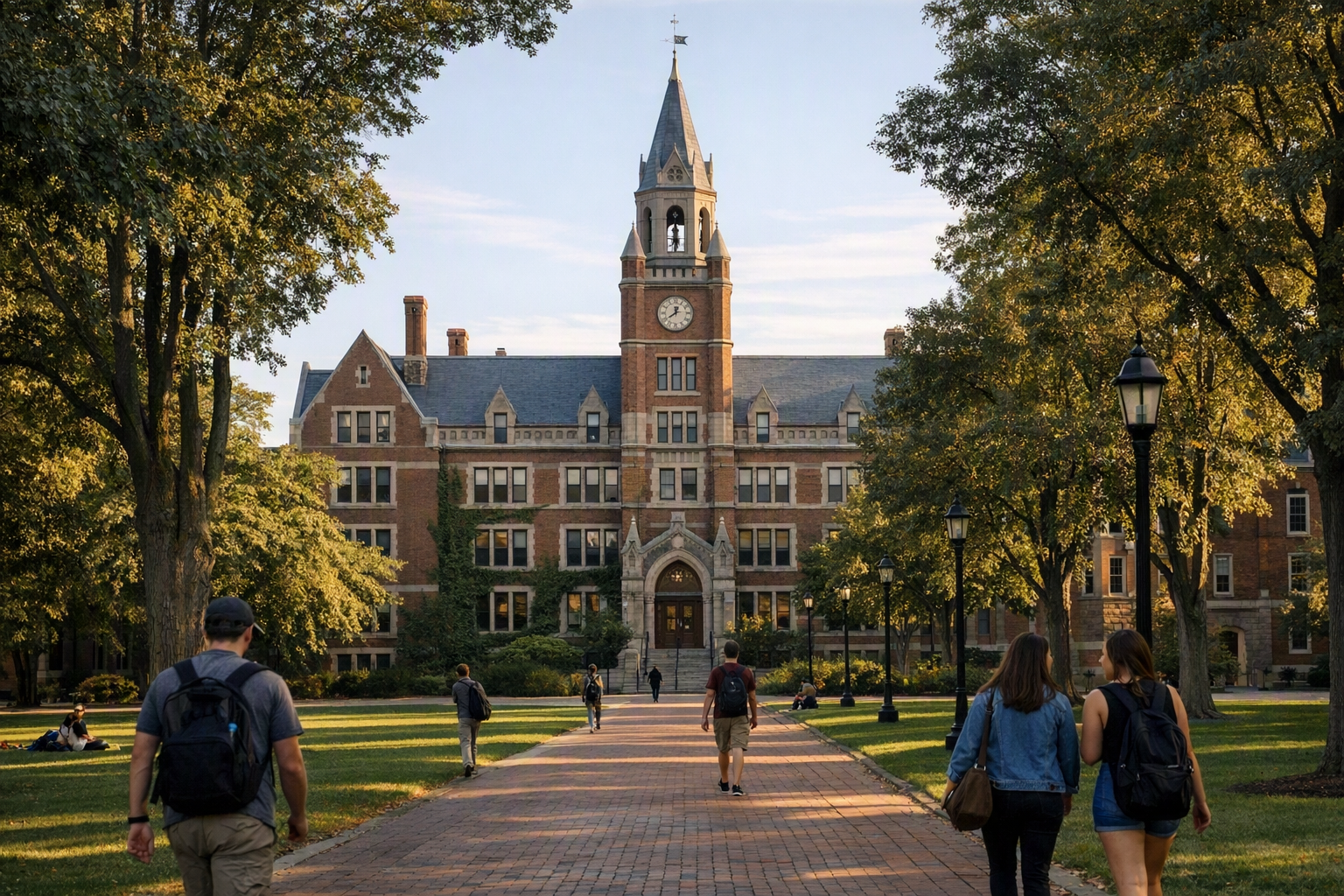
The U.S. Department of Justice on Monday, August 17, opened a Title VI compliance review into William & Mary, saying it will examine whether the university’s scholarships and student-benefit programs use unlawful race-based criteria. The move matters beyond one campus: it pushes federal scrutiny further past admissions and into the quieter parts of higher-ed operations where aid, mentoring, recruitment and professional-development programs are often designed and managed unit by unit. (justice.gov)
In its press release and investigation letter, DOJ pointed to programs across three parts of the university. For undergraduates, it cited the W&M Scholars program, which William & Mary says covers at least the full cost of in-state tuition and fees and gives “top consideration” to students with demonstrated interest in “diverse people and perspectives.” In the School of Education, DOJ highlighted the Martha L. Muguira Fellowship, which the school’s awards page says gives preference to Hispanic or Latino women with financial need, and the Holmes Scholars program, which William & Mary describes as serving doctoral students from “traditionally under-represented backgrounds.” In the law school, DOJ named the Lemon Legal Scholars Program for HBCU graduates and the Reaching Back Scholarship, which a law-school giving page says prefers students who attended historically Black colleges or universities or who “contribute to the diversity” of the law school. (wm.edu)
William & Mary said it is reviewing the DOJ notice and would not comment further. In statements quoted by local and higher-ed outlets, the university said it is “committed to nondiscriminatory learning environments across our campus and complying with all state and federal laws.” DOJ stressed that it has not reached any conclusion about whether the university violated Title VI. According to the investigation letter and subsequent reporting, the university has been asked to provide documents and information by September 8, 2026. If DOJ finds no violation, the matter can be closed; if it finds noncompliance, it says it will first seek voluntary resolution before considering formal action, including a civil suit or steps affecting federal financial assistance. (justice.gov)
The programs under review are the kind many campuses treat as separate from admissions
One reason higher-ed leaders are likely to read the William & Mary case as an immediate compliance warning is the mix of programs DOJ chose to cite. They are not all traditional merit awards housed in a central financial-aid office. The W&M Scholars award sits in Arts & Sciences’ WMSURE program and bundles scholarship support with undergraduate research and mentoring. The Holmes Scholars program is a doctoral mentoring and professional-development track tied to the American Association of Colleges for Teacher Education. The law-school programs combine money with advising, networking and special events. In other words, the review is not limited to who gets in; it reaches the ecosystem of benefits a student gets after admission. (wm.edu)
That matters operationally because those programs are often scattered across admissions, student success, academic departments, graduate schools and advancement offices. William & Mary’s own public pages show that pattern. The School of Education posts its scholarship criteria on departmental awards pages. The law school advertises some opportunities on admissions pages and others on giving pages. The Reaching Back Scholarship, for example, appears on a donor campaign page and includes a sentence stating that it is open to all students regardless of race, gender or ethnicity even as it gives preference to HBCU attendees or students who contribute to diversity. For colleges trying to assess risk quickly, that is the practical lesson: the compliance issue may be embedded in public-facing language outside the admissions office and outside the main financial-aid website. (education.wm.edu)
The William & Mary programs also show the trade-offs institutions are now facing. Some of the cited initiatives were built to address long-standing inequities or specific institutional histories. The Lemon Legal Scholars Program says it was launched through the law school’s “Why We Can’t Wait” initiative and is connected to the university’s Lemon Project, which examines William & Mary’s historical ties to slavery and segregation. But DOJ’s letter makes clear that the current administration is treating those historical and equity rationales not as a defense, but as evidence of intent worth examining. (law.wm.edu)
DOJ is extending its post-admissions enforcement agenda, but the legal and political terrain is still contested
The William & Mary review did not emerge in a vacuum. Since the Supreme Court’s 2023 decision in Students for Fair Admissions v. Harvard, the Trump administration has advanced a broader reading of Title VI that reaches not only admissions but also scholarships, prizes, recruitment, tutoring and other student supports. The Education Department said in February 2025 that federally funded schools must stop using race preferences in admissions, hiring, scholarships and “administrative support.” DOJ separately released guidance for federal-funding recipients in July 2025 and, this year, opened or announced actions involving Arizona State University’s DEI-related student supports, Minnesota’s race-linked health grants, Duke Law admissions and Yale School of Medicine admissions. (ed.gov)
But the administration’s theory is not the last word. An official Education Department page now notes that a federal court in April 2025 enjoined the department from enforcing or implementing its February 2025 Dear Colleague letter, related FAQs, the End DEI Portal and a certification requirement while litigation proceeds. That injunction does not erase Title VI, and DOJ has continued to act under its own authorities, but it does underscore that the legal boundaries are being actively fought over rather than cleanly settled. For campus leaders, that means two things can be true at once: the administration’s interpretation is contested, and it is also the interpretation currently driving federal investigations. (ed.gov)
That distinction is important for educators because the case is not just about ideology or branding. DOJ’s letter to William & Mary focuses on how benefits are allocated: who gets scholarship dollars, who gets automatic consideration, who gets mentoring, who gets access to job fairs and conferences, and what public criteria signal about eligibility. For institutions, that shifts the compliance question from “Did we change our admissions rubric after 2023?” to “Have we checked every program that confers a tangible educational benefit?” (justice.gov)
What colleges will be watching now
The near-term consequences for William & Mary are straightforward: produce documents, defend or revise program criteria, and decide whether any public language needs to change before the review advances. The broader consequence for the sector is that scholarship and support-program design now looks like a front-burner legal issue for the fall term. Colleges that already reviewed undergraduate admissions may still have unresolved exposure in graduate fellowships, law-school aid, affinity mentoring, research pipelines, donor-restricted awards and web copy that has not been revisited since before SFFA. The more decentralized the institution, the harder that audit is likely to be. (usnews.com)
There is also a second-order cost. When universities rewrite programs under legal pressure, they do not only change eligibility language; they often change who owns the work. General counsel, financial aid, advancement and academic units all end up at the same table, especially where donor intent or historically targeted programs are involved. William & Mary’s case illustrates that collision clearly: the challenged programs span undergraduate access, graduate education and legal education, and at least some are tied to institutional missions around belonging, justice or historical repair. Whether DOJ ultimately closes the case or presses for changes, the review has already delivered a message to colleges starting the academic year: the next Title VI flashpoint is likely to be the scholarship page, the fellowship PDF and the mentoring program description, not just the admissions application. (wm.edu)
More from Higher Education

DOJ says Ohio State med school used race in admissions
A new Justice Department findings letter, which Ohio State is contesting, points to separate pathways, race-visible screening and interview advantages as potential Title VI problems during an active admissions cycle.
UNC-Chapel Hill settles federal civil-rights probes through 2028
The university-wide deal closes 18 investigations and a DOJ review while requiring new antisemitism procedures, race-blind admissions and scholarship practices, and quarterly compliance reports.

McGraw Hill adds AI study hub and oral assessment tools to Connect
The college courseware update brings publisher-grounded study aids to select Connect courses and adds Breakout-powered discussion and oral assignments with AI-enabled feedback.